About this place
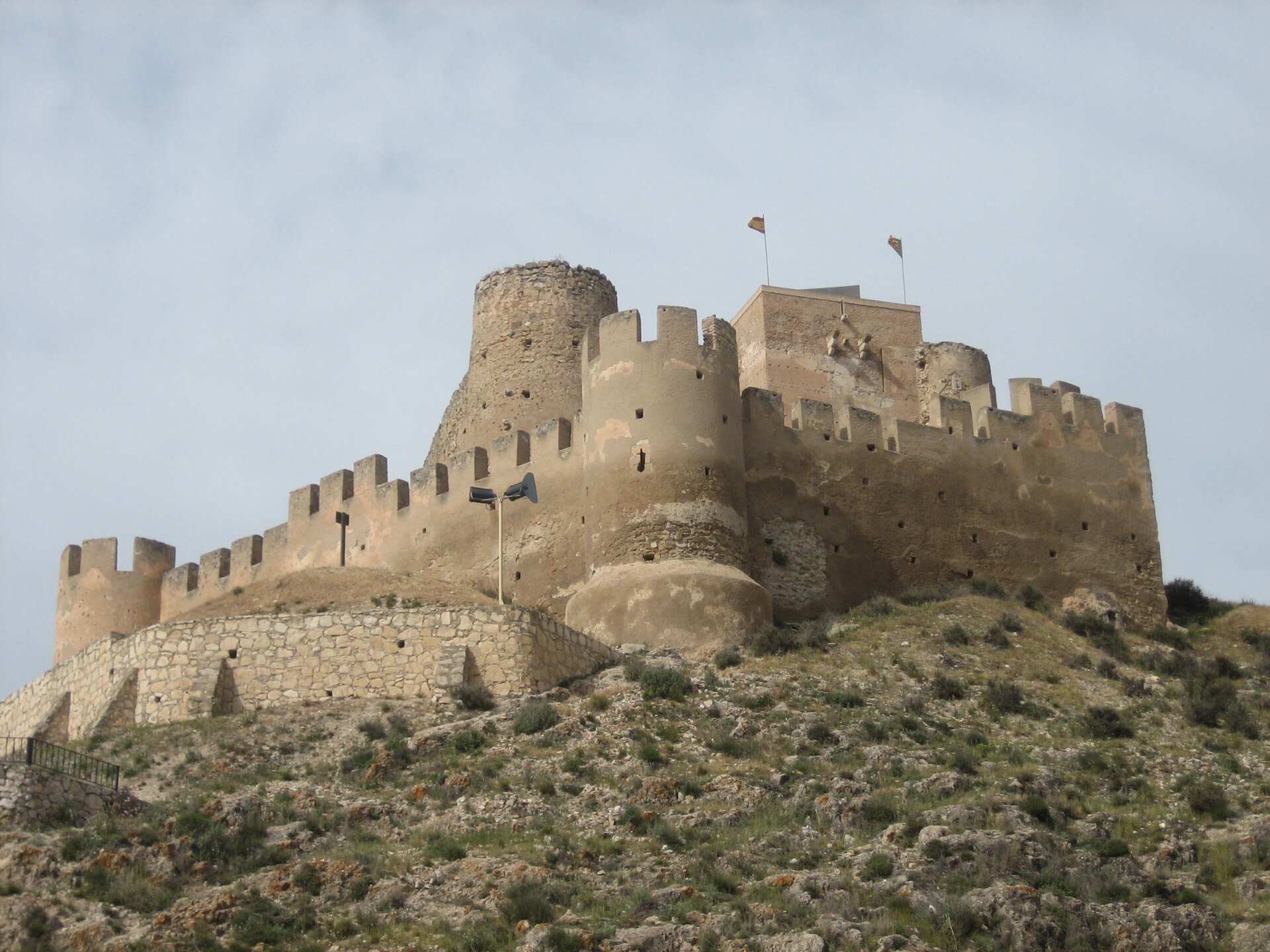
Castillo de Salvatierra is a medieval fortress perched on the Sierra de la Villa above Villena, in the province of Alicante. Locals know it affectionately as "El Castillico" — to distinguish it from the larger, better-preserved Atalaya Castle that dominates the town's skyline from a lower hill.
Where does this hilltop fortress come from?
Archaeological work has shown that the current ruins sit on top of a much older site — an Iberian oppidum dating to the 3rd century BC. The fortification as it stands, however, has Islamic origins: it was built between the 9th and 11th centuries, during the Umayyad Caliphate or the early taifa kingdoms, as part of a defensive network watching over the surrounding area. The structure remained in use through the Almohad period, before the region eventually passed into Christian hands.
What role did it play in defending the valley?
The castle was meant to guard the passage followed by the Vinalopó river route — a strategically important corridor linking the interior of the peninsula with the coast. The trouble was that far more powerful strongholds soon rose nearby: the castle in Villena itself, plus the fortresses at Biar and Sax. Their growing importance quickly overshadowed Salvatierra, which lost much of its strategic value early in the Reconquista. Eventually, defensive functions shifted to Atalaya Castle, and Salvatierra fell into decline — its active use is dated roughly from the 10th to the 14th century.
Did the castle ever matter again after that?
Yes, on a couple of occasions. During the Revolt of the Brotherhoods (the early 16th-century uprising of urban guilds against the nobility), the abandoned fortress served as a refuge for the Viceroy of Valencia, Diego Hurtado de Mendoza, who sought safety there from the rebels. Another chapter unfolded during the War of the Spanish Succession in the early 18th century: Villena's population sided with the Bourbon cause, and a small group of supporters of Philip V held out within Salvatierra's walls against a siege by troops loyal to Archduke Charles. These episodes show that even a long-abandoned fortress could regain military relevance in moments of crisis.
What condition is the castle in today?
Castillo de Salvatierra is now a ruin, with only a small part of the original structure still standing. Even so, the site remains a point of reference for history and archaeology enthusiasts wanting to trace Villena's oldest layers of defense — pre-Christian and Islamic — before the more prominent Atalaya Castle took over that role.
Frequently Asked Questions
What's the difference between Castillo de Salvatierra and Villena's Atalaya Castle? Salvatierra is the older, now-ruined fortress on the Sierra de la Villa, built during the Islamic period on the foundations of an Iberian oppidum. Atalaya Castle, lower down and closer to the town center, took over its defensive role from the 14th century onward and is today Villena's recognizable landmark.
What is Castillo de Salvatierra's local nickname? Locals in Villena commonly call it "El Castillico" (literally "the little castle"), setting it apart from the town's larger, better-preserved castle.
Why did the castle lose its importance? The proximity of stronger fortresses — Villena's own castle, plus those at Biar and Sax — meant Salvatierra quickly stopped playing a key defensive role, despite its favorable position overlooking the Vinalopó valley route.
Can visitors explore the ruins today? The castle survives only as ruins, with just part of the original walls still visible. It's a site mainly of interest to those drawn to regional history and archaeology, rather than a fully restored tourist attraction.
Nearby places

Earn badges for the places you visit
Download NextOnTrip, discover new places and check off your trails.