About this place
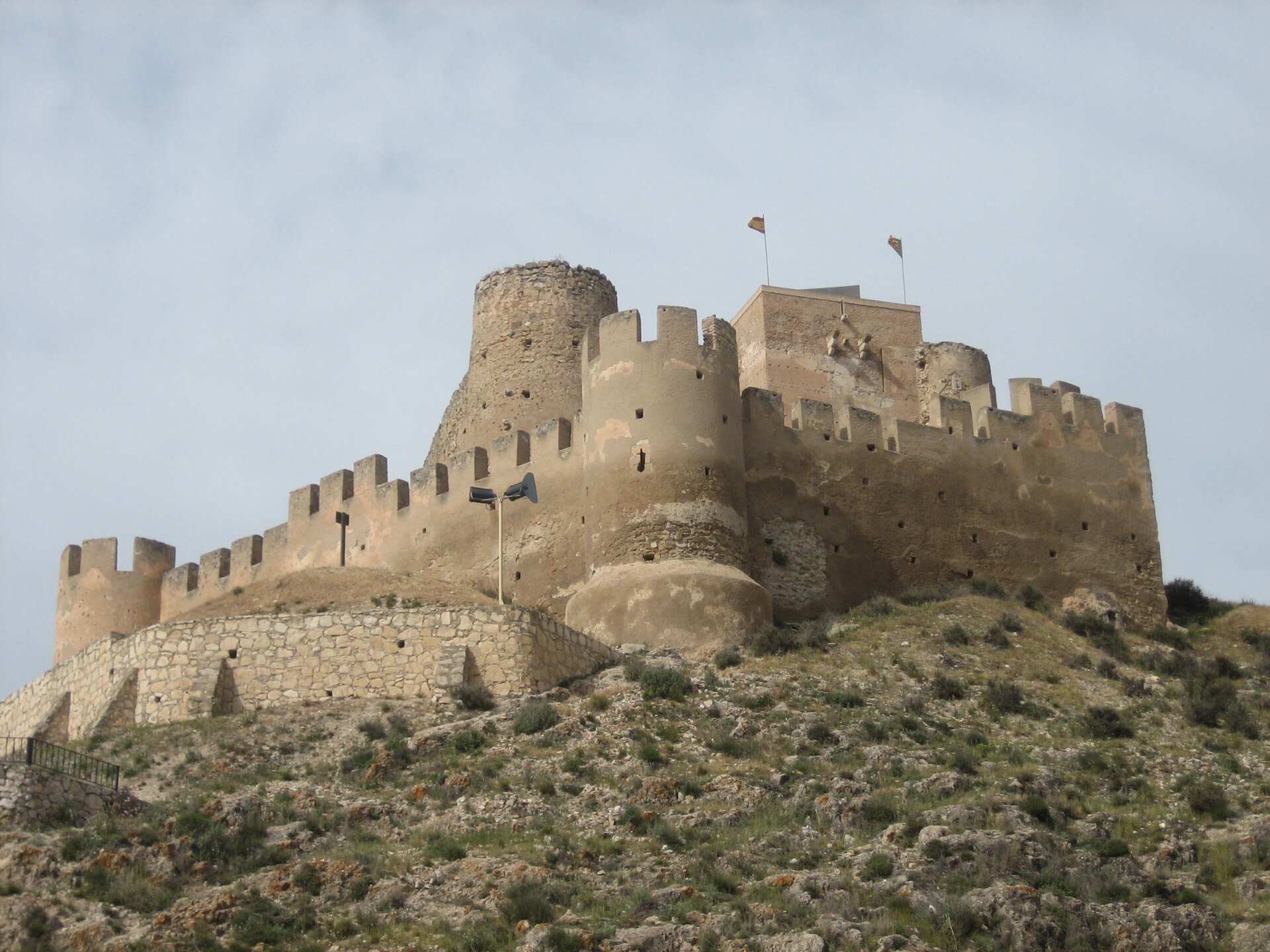
Atalaya Castle stands guard over Villena, a town in the northwest of Alicante province, close to the borders with Albacete, Valencia and Murcia. Perched on a rocky spur of the San Cristóbal mountain, the fortress spent centuries watching over the old frontier between Castile and Aragon.
How old is the castle?
The exact construction date is unknown, but the fortress already appears in Arab sources from 1172, during Almohad rule, when it served as a refuge for the people of Villena. Some historians have speculated that the site may sit on top of an earlier Roman structure, though excavations have never confirmed this.
Atalaya was a key stronghold on the northern edge of Muslim-controlled Iberia. It withstood three separate sieges by James I of Aragon before finally falling in 1240. Following the Treaty of Almizra in 1244, the castle passed into Castilian hands — first to the Order of Calatrava, then to Infante Manuel. His son, Juan Manuel, Prince of Villena, later strengthened its defenses.
In 1445 the castle was granted to Juan Pacheco along with the title of Marquis of Villena. He reinforced the original Almohad walls, added an outer defensive ring, and raised the keep by two extra storeys — the form in which most of the structure still stands today.
During the Peninsular War, Marshal Suchet ordered the main tower blown up, destroying Almohad-era vaults that ranked among the oldest surviving examples in both Spain and the Maghreb. The castle was then abandoned, and in the 19th century locals took stones from its walls to build nearby houses.
What can you see today?
The keep is the highlight — climb to its rooftop for sweeping views over Villena and the surrounding countryside. Look out too for surviving stretches of the Almohad walls and the remaining medieval vaults, which survived the Napoleonic-era explosion. Restoration work and archaeological digs have been ongoing since 1958, uncovering further architectural details of the fortress.
How do you get there and what does a visit involve?
Visits start at the reception center right next to the castle, where you can also leave your car. Tickets are sold there or at the Tourist Information Office on Plaza de Santiago.
Without a guide, the castle is open Tuesday to Sunday, plus public holidays and the Mondays before them, from 10:00 to 14:00. Guided tours run in the morning at 10:30, 11:30 and 12:30, with an additional afternoon slot at 16:30 from Tuesday to Saturday — these require booking in advance. Admission costs €3, or €1.50 with a discount.
When is the best time to visit?
Since most of the walls and paths are exposed with little shade, spring and autumn offer the most comfortable conditions and the clearest views from the tower. In summer, aim for the early morning slots before the heat sets in.
Frequently asked questions
Is the castle original or a reconstruction? Much of the structure is original, including the Almohad-era walls and vaults. The upper section of the keep dates from Juan Pacheco's 15th-century rebuilding, and restoration work has continued since 1958.
How long does a visit take? A self-guided visit usually takes about an hour; guided tours run a bit longer since they include the castle's history and access to the tower.
Do I need to book tickets in advance? Self-guided visits require no reservation, but guided tours do. Tickets are available at the reception center next to the castle or at the Tourist Information Office.
Is the castle suitable for children? Yes, families can visit comfortably, though some paths cross uneven, rocky ground, so comfortable footwear is recommended.
Nearby places

Earn badges for the places you visit
Download NextOnTrip, discover new places and check off your trails.