About this place
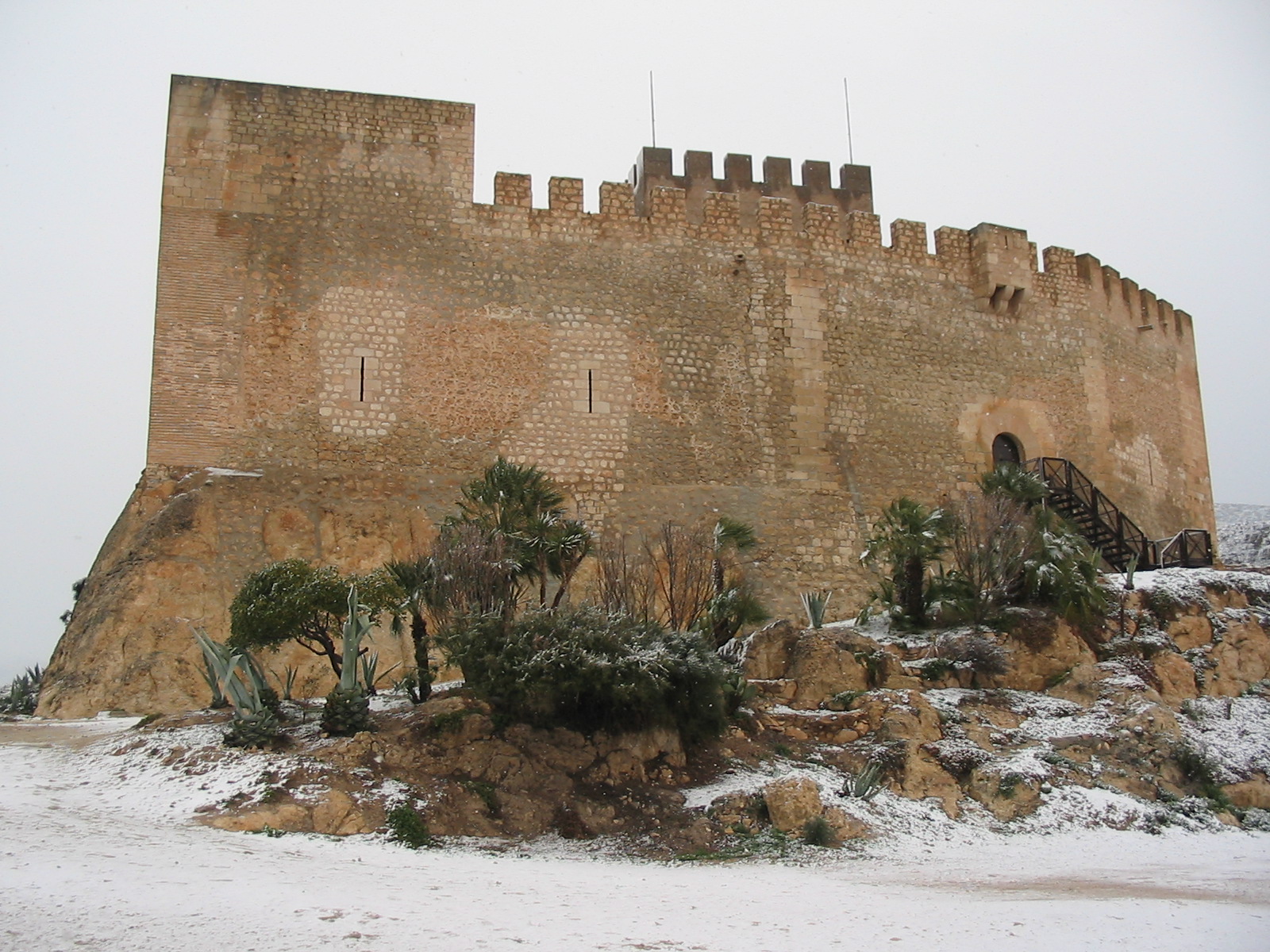
Castillo de Elda rises above the town of Elda in the province of Alicante, in the Valencian Community. Part fortress, part stately residence, it carries nearly eight centuries of history — from an Islamic-era border stronghold to a noble palace and, more recently, a monument brought back from near-total ruin.
Where does the castle's story begin?
The first fortification on the site dates to the second half of the 12th century, built under Almohad rule. After the Almohad defeat at Huete in 1172 and the growing pressure of the Christian advance, the rulers of the taifa of Murcia pushed to fortify strategic points along the Vinalopó valley. Elda, sitting on that route, received a fortress that was maintained and expanded until 1243, meant to secure the crossing and the settlements along this contested frontier.
What happened after the Christian conquest?
Elda fell to Christian forces in 1243, but that did not bring stability. Between the mid-13th and early 15th centuries, the castle and its surrounding lands changed hands repeatedly through grants, sales, and feudal transfers — a pattern typical of the shifting border zone between the Crown of Aragon and Castile, where local lords competed for control of fortified towns.
How did a fortress become a palace?
The turning point came in the 16th century, when the castle underwent a major transformation into the residence of the Coloma family, who held the county of Elda. The old defensive structure was reshaped into a grand seigneurial palace, keeping the bones of the medieval fortress while adding the comforts and appearance of an aristocratic home. That layered identity — fortified core wrapped in palatial architecture — is why the building is often described today as a castle-palace rather than a simple keep.
Why did the castle fall into disrepair?
The Coloma family abandoned the residence in the early 18th century, and without permanent occupants the building began to decay. The 19th century brought serious damage, as stone and building material were stripped from the structure for use elsewhere. For decades afterward, the castle stood as a deteriorating ruin overlooking the town.
What is being done to preserve it now?
Sustained recovery efforts began in the 1980s, when local authorities launched excavation and conservation campaigns aimed at stabilizing the remains and recovering parts of the original layout. That work continues today, and the Castillo de Elda is recognized as a protected cultural property of the Valencian region. It sits at coordinates 38.4807° N, 0.7972° W, right at the historic core of the town.
What should visitors know before going?
The castle occupies a hilltop position overlooking Elda, with views over the Vinalopó valley and the surrounding hills. The town is within easy reach of both Alicante and Murcia, making it a convenient stop for travelers exploring the inland areas of the province rather than the Costa Blanca coastline. Because conservation work is ongoing, it is worth checking locally for current opening hours and which parts of the site are accessible at the time of a visit.
Frequently asked questions
Who built Castillo de Elda? The original fortress was built and maintained by the Almohads in the second half of the 12th and first half of the 13th centuries, as part of fortifying the frontier of the taifa of Murcia.
When did the castle become a palace? In the 16th century, when the Coloma family took ownership and rebuilt the medieval fortress into a grand residence befitting their county.
Why did the castle fall into ruin? After the Coloma family left in the early 18th century, the building deteriorated, and in the 19th century it was further damaged as materials were removed for reuse elsewhere.
Has the castle been restored? Since the 1980s, excavation and conservation work has gradually recovered parts of its original appearance, though the process is still ongoing.
Where exactly is the castle located? In the historic center of Elda, in the province of Alicante, at coordinates 38.4807° N, 0.7972° W.
Nearby places

Earn badges for the places you visit
Download NextOnTrip, discover new places and check off your trails.