About this place
Castillo de Almalaff is a ruined medieval fortress in the municipality of Hortezuela de Océn, in the province of Guadalajara, in the Castile-La Mancha region of Spain. It sits on the edge of a raised plateau in the western part of the historic Señorío de Molina, overlooking a valley that drops toward the Tajuña river.
The history behind the ruins
The site predates the castle itself: it stands on the former settlement of Santa María de Almalaff, which had Celtiberian origins. During the Muslim period, a stone watchtower was raised here, likely encircled by a small wall acting as a barbican. From this post, defenders could keep watch over the route running through the Lamadre river valley, a strategically important line for controlling this stretch of frontier.
In the early 12th century, the stronghold was taken over and rebuilt by Manrique Pérez de Lara, the first Lord of Molina and one of the most powerful nobles of his time, who also served as regent of Castile. Under him, the castle became part of the defensive line guarding the eastern edge of the Señorío de Molina.
What you'll see on site
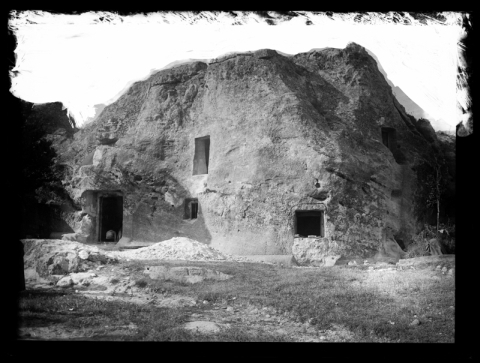
Today only a section of the tower wall survives, with a visible arched doorway and a small window opening, surrounded by scattered stone blocks that once formed the rest of the structure. It is a modest but genuine remnant of a frontier stronghold, set against the stark, open plateau landscape around it.
Right next to the castle ruins stands the hermitage of Nuestra Señora de Océn, which preserves Romanesque elements from its original construction — together the two sites form a small but coherent historical stop within the municipality. The surrounding terrain is shaped by the parameras (high plains) and sabinares (juniper woodlands) typical of the Señorío de Molina, giving the area an open, uncrowded character.
How to get there
Castillo de Almalaff lies within the municipality of Hortezuela de Océn, a small village on the eastern highlands of Guadalajara province. Access to the ruins is free, which makes it an easy stop for anyone touring the wider Señorío de Molina area. The nearby Alto Tajo Natural Park means a visit to the castle can be combined with an excursion to the park's river canyons, viewpoints, and distinctive geological landscapes.
When to visit
The open highlands of the Señorío de Molina have a harsh climate, so spring and early autumn tend to offer the most comfortable conditions for exploring the ruins, with milder temperatures than the peak of summer or winter. Since there is no shelter or on-site infrastructure, it's worth planning the visit for daylight hours and settled weather.
Frequently Asked Questions
Is there an entrance fee for Castillo de Almalaff? No, access to the ruins is free year-round.
What exactly remains of the castle? A section of the tower wall survives, including an arched doorway and a small window opening, along with scattered stones from the rest of the original structure.
Who built Castillo de Almalaff? The stronghold in its current form was raised in the early 12th century by Manrique Pérez de Lara, the first Lord of Molina, on the site of an earlier Muslim watchtower.
What else is worth seeing nearby? The hermitage of Nuestra Señora de Océn, with Romanesque elements, stands right next to the castle ruins, and the Alto Tajo Natural Park with its canyons and viewpoints is close by.
Nearby places

Earn badges for the places you visit
Download NextOnTrip, discover new places and check off your trails.