About this place
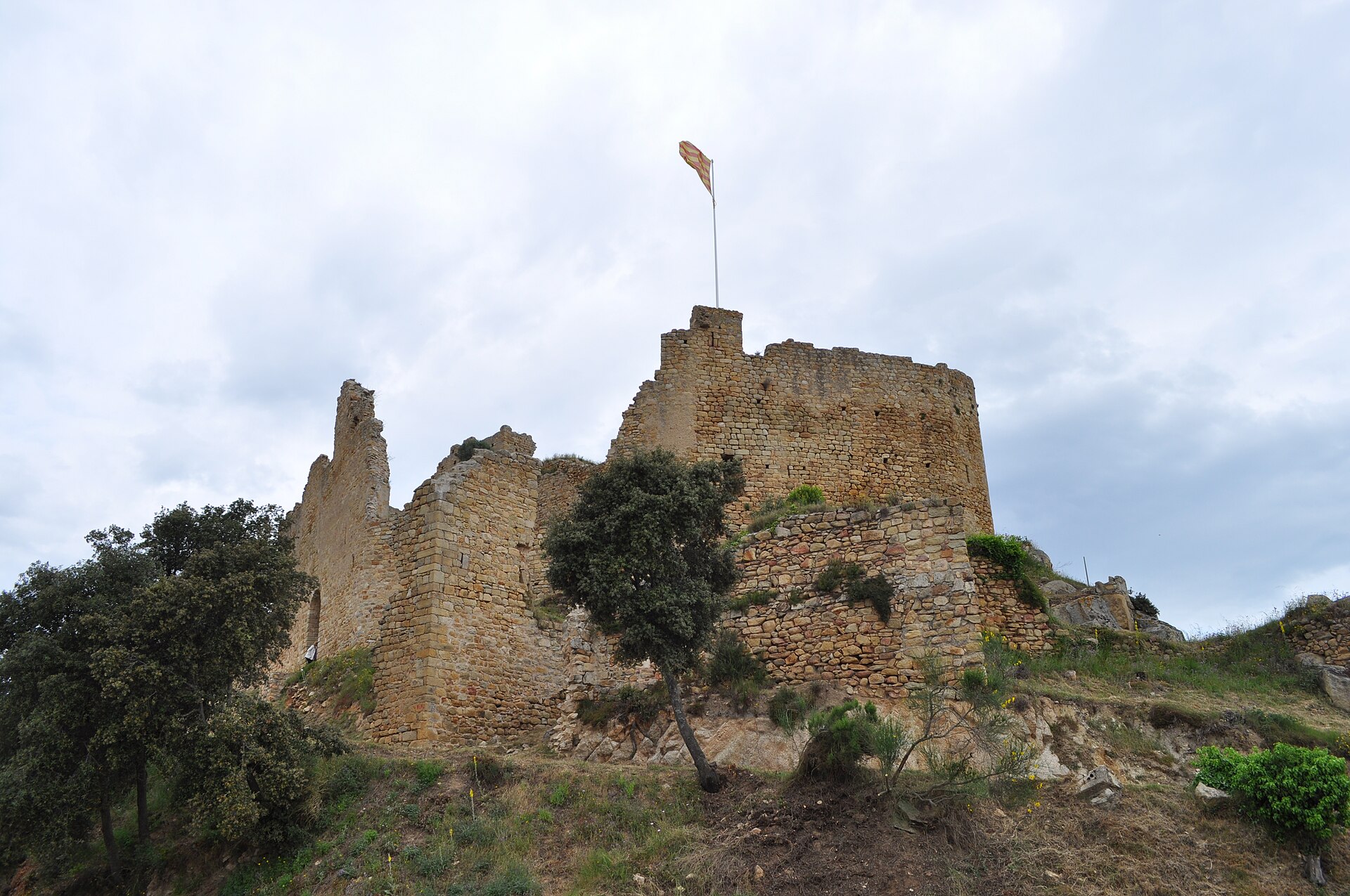
Castell de Palafolls is a ruined medieval castle perched on a hill above the town of Palafolls, in Catalonia's Maresme region, close to the mouth of the Tordera river and the Mediterranean coast.
How do you get to the castle?
The fortress sits on high ground overlooking the center of Palafolls, with views stretching over the Tordera valley toward the coastline. That position was no accident: for centuries the castle controlled the old road linking Girona and Barcelona, which ran along this stretch of coast. Guarding that trade route is the main reason the site grew into a fortified stronghold in the first place.
What's the history behind it?
The earliest references to the castle date back to the 10th century — it appears in 968 in the founding document of a nearby monastery, and by 1035 it belonged to Humbert de Sesagudes. Through marriage, control passed to the Palafolls family, who expanded the site with a second defensive ring over the following centuries.
The castle was the seat of the barony of Palafolls, which covered not only the town itself but also the present-day municipalities of Malgrat de Mar and Santa Susanna, plus part of Blanes. In 1229, Guillem de Palafolls took part in the conquest of Mallorca alongside King James I — a sign of how influential the family had become.
In 1381, Guillem de Palafolls sold the castle to King Peter III, and the family relocated to Aragon, where it later gave rise to the Palafox dynasty. The following year, Viscount Bernat IV de Cabrera bought the fortress. The following centuries brought more changes of ownership and turbulent episodes: the castle was occupied during Catalonia's civil war between 1462 and 1472, suffered damage during peasant uprisings in 1485, and was reinforced against pirate raids in the 16th century. Ownership later passed to the Montcada family and then to the Dukes of Medinaceli.
In 1880, the site passed into the hands of the Spanish state and began to fall into disrepair. That decline was only reversed after the "Amics del Castell de Palafolls" association was founded in 1966, which led architect Joan Bassegoda i Nonell to restore the castle chapel in 1971. Today the castle is listed as a site of national cultural interest (bé cultural d'interès nacional), a status formally granted in 1988.
What will you see on site?
The castle follows an irregular, elongated layout shaped by the rocky hilltop it sits on, enclosed by several rings of defensive walls. Surviving elements include the keep (torre de l'homenatge), residential buildings, a cistern, and a Romanesque chapel with a single nave and a circular apse. The main hall still shows a barrel-vaulted semi-basement and traces of its original wooden ceiling. Most of the structure was built from local granite; the oldest parts date to the 10th century, while the castle reached its final extent by the 14th century.
When is the best time to visit?
Since the site is exposed and set on open, elevated ground, spring and autumn tend to offer the most comfortable conditions, avoiding strong winds and summer heat. This is an archaeological ruin rather than a restored monument, so sturdy shoes are worth packing — the terrain underfoot is uneven and rocky.
Frequently asked questions
Can you visit the castle? Yes, the site is open to visitors as an archaeological ruin listed as a site of national cultural interest.
How old is the castle? The earliest records date to the 10th century (968 and 1035), and the castle reached its final built form in the 14th century.
Why was the castle built on this particular hill? The hilltop above Palafolls gave control over the old road connecting Girona and Barcelona, making it a strategic defensive point in the Maresme region.
What survives from the original structure? Visible remains include the keep, sections of the defensive walls, a cistern, and a Romanesque chapel with an apse, partly restored in the 1970s.
Nearby places

Earn badges for the places you visit
Download NextOnTrip, discover new places and check off your trails.