About this place
Castell de Castell d'Aro is a medieval stronghold standing in the upper part of the town of Castell d'Aro, within the municipality of Castell-Platja d'Aro i s'Agaró in the Baix Empordà region. Only fragments of the original structure survive today, yet it was this fortress that gave its name to the whole settlement and served as a landmark for the Aro valley for centuries.
What is the history behind the castle?
The earliest written record of the fortress dates back to 1041, when documents referred to it as "castrum appelatum Benedormiens" — the source of its alternative name, Castell de Benedormiens. That year, local nobles, knights and clergy gathered to decide the future of the recently built castle. Among those present was Countess Ermessenda of Carcassonne, one of the most influential figures in Catalonia at the time.
It was agreed that the Monastery of Sant Feliu de Guíxols would take over guardianship of the fortress. In exchange, the monks committed to defending the extensive territory of the Aro valley against raids by Saracen forces, a genuine threat along the Costa Brava coastline during that period. The castle therefore functioned as a defensive outpost, protecting the surrounding villages and communication routes.
Over the following centuries the fortress gradually lost its military significance, and its walls underwent alterations and partial demolition. Today, Castell de Castell d'Aro is registered as a cultural property of national interest, underscoring its importance to local heritage.
What can you see on site?
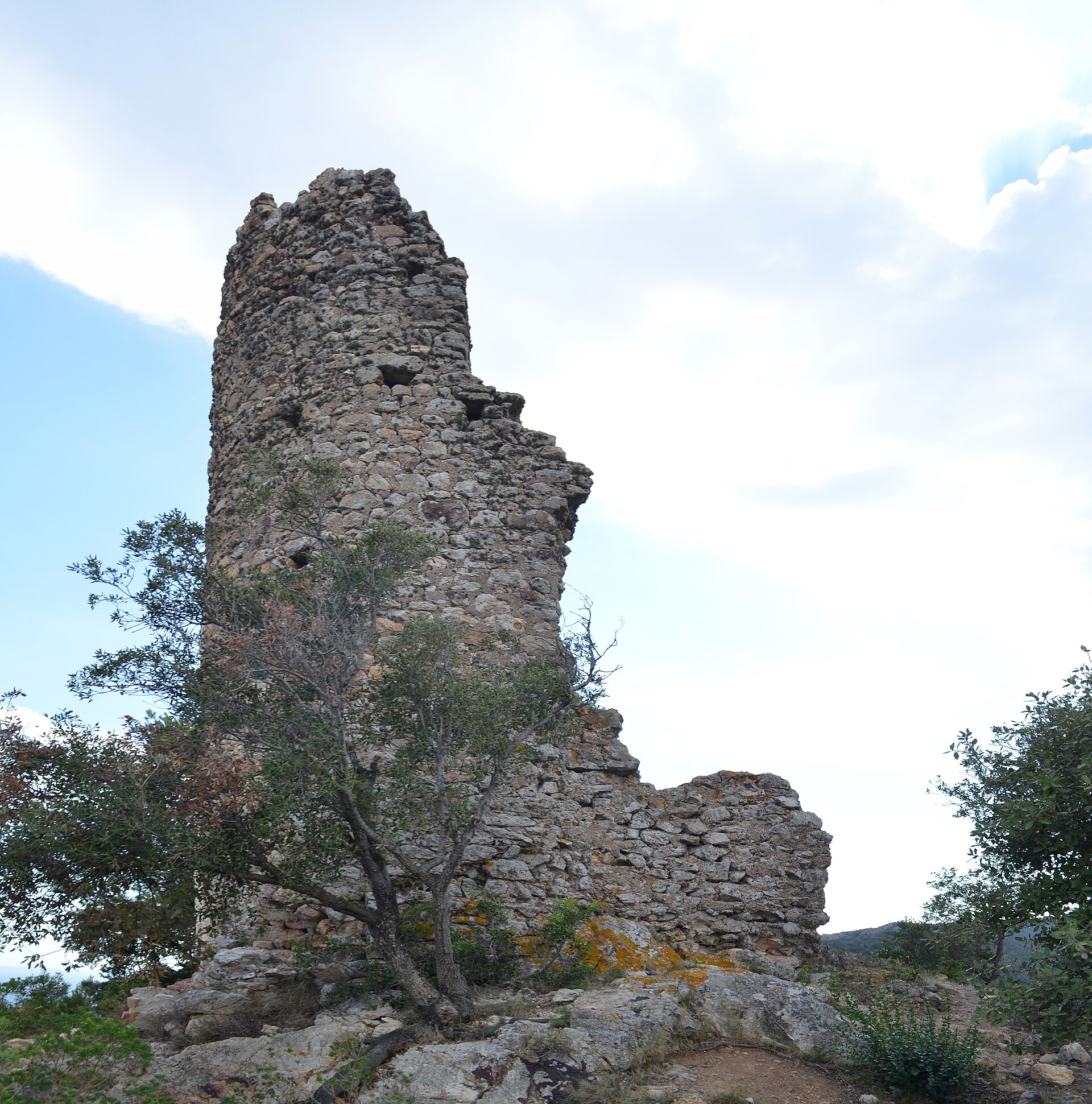
What remains of the original construction are chiefly sections of defensive walls on the eastern side, built directly on the rocky outcrop. The lower parts of these walls still show arrow slits, once used by defenders to keep watch and repel attackers. The tower standing on the same side was entirely rebuilt at a later date, making it difficult today to distinguish which elements belong to the original medieval structure.
The castle remains sit right next to the parish church, a layout typical of Catalan towns, where secular and religious power were historically concentrated on the same hilltop. Walking through this small, historic corner of town offers a sense of what the medieval Aro valley felt like, long before the coast became a popular tourist destination.
How do you get there?
The ruins stand in the very heart of Castell d'Aro, in its oldest, uppermost quarter, right beside the church. This makes the site easy to reach on foot from the town centre, with no long walk or special access required. The surroundings are well suited to a short stroll combining a visit to the castle remains with a look around the historic centre.
When is the best time to visit?
Given its intimate scale and lack of a large covered interior, the site is best visited during quieter hours of the day, when the light falls well on the walls and arrow slits, making them easier to appreciate. Spring and autumn are good seasons for a walk through Castell d'Aro without the crowds typical of peak season on the nearby coast.
Frequently asked questions
How much of the castle has survived? Not a great deal — mainly sections of defensive walls with traces of arrow slits, plus a rebuilt tower. These are remains rather than a complete structure.
What was the castle originally called? Documents from 1041 name it "castrum appelatum Benedormiens", giving rise to its alternative name, Castell de Benedormiens.
Who was responsible for the castle in medieval times? Following the 1041 agreement, the Monastery of Sant Feliu de Guíxols took on guardianship of the fortress along with the duty of defending the Aro valley.
Is there an entrance fee? The ruins stand in public space within the town, next to the church, so they can be viewed freely while walking through Castell d'Aro.
Nearby places

Earn badges for the places you visit
Download NextOnTrip, discover new places and check off your trails.