About this place
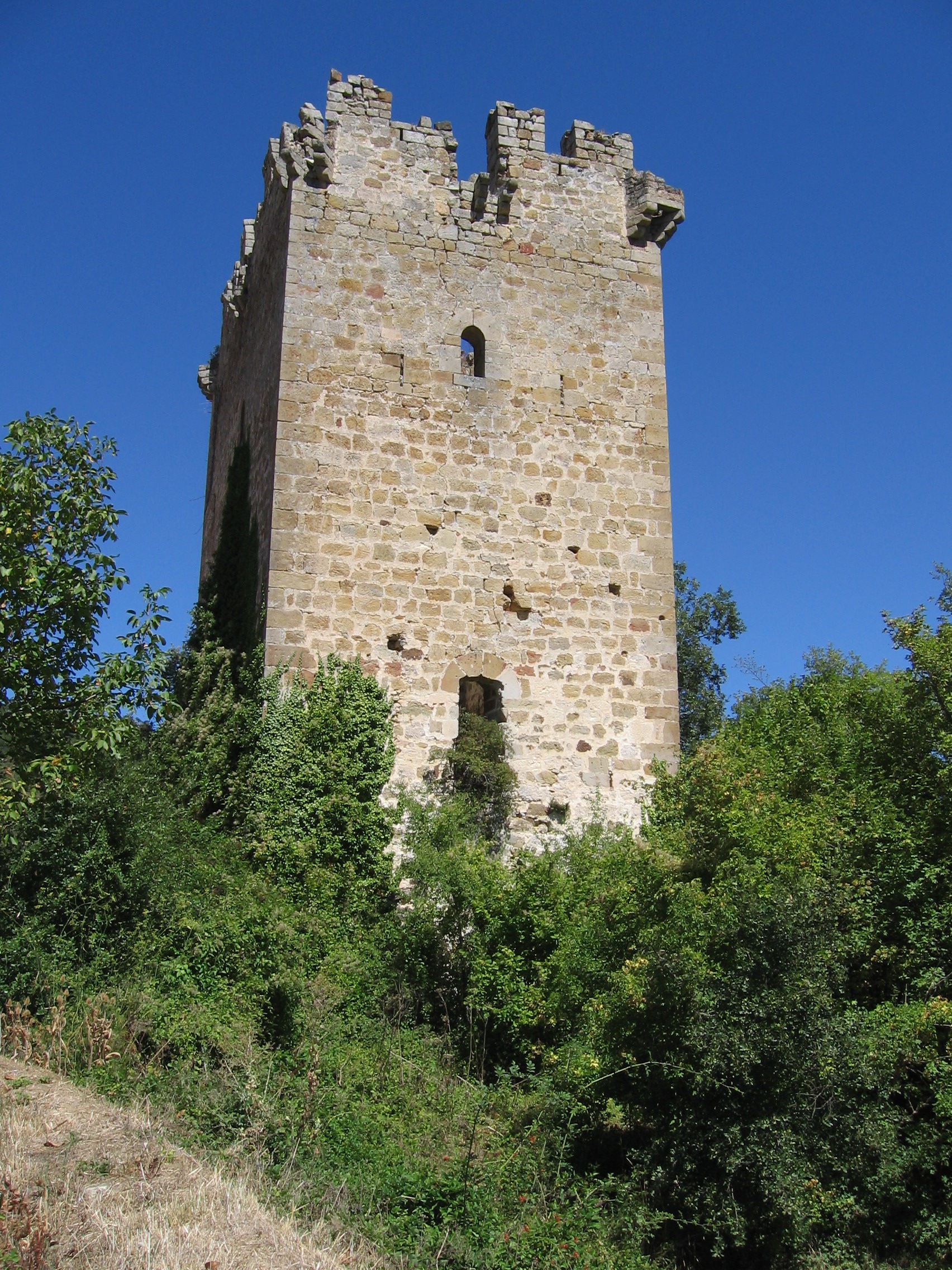
Casa Torre de Calderones y Salazares is a medieval fortified tower standing in Nograro, a village within the municipality of Valdegovía / Gaubea, in the province of Álava, Basque Country. The building is more than six hundred years old and ranks among the best-preserved examples of defensive architecture in the region.
What is this tower?
The structure was built at the turn of the 14th and 15th centuries as a tower-house — a fortified noble residence combining a family home with a defensive stronghold. Buildings of this kind formed the backbone of the social and military structure of Valdegovía in the late Middle Ages: local lineages raised these fortified seats to control the surrounding land and defend their interests against rival families.
The tower passed successively through the hands of the Calderón, Salazar and Salcedo families, which is why its name today strings together all three surnames. Its facades still stand, along with remains of the original crenellated parapet and machicolations — openings projecting from the upper wall that allowed defenders to drop stones or other objects on attackers below.
What will you see on site?
The walls are pierced by a series of defensive openings, ranging from narrow arrow slits to more modest loopholes that let defenders strike attackers from cover. The main floor features a distinctive opening closed with a concave arch, while other parts of the building show pointed-arch openings, a detail typical of the Gothic influence that filtered into military architecture of the period.
The tower did not originally stand alone. On its north, east and south sides it was protected by a barbican — an outer fortification set forward from the main defensive line to slow down and complicate any direct assault on the building. Remains of the walls that once enclosed the whole fortified complex still survive, giving visitors a sense of the scale of the original stronghold.
One of the more intriguing traces of daily life inside the tower is what remains of an oratory dedicated to Saint James (Santiago) — a small private chapel where the residents could carry out their religious practices without ever leaving the fortified compound.
How do you get there?
Nograro sits within the municipality of Valdegovía / Gaubea, in the western part of the province of Álava. This is a rural, sparsely built-up area, set among the valleys and hills typical of this part of the Basque Country. A car is by far the most practical way to get there — local roads connect Nograro with the neighboring villages of the municipality and with the province's main routes.
When should you visit?
Given the nature of the site — a stone, open-air structure with no roofed visitor interiors — spring and autumn make for the best visiting months, offering mild temperatures and the most scenic surrounding countryside. Summers here can bring the higher temperatures typical of Spain's interior, while winters tend to be cooler and damper, in keeping with the climate of northern Spain.
Frequently asked questions
What's the difference between a tower-house and a full castle? A tower-house (Spanish: casa torre) is a smaller, more compact type of fortified noble residence, combining living quarters and military defense within a single vertical structure — unlike sprawling castle complexes with multiple courtyards and outbuildings.
Who owned the tower? The building belonged in turn to the Calderón, Salazar and Salcedo families, a history reflected directly in its present-day name.
What is a barbican and why was it built? A barbican is an outer fortification surrounding the main building, designed to slow and complicate an attack before it could reach the tower's actual walls.
Can you go inside the tower? The site survives mainly as an exterior architectural shell, with visible defensive features — facades, arrow slits and the remains of its surrounding walls — making it a place best appreciated from the outside as a witness to the region's medieval architecture.
Nearby places

Earn badges for the places you visit
Download NextOnTrip, discover new places and check off your trails.