About this place
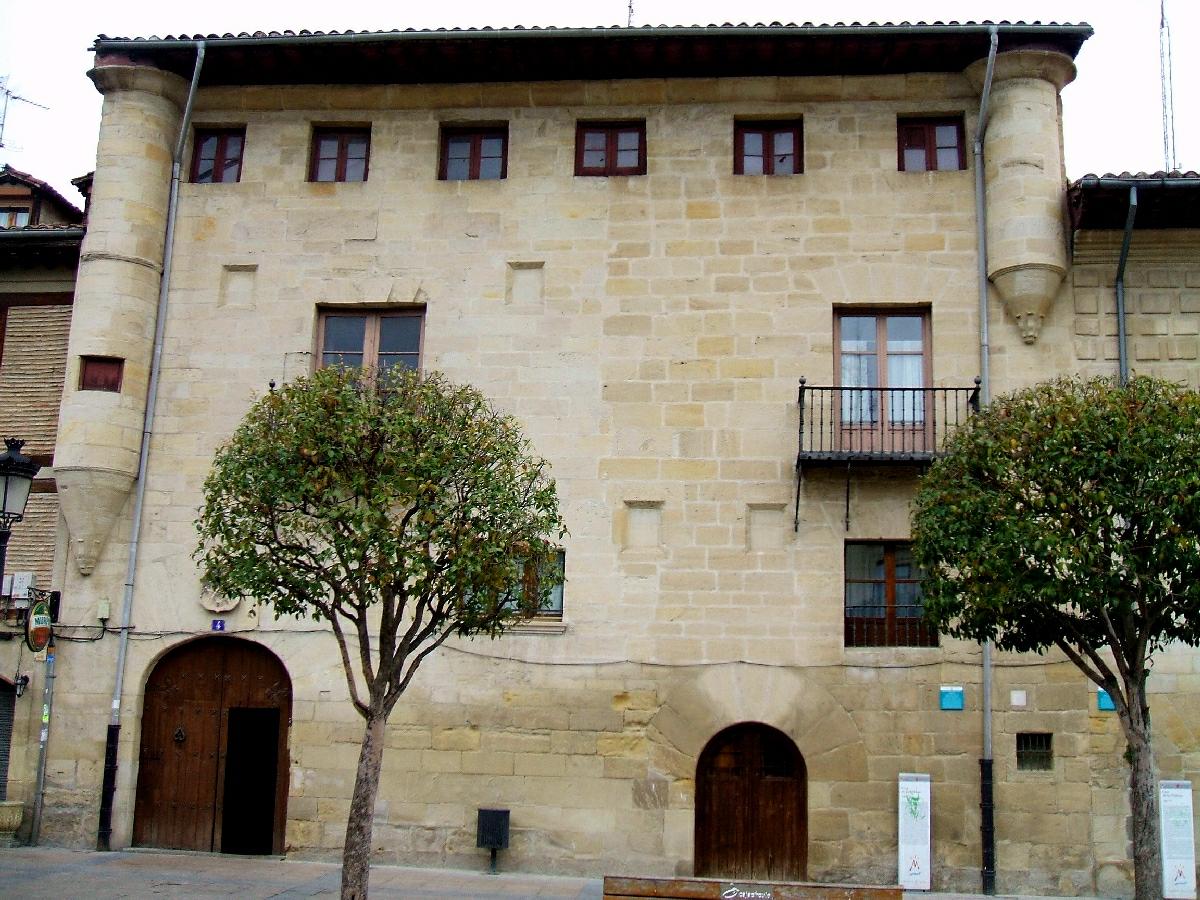
Casa de los Urbina is a Renaissance-Gothic townhouse in Miranda de Ebro, standing on Plaza de España directly across from the town hall. Its stone facade, flanked by two defensive corner towers, sets it apart from the surrounding buildings and hints at a time when even a wealthy family's residence in this part of Castile had to double as a small fortress.
Where does the name come from?
The building went up between 1540 and 1550, commissioned by Captain Juan de Urbina, an officer in the service of Emperor Charles V, and his wife María de Salazar y Frías. The house still carries the founder's surname, and that is how it appears in the town's heritage registers today.
What will you see inside and out?
The layout is rectangular, built around an interior garden — an unexpected patch of open space in the tight fabric of the old town, and a welcome contrast to the stone walls surrounding it. The facade mixes two styles at once: a Renaissance composition with lingering Gothic details, cut from dressed stone and bracketed on both sides by solid, tower-like volumes. That combination of ceremonial front and defensive bulk was typical of 16th-century Castilian noble houses, built at a time when displaying wealth also meant being ready to protect it.
What history happened inside these walls?
Casa de los Urbina has hosted more than one notable traveler. In 1655, Princess Margaret of Savoy-Austria rested here while crossing Spain as part of a royal journey. Five years later, in 1660, King Philip IV and Infanta Maria Theresa of Austria stopped at the house on their way to the French border, where the infanta was to marry Louis XIV. That marriage, sealed by the Treaty of the Pyrenees, ended years of conflict between Spain and France, and Miranda de Ebro — sitting on the route from Madrid toward the border — became one of the stops on that historic journey.
What is the building used for today?
Casa de los Urbina now belongs to the Catholic Church and serves as the parish house attached to the Church of Santa María. It is not a museum piece behind glass but a working building, which is worth keeping in mind when planning a visit: access to the interior may be limited to the parish's operating hours.
How do you get there?
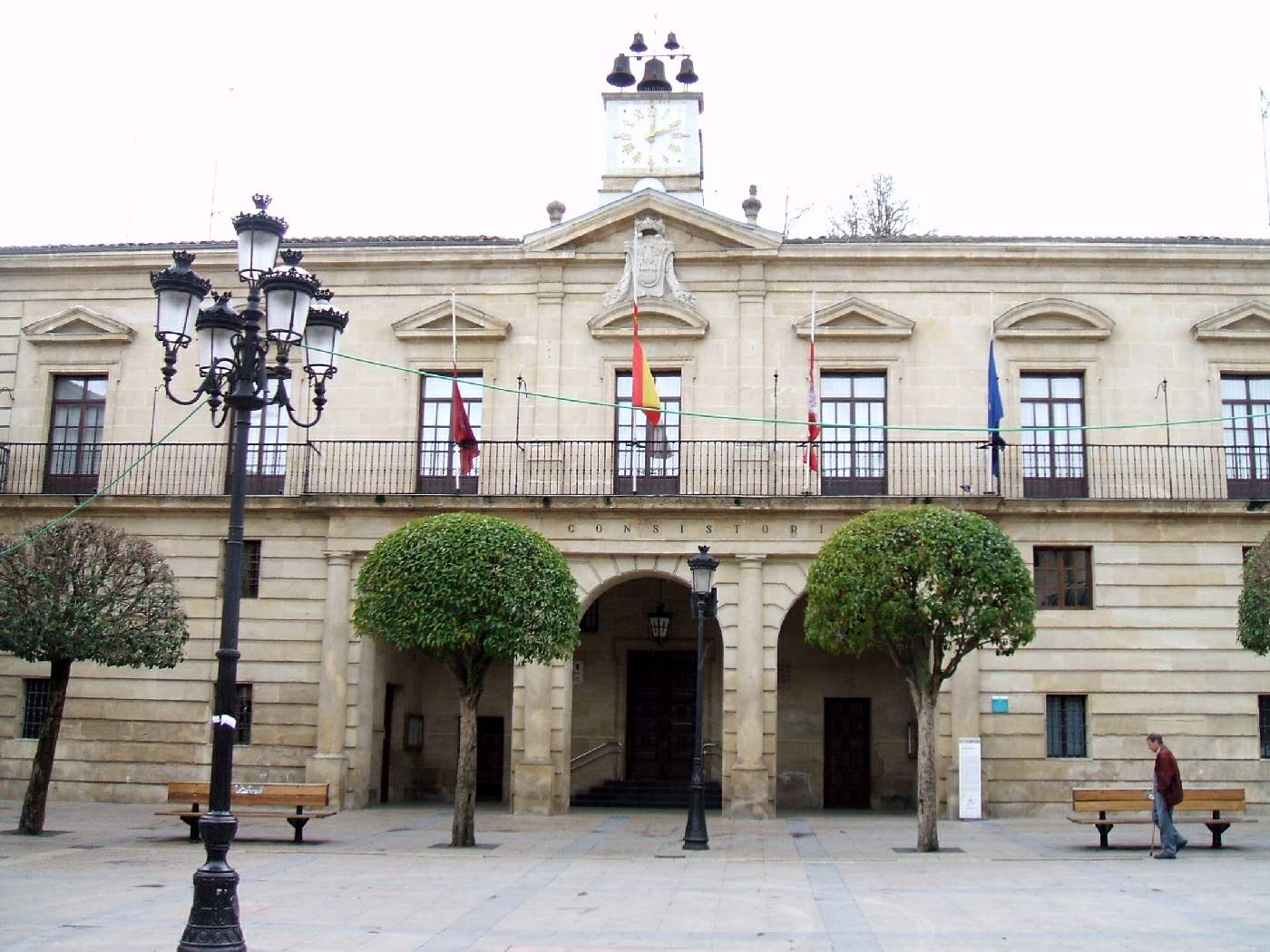
The house stands on Plaza de España, right in the heart of Miranda de Ebro, facing the town hall — one of the clearest landmarks in the old town. Miranda de Ebro sits on a major rail and road junction between Burgos and Vitoria-Gasteiz, so reaching it by train or car from either city takes little time. From the train station, the square is a walk of about fifteen minutes.
When should you visit?
The facade and the square around it can be admired year-round, though a stroll across Plaza de España is at its best in spring and autumn, before the summer heat that settles over the Ebro valley. It is worth pairing the visit with the neighboring Church of Santa María and the rest of the old town's historic buildings.
Frequently asked questions
Can you go inside Casa de los Urbina? The building functions as a parish house, so interior access depends on the parish's current activities; the facade and square can be viewed from outside at any time.
Who built this palace? Captain Juan de Urbina, who served Charles V, together with his wife María de Salazar y Frías, between 1540 and 1550.
Why does the facade have corner towers? They are a remnant of the defensive character of 16th-century Castilian noble houses, which combined a ceremonial appearance with a protective function.
Which notable figures stayed here? Princess Margaret of Savoy-Austria in 1655, and King Philip IV with Infanta Maria Theresa in 1660, en route to her wedding to Louis XIV.
Nearby places

Earn badges for the places you visit
Download NextOnTrip, discover new places and check off your trails.