- Monuments
- Historical Sites
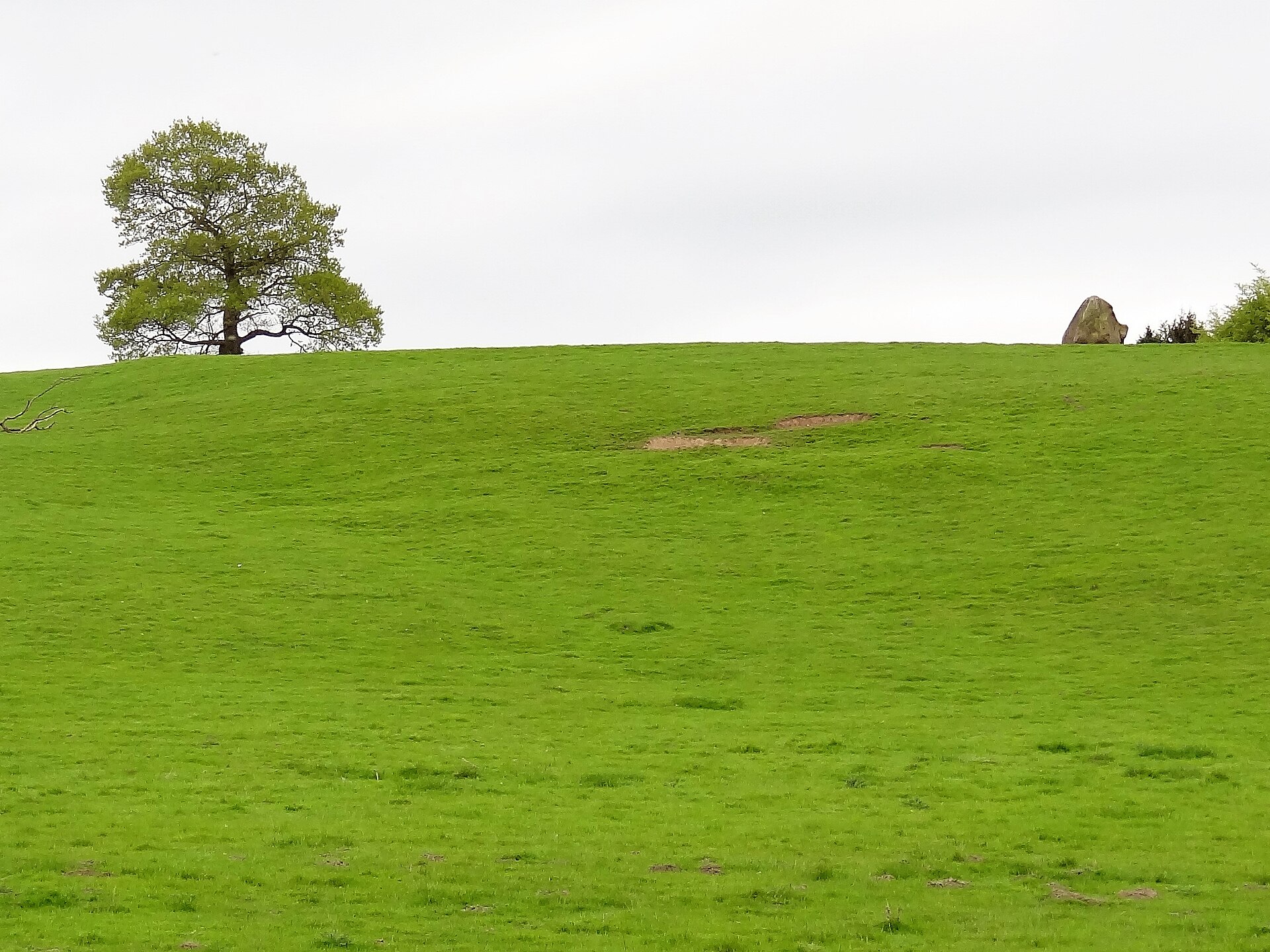
Carved rock known as the Grey Stone in Grey Stone Pasture, Harewood Park, 370m south east of New Bridge
Save this place and discover nearby attractions with NextOnTrip
In the app you can add it to your favorites, see what else is worth visiting nearby on the map, and earn a badge for your visit.
The app is available for iPhone and Android.
About this place
The Grey Stone in Harewood Park is a huge gritstone boulder covered in prehistoric carvings, sitting in a pasture inside Harewood Park, north of Leeds in West Yorkshire. Its formal designation is "Carved rock known as the Grey Stone in Grey Stone Pasture, Harewood Park, 370m south east of New Bridge". It is a petroglyph protected as a scheduled archaeological monument in England.
What is the Grey Stone?
The Grey Stone is a lone block of rock measuring roughly 4.2 x 2.4 x 2.7 metres, set on a low ridge within Grey Stone Pasture. Its surface carries marks cut in the Neolithic or Bronze Age. Carvings of this kind on natural rock are known as rock art, and northern England has many examples.
What can you see on the rock?
Several faces of the boulder are carved. The most distinctive is a small vertical face bearing six concentric rings with no central cup, the hollow normally found in this type of motif. Heritage records also describe a north face with a larger central circle surrounded by smaller ones, compared to a Celtic shield. Researchers of rock art note as many as 18 further cup marks across the surface, catalogued in Boughey and Vickerman's 2003 survey.
How old are the carvings?
Historic England links the carvings to roughly 2000 to 1500 BC, citing worked flints and an axe found nearby. Rock art of this type is generally placed in the Late Neolithic and Bronze Age. One writer suggests that rings lacking a central cup may be later than examples found on the moors, but that is an opinion rather than established fact.
Where does the name come from?
"Grey Stone" is a fairly common name in northern England, often given to boulders that may carry cup-and-ring markings. Some authors also connect this stone with the origin of the name Harewood itself, though that remains a suggestion.
Visiting tips
The rock stands in Harewood Park, about 370 metres south east of New Bridge. The land is part of the private estate around Harewood House, so check current access rules and walking routes before you go. The spot is quiet, with no visitor facilities. Wear sturdy footwear, as the pasture can be muddy, and aim for low sunlight in the morning or late afternoon, when carvings show up best.
Frequently asked questions
Is the Grey Stone protected? Yes. It is listed by Historic England as a scheduled archaeological monument, so do not touch it with tools, take rubbings or mark it in any way.
How old are the carvings? Historic England dates them to around 2000 to 1500 BC, the Late Neolithic or early Bronze Age.
Where exactly is it? In Harewood, in the Leeds district, at about 53.883 N, 1.523 W.
What do the concentric rings mean? Nobody knows for certain. Researchers usually suggest ritual or territorial symbolism, but firm evidence is lacking.
Is it good for a short walk? Yes, if you enjoy archaeology and parkland landscapes. Combine it with a visit to Harewood House and the surrounding paths.
Nearby places


Earn badges for the places you visit
Download NextOnTrip, discover new places and check off your trails.