About this place
Cádiz is a port city on the Atlantic coast of Andalusia, widely regarded as the oldest continuously inhabited settlement in Western Europe. Built on a narrow peninsula surrounded by sea on three sides, it has functioned for millennia as a fortified trading hub and a gateway to the open ocean.
How old is Cádiz, exactly?
Phoenician traders established the settlement around 1100 BC under the name Gadir, making it one of the earliest urban centers in this part of the continent. Over the following centuries the city passed through Carthaginian, Roman, Visigothic and Moorish hands, each leaving traces still visible in its streets today. Some of that history sits literally beneath the surface: a Roman theatre dating from the 1st century AD lies in the city center, only rediscovered in the 1980s.
Why is Cádiz tied to the age of exploration?
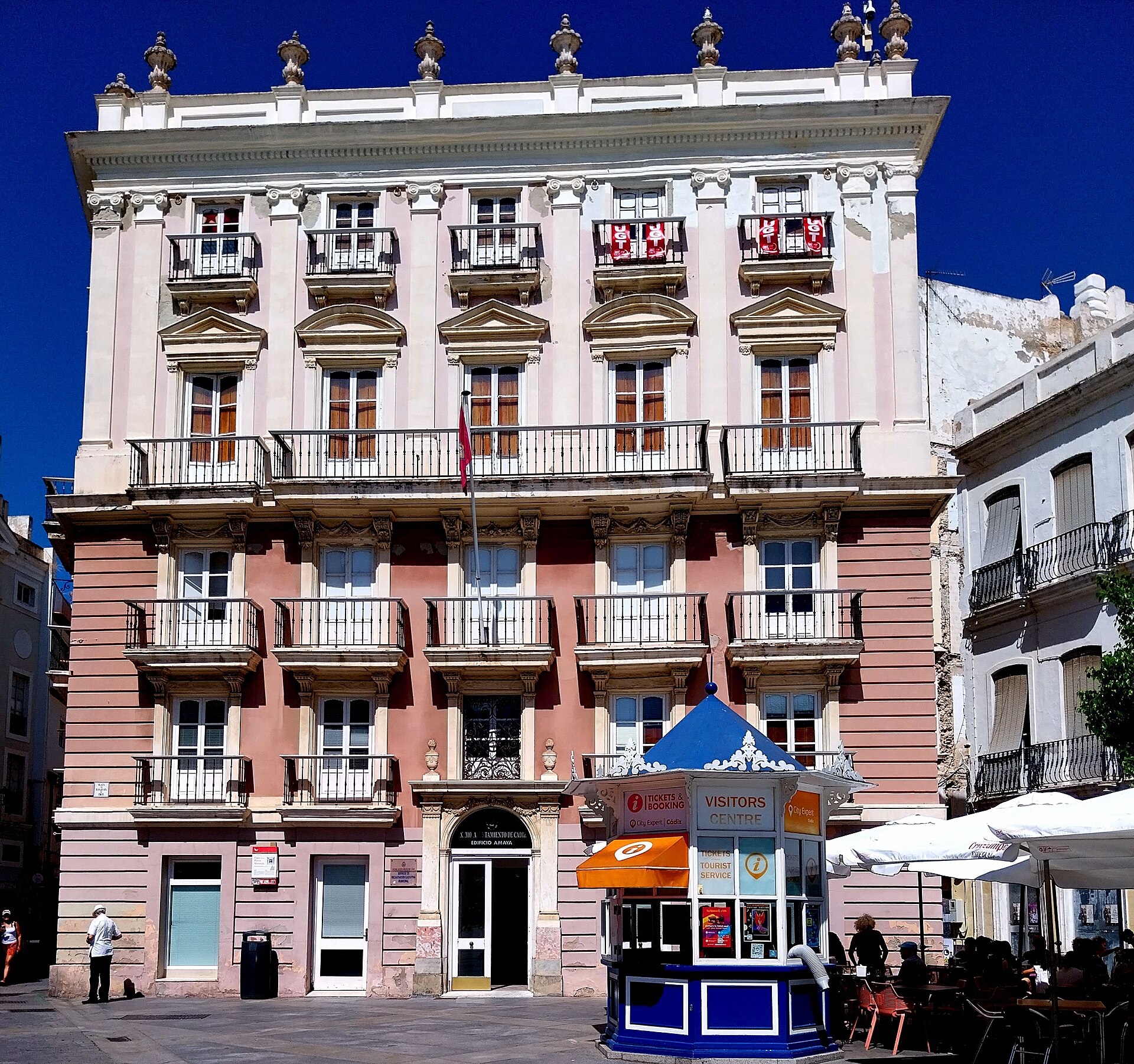
Between the 15th and 18th centuries the port became one of the key departure points for voyages to the Americas — two of Christopher Columbus's expeditions set sail from here. The wealth that flowed back from the colonies in the 18th century reshaped the city, giving rise to the grand townhouses, wide squares and marble-paved streets that still define its old town.
What should visitors see in the historic center?
Cádiz Cathedral, built from the 18th century onward in a mix of baroque and neoclassical style, dominates the seafront and remains the city's most recognizable landmark. Nearby stands Torre Tavira, an 18th-century watchtower originally used by merchants to track ships entering the port; it now houses a camera obscura that projects a live view of the city onto a screen inside a darkened room. The old town itself is a dense grid of narrow lanes, plazas and hidden courtyards best explored slowly, on foot.
What else draws people to the city?
The peninsula is lined with sandy beaches and clear Atlantic water that regularly rank among the cleanest in Europe, giving Cádiz a dual identity as both a historic city and a coastal getaway — mornings for sightseeing, afternoons by the sea. The city is also known for its February carnival, one of the liveliest and most satirical street festivals in Spain, famous for improvised performances, elaborate costumes and sharp political humor.
Frequently Asked Questions
Is Cádiz really the oldest city in Western Europe? It is commonly described as the oldest continuously inhabited city in the region, tracing its origins to the Phoenician colony of Gadir founded around 1100 BC.
What historical layers can visitors actually see? Beyond the 1st-century Roman theatre, the influence of successive civilizations — Carthaginian, Roman, Visigothic and Moorish — is visible in the street layout and surviving structures of the old town.
What is the connection between Cádiz and Christopher Columbus? The port served as the departure point for two of Columbus's voyages to the New World, making it one of the most important cities of the age of exploration.
When is the best time to visit Cádiz? The city reaches peak energy during its February carnival, but its beaches and mild Atlantic climate also make it a strong option throughout the summer months.
Nearby places

Earn badges for the places you visit
Download NextOnTrip, discover new places and check off your trails.