About this place
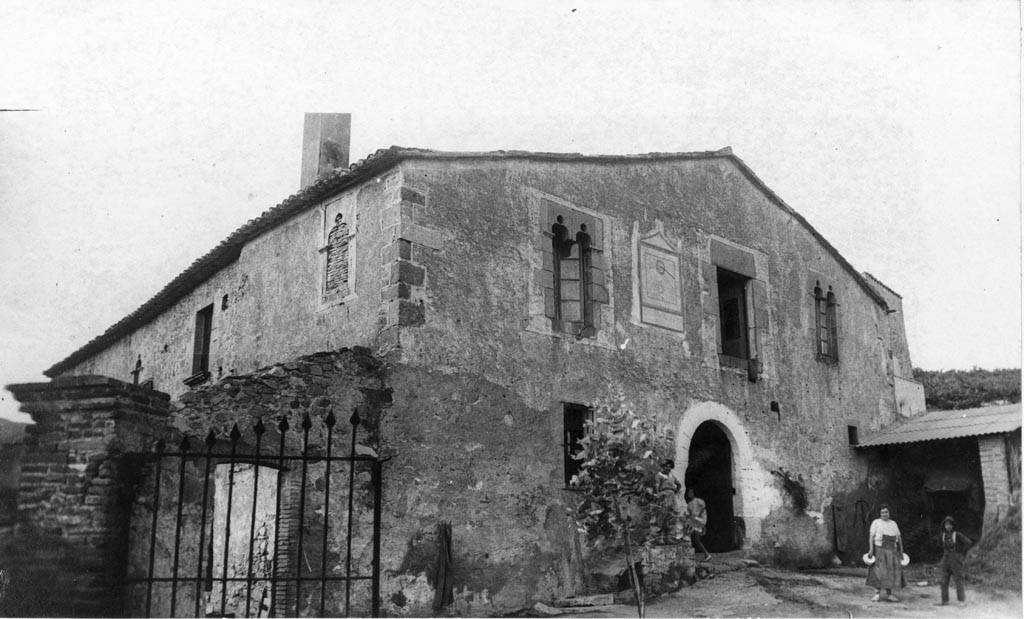
Ca n'Estela is a traditional Catalan masia (farmhouse) standing in the municipality of Tiana, in the Maresme comarca, Barcelona province. The house itself sits on private land, but the fields around it hold something rarely mentioned in mainstream guides to the region: physical traces of a Roman-era settlement dating back roughly two thousand years.
Where exactly is Ca n'Estela?
The farmhouse lies on the plain stretching between Tiana and neighboring Montgat, toward Alella, right in the heart of Maresme — the coastal strip just north of Barcelona. Its coordinates sit around 41.483 N, 2.286 E. The surrounding landscape is classic Maresme: gentle hills, former vineyards and fields, some now left fallow, criss-crossed by dirt tracks.
What has been found near the farmhouse?
About 450 meters west of the main building, along the Camí del Mig d'Alella path, archaeologists identified a site known as Ca l'Estela. A 1985 discovery of common and Roman ceramics, amphorae, roof tiles (imbrex), and Arretine terra sigillata pointed to activity from the Republican and early Imperial Roman periods. Researchers have raised the possibility that a Roman villa once stood in the area, though no walls or foundations have survived to confirm it definitively. A short distance away, within what is now called the Vinya de Ca n'Estela (the vineyard of Ca n'Estela), surface finds — again roof tiles, amphorae, and storage vessels, concentrated mostly in the northern part of the plot — suggest this land once served as the working grounds of a larger Roman estate. Both sites have carried formal protection since July 2002, listed in Catalonia's local cultural heritage register (BCIL, category B). That status is about legal protection, not public access: the fields lie fallow today, with no visible ruins on the surface.
How do you get there?
The easiest approach is on foot or by bike along the Camí del Mig d'Alella, the path connecting Tiana and Alella — a moderately demanding route running through Maresme's fields and scrubland. Since both the farmhouse and the archaeological plots are private property, entry to the building and the dig sites themselves isn't possible; a visit here means walking the public track and taking in the surrounding countryside rather than touring a fenced monument with an entrance fee.
Is there a local legend attached to Ca n'Estela?
Among the stories collected from Tiana's residents is one about Can Estela del Camp, where rabbits went missing from the farmhouse seven nights running. Each time, the house bell rang to summon the sometent — the local militia — but they never arrived quickly enough to catch anyone in the act. It eventually turned out the thief wasn't an outsider at all, but someone who lived on the farm itself.
When should you visit?
Spring and autumn suit this stretch of Maresme best — mild temperatures and fields and former vineyards at their most photogenic. Summer heat makes longer walks harder going, since the open land around Ca n'Estela offers little in the way of shade.
Frequently Asked Questions
Can I go inside Ca n'Estela? No — it's private property, as are the two nearby archaeological plots. A visit is limited to walking the public path through the area.
Will I see Roman ruins on site? Not in the form of standing walls. The archaeological finds — ceramics, amphorae, roof tiles — have gone into research records, and the fields themselves lie fallow today with nothing visible on the surface.
How do I get to Ca n'Estela? On foot or by bike, via the Camí del Mig d'Alella path linking Tiana and Alella.
Is it worth combining with other stops in Tiana? Yes — the area is dotted with other Catalan masies and walking routes through Maresme, so a stop at Ca n'Estela fits naturally into a longer countryside hike around the municipality.
Nearby places

Earn badges for the places you visit
Download NextOnTrip, discover new places and check off your trails.