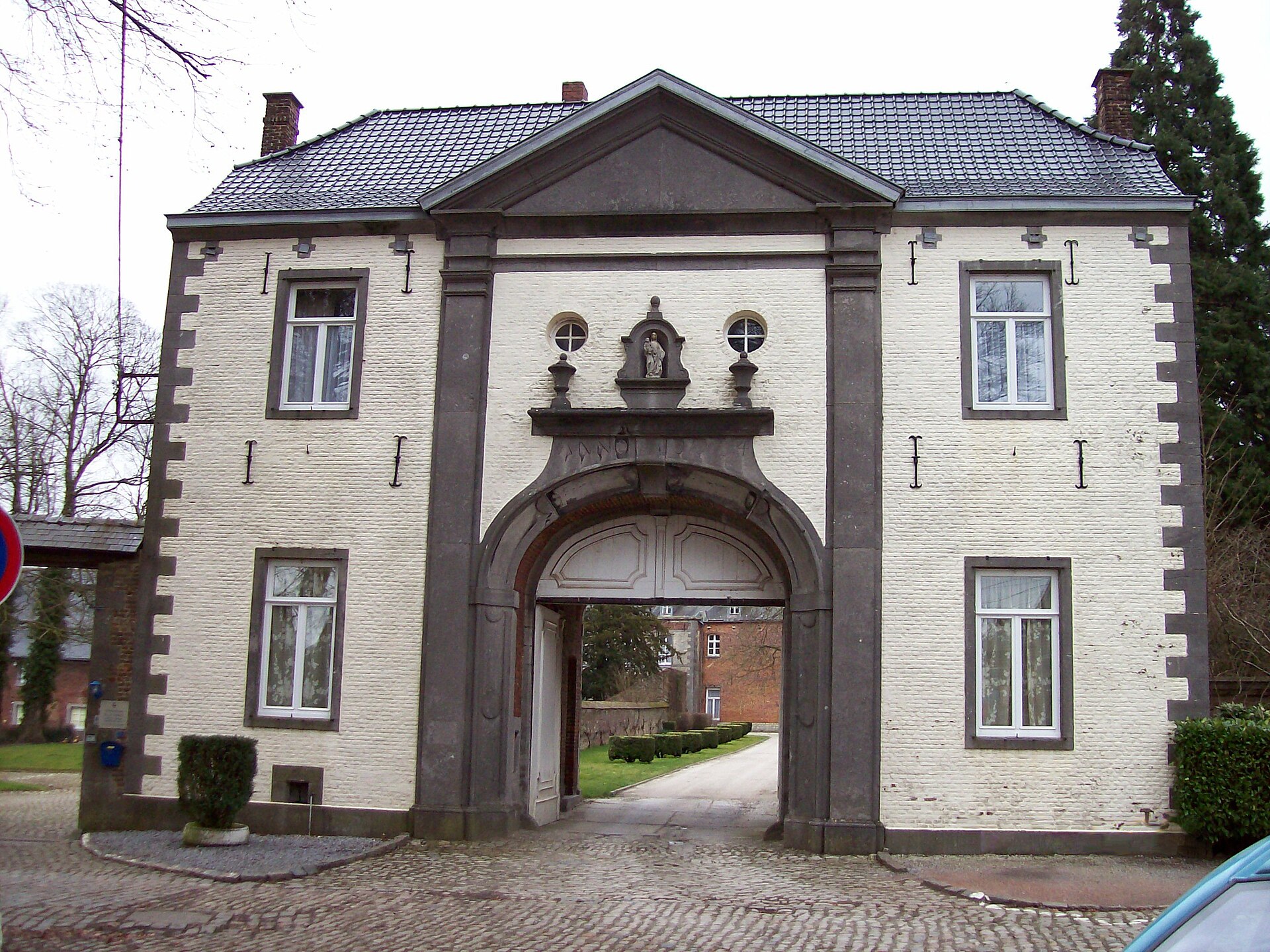
About this place
Bois-Seigneur-Isaac Abbey is a former monastery in Ophain-Bois-Seigneur-Isaac, a village now part of Braine-l'Alleud in Walloon Brabant, a short distance south of Brussels. Over the centuries the site has passed through several religious communities: it began as an Augustinian abbey, later became a Premonstratensian priory dependent on Averbode Abbey, and today is home to the Lebanese Maronite Order.
Where does the name come from?
Local tradition traces the origins of the place to a knight named Isaac who set out on crusade in the 11th century and was taken prisoner by Saracen forces. According to the legend, he was freed after experiencing a vision of the Virgin Mary. On returning home he built a wooden chapel dedicated to Our Lady of Grace and Consolation, housing a statue that was venerated for nearly two hundred years. His name gave the settlement — and later the abbey — the "Seigneur Isaac" part of its name.
What was the miracle that turned the chapel into a pilgrimage site?
The defining event in the site's history is the eucharistic miracle of 5 June 1405. During a mass celebrated by the parish priest of nearby Ittre, a fragment of the consecrated host was discovered on the corporal and reportedly began to bleed when lifted. The bishop of Cambrai, whose diocese covered the area at the time, investigated the reported miracle and in 1410 formally declared it genuine, authorizing the chapel to become a pilgrimage destination.
How did the chapel grow into an abbey?
The growing stream of pilgrims required permanent pastoral care, so in 1413 Augustinian canons regular were brought to the site. The resulting priory quickly gained independence, becoming a full abbey in its own right by 1416. In the same period, on 3 May 1413, the bishop authorized veneration of the corporal as a relic and established an annual procession in honor of the miracle together with a public exposition of the Blessed Sacrament — a tradition that, in various forms, endured for centuries.
What happened to the community afterward?
Following its time as an Augustinian abbey, the site came under the Premonstratensian (Norbertine) order, functioning as a priory dependent on Averbode Abbey in Flemish Brabant. This arrangement, linking a local community to a larger mother abbey, was typical of the Norbertine order and helped preserve continuous religious life through the region's turbulent history.
Who runs the abbey today?
The abbey buildings and grounds are now occupied by the Lebanese Maronite Order, a community rooted in Eastern Christian tradition with a presence in Western Europe. This transition allowed the site to retain a religious function, even under a different liturgical tradition than the one in which it originated.
Why visit Bois-Seigneur-Isaac?
The abbey is a compelling stop for anyone interested in the religious history of Walloon Brabant, combining a crusader legend, a documented eucharistic miracle recognized by church authorities, and centuries of transition between religious communities up to the present Maronite presence. Its proximity to Braine-l'Alleud and to Brussels also makes it easy to combine with a visit to the nearby Waterloo battlefield or other regional sights.
Frequently asked questions
Where exactly is the abbey located? In Ophain-Bois-Seigneur-Isaac, part of the municipality of Braine-l'Alleud in the province of Walloon Brabant, Belgium.
Which order runs it today? The Lebanese Maronite Order.
What is the site historically known for? The legend of the knight Isaac and the eucharistic miracle of 1405, recognized as authentic by the bishop of Cambrai in 1410.
Nearby places

Earn badges for the places you visit
Download NextOnTrip, discover new places and check off your trails.