About this place
The Great Beguinage of Sint-Elisabeth in Sint-Amandsberg is one of the best-preserved beguinages in Flanders and the only neo-Gothic beguinage anywhere in the region. Spread across roughly eight hectares on the outskirts of Ghent, just beyond the historic city centre, it has been part of the UNESCO World Heritage List since 1998, listed together with twelve other Flemish beguinages.
Where did Ghent's beguinages come from?
The story begins in 1234, when Countess Joan of Constantinople laid down the rule and statutes for a community of beguines, followed two years later by the founding of a chapel in an area known as "het Broek". Beguines were laywomen who never took permanent religious vows — often poor women, or daughters from middle-class and noble families, who chose to live communally within an enclosed settlement devoted to prayer and mutual support. For centuries, Ghent was home to two such beguinages sharing common roots, developing side by side until the mid-19th century.
Why did the beguines move to Sint-Amandsberg?
The original Saint Elizabeth Beguinage, located near the Rabot district, gradually found itself swallowed up by the expanding city of Ghent, which pressed in from every side and eroded the space and calm the community needed. Their rescuer was Duke Engelbert of Arenberg, whose support made it possible to build an entirely new, spacious settlement outside the city. Construction ran from 1873 to 1874, after which the old beguinage in the centre was abandoned for good.
What did the move look like?
In 1874, around 700 beguines relocated to their new home in a striking procession of carriages — an event that must have drawn considerable attention from onlookers across Ghent. At the new site, eighty houses and fourteen convents went up along deliberately laid-out, winding streets. The whole settlement was enclosed by a wall with two imposing gates, effectively forming a self-contained town within a town.
What sets this beguinage apart from the others?
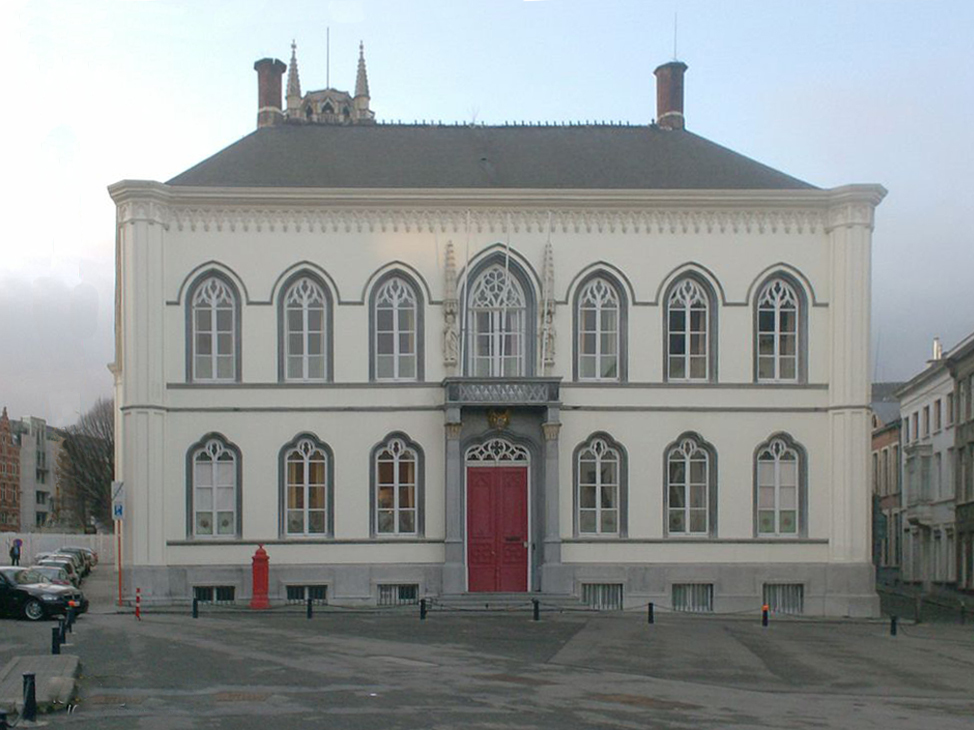
Its architectural style is pure neo-Gothic — a genuinely unique feature, since no other beguinage in Flanders was designed in this style. The layout of curving, picturesque streets, brick-fronted houses and convents, and the fully walled perimeter make walking through the site feel like stepping back into a 19th-century religious community frozen in place.
What protected status does the Great Beguinage hold today?
On 21 April 1994, the entire complex received full legal protection, both as a monument and as a protected townscape. A few years later, on 2 December 1998, UNESCO added it to the World Heritage List as part of a collective inscription covering thirteen Flemish beguinages — recognition of the exceptional historical and architectural value of this uniquely Flemish form of settlement.
Frequently asked questions
Can visitors walk around the Great Beguinage of Sint-Elisabeth? Yes, the grounds are open to the public for walking tours. Strolling among the brick houses and quiet lanes gives a strong sense of the original community's atmosphere, though many buildings are now private residences and their interiors are not open to visitors.
How does this beguinage differ from the Old St. Elizabeth Beguinage in central Ghent? Both share roots going back to the 13th century, but the Great Beguinage in Sint-Amandsberg is the newer, neo-Gothic settlement built between 1873 and 1874, after the original beguinage in the city centre was abandoned due to pressure from Ghent's expanding urban development.
Why is this beguinage on the UNESCO World Heritage List? The 1998 inscription covers thirteen Flemish beguinages collectively, recognising a distinctive, secular model of communal living for women practised in the region since the Middle Ages — the Great Beguinage stands out among them for its neo-Gothic architecture.
Nearby places

Earn badges for the places you visit
Download NextOnTrip, discover new places and check off your trails.