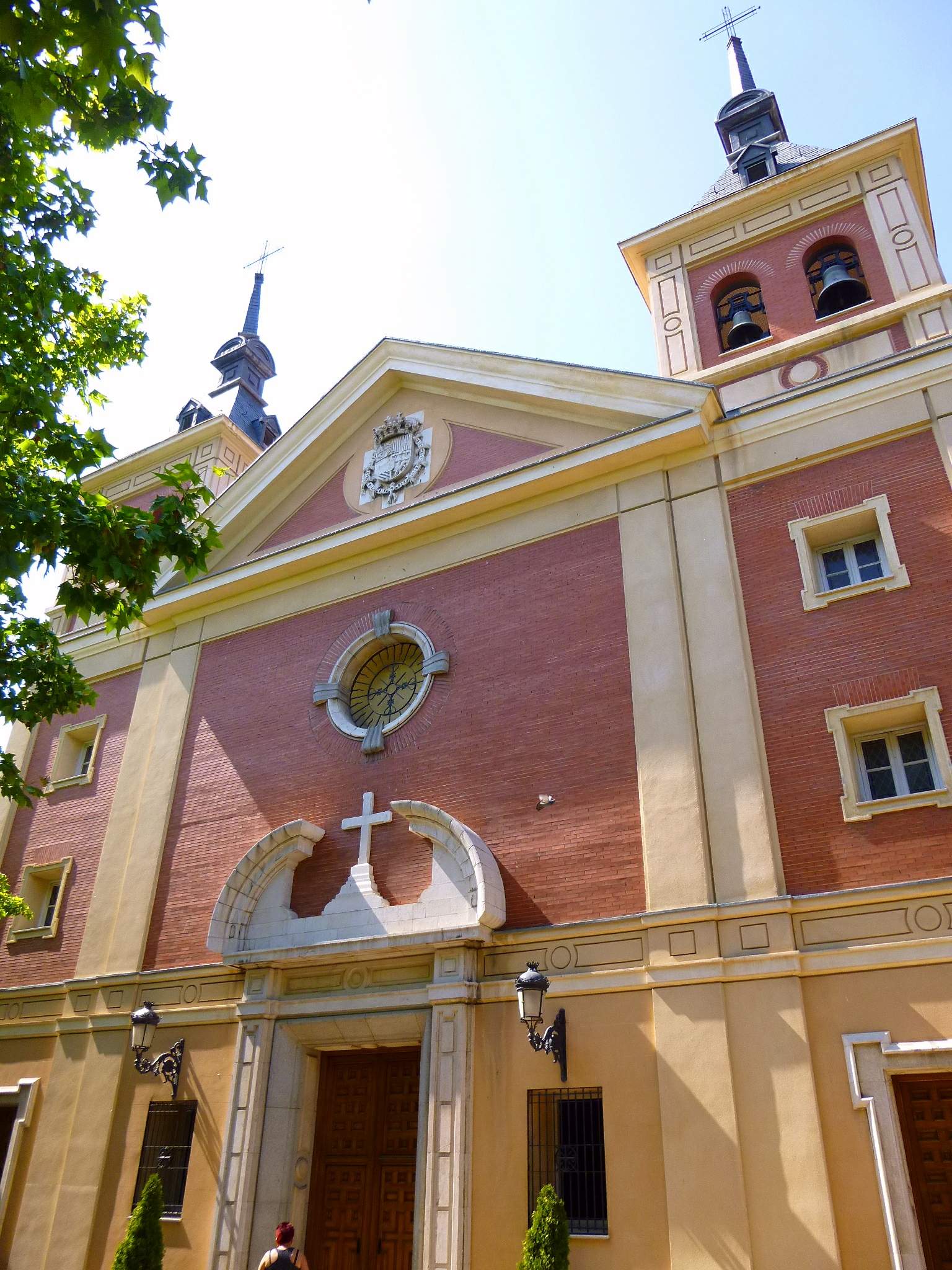
About this place
The Royal Basilica of Our Lady of Atocha stands in central Madrid, on Avenida de la Ciudad de Barcelona 1, right next to Atocha railway station. The church has been entrusted to the Dominican order for centuries, making it one of the longest-running monastic sanctuaries in the Spanish capital.
How old is this sanctuary?
The site's religious history stretches back to the Middle Ages. The earliest references to a hermitage at Atocha date from the 12th century, and devotion to the image kept there is documented in the centuries that followed. By the 16th century the original hermitage had fallen into disrepair, so Friar Juan Hurtado de Mendoza, confessor to Emperor Charles V, arranged for it to be rebuilt as a much larger church. In 1523, Pope Adrian VI granted custody of the new sanctuary to the Dominican order, which has maintained it ever since.
Who is Our Lady of Atocha?
At the heart of the sanctuary is the image of Our Lady of Atocha, one of Europe's so-called Black Madonnas — statues whose dark colouring has drawn devotion for centuries. She is regarded as Madrid's oldest patroness, with mentions of miracles attributed to "Our Lady of Tocha" appearing as early as the 13th century in the Cantigas of Alfonso X the Wise. For generations, pilgrims have come to the church seeking her intercession, and the accumulated tradition of miracles helped cement her place at the centre of the city's religious life.
What is the basilica's connection to the Spanish monarchy?
The sanctuary has a long-standing bond with the Spanish crown. In 1643, King Philip IV, a devoted follower of Our Lady of Atocha, formally proclaimed her protector of the royal family and of the Spanish monarchy as a whole. That royal patronage turned the church into a place regularly associated with the court and its ceremonies, and it remains a distinctive part of the basilica's identity among Madrid's churches to this day.
What can visitors see inside?
The building standing today is not the original 16th-century church — the historic structure was badly damaged during the upheavals of 20th-century Spain and had to be rebuilt in the decades that followed, while continuing to serve as Madrid's principal Marian shrine. Inside, the main focus remains the venerated image of Our Lady of Atocha, set within the richer decorative style typical of Dominican churches, alongside a sense of uninterrupted devotion spanning centuries. Its location, right on one of Madrid's main thoroughfares and a short walk from Atocha station, makes it easy to combine a visit with a stroll through the historic centre, close to landmarks such as the Royal Botanical Garden and Retiro Park.
When is the best time to visit?
As an active parish church, the basilica follows its own liturgical calendar, with Mass and services held throughout the year and Marian feast days marked with particular solemnity. Visitors mainly interested in the history and religious art are better off coming outside service times, on weekdays, when the interior is quieter. It is worth remembering that this remains a living place of worship rather than a purely tourist attraction, which shapes how a visit should be approached.
Frequently Asked Questions
Who looks after the Basilica of Our Lady of Atocha? The Dominican order has been responsible for the church since 1523, when Pope Adrian VI granted them custody of the sanctuary.
Why is Our Lady of Atocha so significant for Madrid? She is considered the city's oldest patroness, with devotion documented since the Middle Ages and miracle accounts recorded as far back as the 13th-century Cantigas of Alfonso X the Wise.
What is the basilica's link to the Spanish royal family? In 1643, King Philip IV declared Our Lady of Atocha protector of the royal family and the Spanish monarchy, a status that has shaped the church's identity ever since.
Is the basilica close to central Madrid? Yes — it sits on Avenida de la Ciudad de Barcelona, right beside Atocha railway station and within easy walking distance of the city's central districts.
Nearby places

Earn badges for the places you visit
Download NextOnTrip, discover new places and check off your trails.