About this place
Barry is an abandoned troglodyte village carved into a rocky plateau above Bollène, in the northern Vaucluse. Rather than being built up from the ground, its houses were hollowed straight out of soft limestone, and today they stand empty among scrub and ruins on a hillside overlooking the surrounding countryside.
Where does this village come from?
The Barry plateau was occupied almost continuously from prehistoric times. Some historians identify the site with Aeria, the main settlement of the Tricastini, a Celto-Ligurian people described by the Greek geographer Strabo around the time of the Roman conquest of Gaul. Numerous Roman coins and medals found nearby support the idea of ancient occupation, as does the neighbouring hamlet of Saint-Pierre-de-Sénos — now part of Bollène — which once held a Roman town called Senomagus.
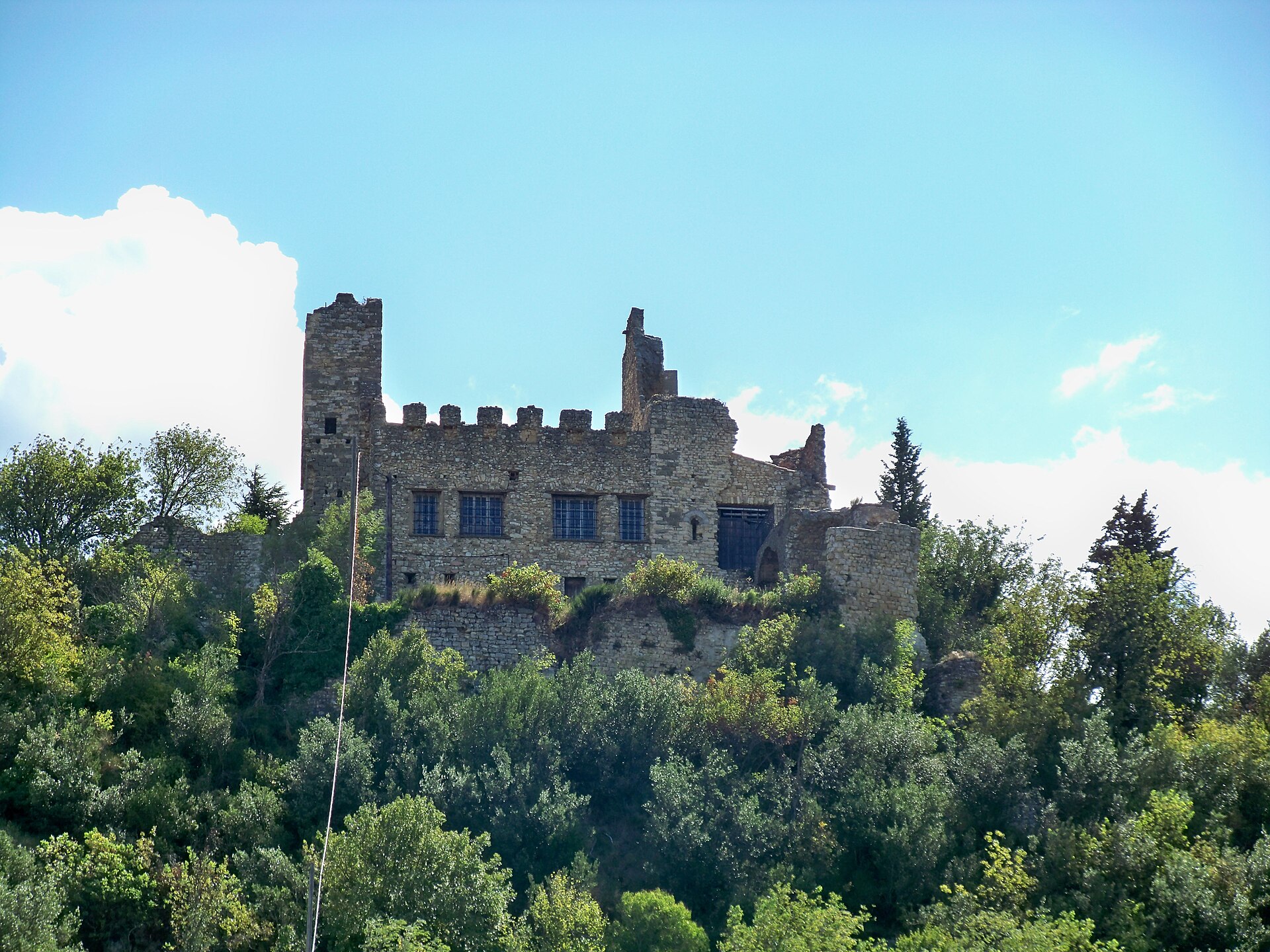
In the 11th and 12th centuries a fortress was built on the rocky outcrop; its remains, known as the Château de Chabrière, can still be seen along the hiking trail today. The troglodyte village itself — houses cut into the soft limestone locally called "safre" — was inhabited from the 17th to the 19th century, reaching its peak in the 18th century: a 1763 census counted 88 households and 478 residents.
Why was it abandoned?
Toward the end of the 19th century, residents grew increasingly alarmed by frequent collapses of poorly supported dwellings — there were cases of people being buried inside their own homes — and gradually resettled in the nearby hamlet of Saint-Pierre-de-Sénos. The village emptied out slowly, house by house, until a single resident remained, treated almost as a hermit; he only left Barry in 1976.
What will you see there?
Inside the rock-cut houses, traces of daily life are still visible: alcoves once used as wine vats, cupboards, fireplaces, wash basins and water cisterns, all carved from the same block of stone as the walls. Walking through the ruins also leads up to the remains of the medieval Château de Chabrière at the top of the hill.
Since 2020, restoration work worth more than 2.4 million euros has been underway, supported by the Fondation du Patrimoine and the local association Barry-Aeria, which is dedicated to protecting the whole massif.
How do you get there and visit?
Entering the houses themselves has been forbidden since a 2009 municipal order, due to the risk of falling rocks. That doesn't mean the village is off-limits, though: visitors can freely walk the marked hiking trails that run alongside and through the old settlement, offering close-up views of the ruins without stepping inside.
Two route options are available. The shorter one gives you a viewpoint over the village and takes you past the unrestored house ruins. The longer one continues up to the ruins of the Château de Chabrière. Parking along the road is free — arrive early in high season, as space is limited.
When should you visit?
Spring and autumn offer the best conditions, with milder temperatures and rock paths that aren't baking under the Provençal sun. In summer, an early morning visit is best, both to beat the heat and to secure a parking spot.
Frequently Asked Questions
Can you go inside the houses at Barry? No — a municipal order in place since 2009 bans entry due to the risk of rockfall. Visits are limited to the marked trails around and through the site.
How long does a visit take? The shorter loop takes around an hour; the longer one, which continues to the Château de Chabrière ruins, takes longer depending on your pace.
Is there an entrance fee? No, access to the trails and views of the village is free, and roadside parking is also free of charge.
Is Barry the same as the ancient city of Aeria? Some historians identify the Barry plateau with Aeria, the former Tricastini capital mentioned by Strabo, though there is no conclusive archaeological proof either way.
Nearby places

Earn badges for the places you visit
Download NextOnTrip, discover new places and check off your trails.