About this place
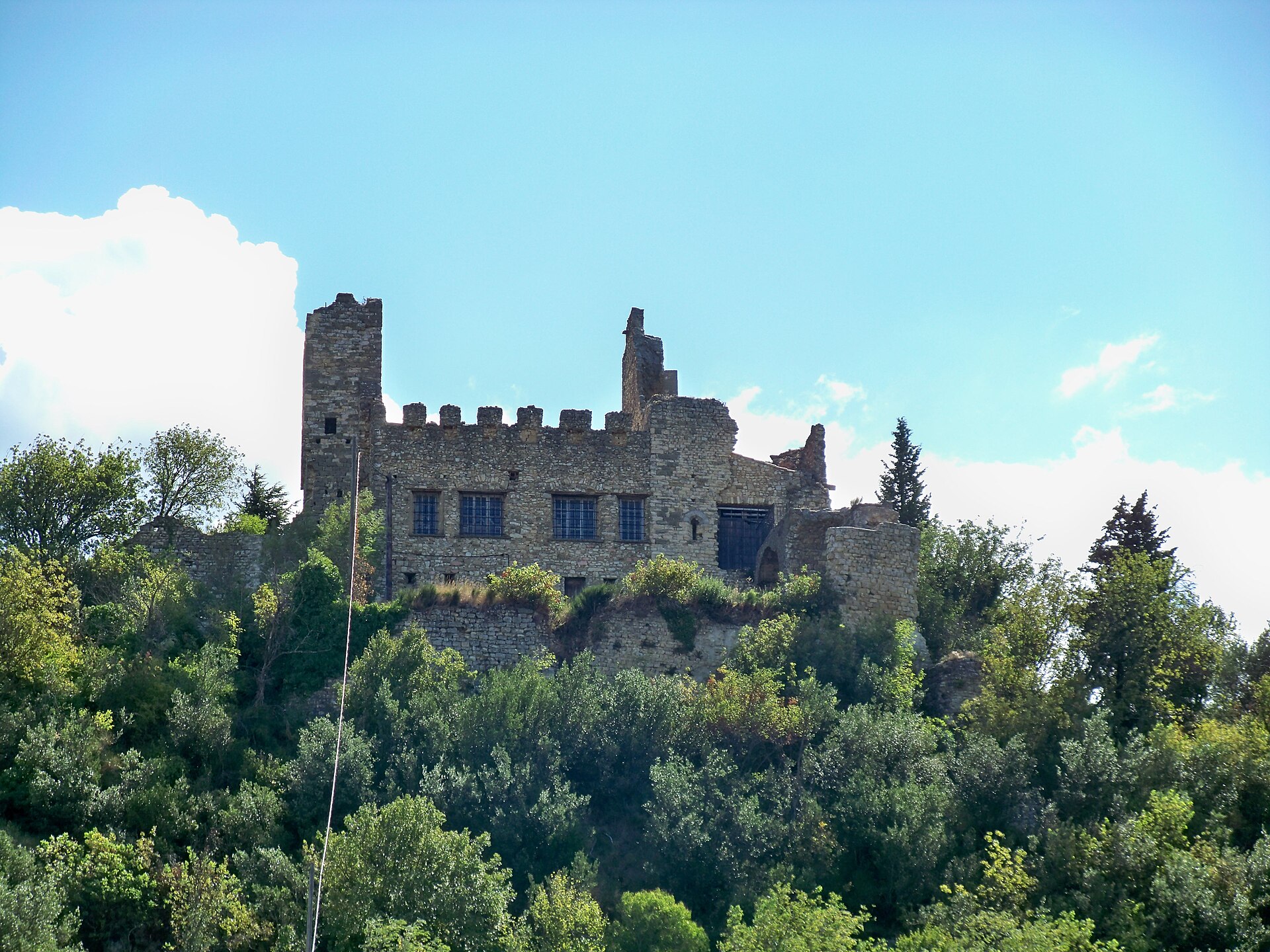
Château de Mondragon sits on a hilltop above the village of Mondragon, in the Vaucluse department of Provence, on the stretch of the Rhône valley between Bollène and Orange. Its elevated position once allowed it to keep watch over both the river and the road running alongside it.
How old is the château, really?
Traces of fortification on this hill go back as far as the 10th century, but the structure visible today largely dates from the 12th century. Two towers from that period still stand, along with the remains of the crenellations that once topped four additional towers forming the castle's defensive ring.
A key moment in its history came in 1114, when Emperor Conrad II granted Mondragon to the Archbishop of Arles, along with full judicial rights over the territory and the title of Prince of the Holy Empire. From then on the castle served first the local lords and later the archbishops themselves as a residence and seat of power.
Why is so much of it in ruins?
The castle didn't survive its centuries intact. It was destroyed once in 1217, and again in 1562, this time by Huguenot forces during the Wars of Religion. It has remained in that partially ruined state ever since — which is exactly how visitors see it today, standing watch over the village below.
Can you actually go inside?
No. The château is privately owned and closed to visitors on the inside. That said, it's easy to enjoy from the outside: thanks to its hilltop position, it's visible from many points in and around the village, making it a natural photo stop even without setting foot past the gate.
What else is worth seeing in the village itself?
Mondragon isn't just a silhouette on a hill. Fragments of the medieval town walls still run through the village, and on rue Jean Jaurès stands the Romanesque Pénitents chapel, topped with its own bell tower. A short walk away is the 14th-century Hôtel de Suze, notable for its Renaissance facade.
The village also carries a local legend about a dragon, known as "le Drac," said to have once haunted the banks of the Rhône and lurked in the cliffs above the settlement. Every year on May 10 and 11, the Fête du Drac brings this legend to life with a lively, medieval-themed festival that draws visitors from across the region.
Hikers will find Mondragon a convenient starting point too, with a range of marked trails suited to both casual walkers and more experienced hikers heading out toward the surrounding Grès hills.
Frequently asked questions
Is Château de Mondragon open to the public? No, it's privately owned and cannot be visited inside. You can only see it from the outside, from the village and the surrounding area.
How old is the château? The site's first fortifications date to the 10th century, while the structure standing today was largely built in the 12th century.
Why does the château look ruined? It was destroyed twice, first in 1217 and again in 1562 during the Wars of Religion, when Huguenot forces attacked it. It has remained in that state since.
What else can you do in Mondragon besides viewing the château? Visit the Romanesque Pénitents chapel, admire the 14th-century Hôtel de Suze, and if your timing allows, catch the Fête du Drac dragon festival held every May.
Nearby places

Earn badges for the places you visit
Download NextOnTrip, discover new places and check off your trails.