Save this place and discover nearby attractions with NextOnTrip
In the app you can add it to your favorites, see what else is worth visiting nearby on the map, and earn a badge for your visit.
The app is available for iPhone and Android.
About this place
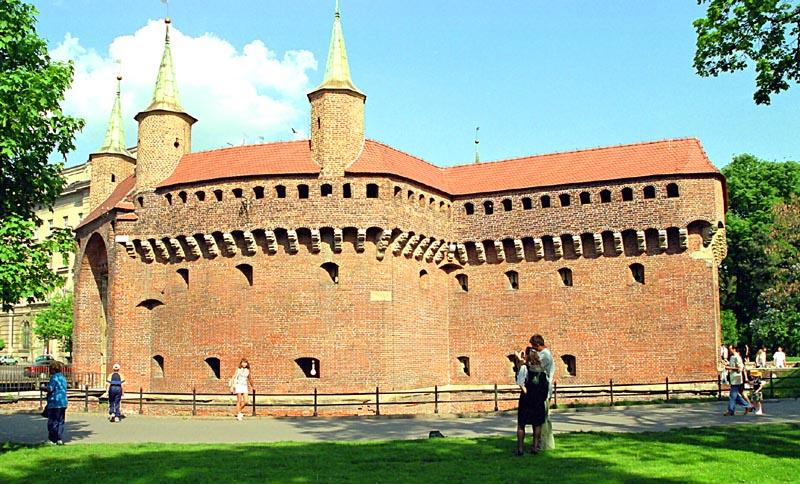
The Kraków Barbican (Barbakan), locally nicknamed the Rondel, is a late Gothic fortification built in 1498–1499 in front of St Florian's Gate, on the northern edge of the Old Town. It was the strongest point of the city's defences and is now one of only three Gothic barbicans surviving in Europe, alongside those in Carcassonne and Görlitz. Kraków's is the largest and best preserved.
What is a barbican, and what was this one for?
A barbican is a free-standing outwork placed in front of a city gate. Its purpose was to stop attackers before they reached the walls and to hit them with fire from several levels at once. Kraków's Barbican guarded St Florian's Gate, to which it was joined for centuries by a fortified passage known as the "neck". From 1566 it also protected the approach to the City Arsenal, built close by.
Why was it built when it was?
After King John I Albert's failed Bukovina campaign of 1497, Poland faced the threat of retaliatory raids by Wallachians, Turks and Tatars. Kraków therefore reinforced the northern stretch of its defences, always the most exposed. According to the Codex of Balthasar Behem, the king laid the foundation stone himself and followed the works closely.
What does the Barbican look like?
The building is laid out as an incomplete circle, 24.4 m across inside the walls and more than 30 m on the outside. Up to the former waterline of the moat the walls are limestone; above that they are brick. At their thickest they exceed 3 m. Four tiers of gunports, 130 in all and arranged in a staggered pattern, were designed for handheld firearms. The top carries machicolations, projecting galleries with openings in the floor, and above them rise seven lookout turrets, alternately round and octagonal. A vaulted underground passage led to sally ports for the garrison.
A moat 26 m wide and up to 6 m deep once surrounded the fortress; it was later filled in as the city grew. The gate facing Kleparz led onto a bridge, part of which could be raised.
What part did it play in history?
The Royal Route ran through the Barbican, leading from St Florian's Collegiate Church up to Wawel. Kings, envoys and victorious commanders entered the city this way, and the building became known as the Gate of Glory (Porta Gloriae). In 1587 its defenders drove off the troops of Archduke Maximilian of Habsburg, who was fighting for the Polish crown. During the Swedish invasion in 1655 the garrison surrendered, short of ammunition and food. In 1768 the Bar Confederates used it in their fight against Russian forces.
How did it survive?
After an 1806 decree by Emperor Francis II, Kraków began demolishing its walls. In 1817 Feliks Radwański, an architect and senator in the Free City of Kraków, secured the survival of the Barbican and the northern section of the fortifications. The "neck" linking it to the gate was removed when the Planty were laid out.
What else is nearby?
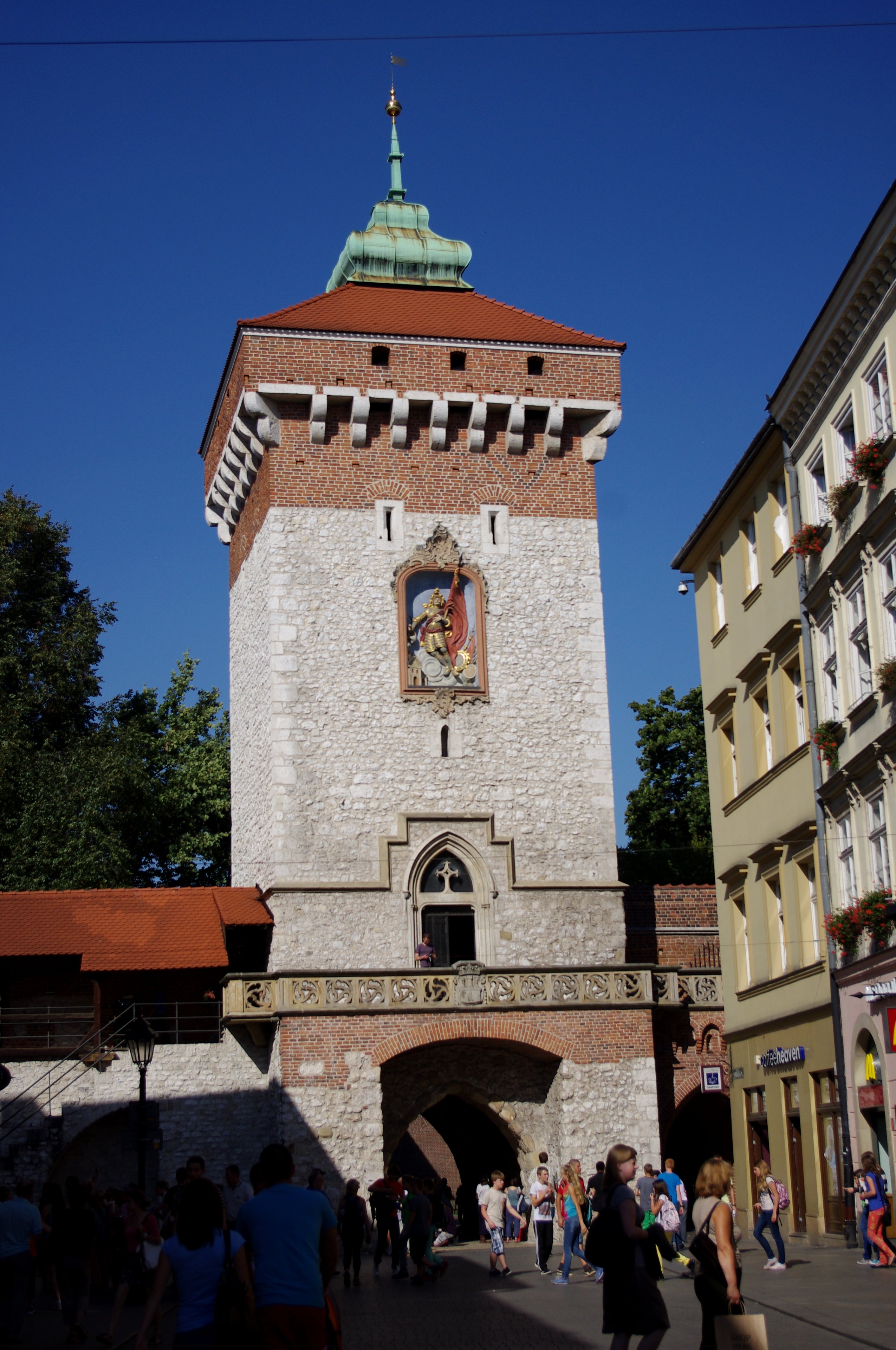
- St Florian's Gate, a Gothic gate tower first recorded in 1307.
- The city walls with three towers, adjoining St Florian's Gate.
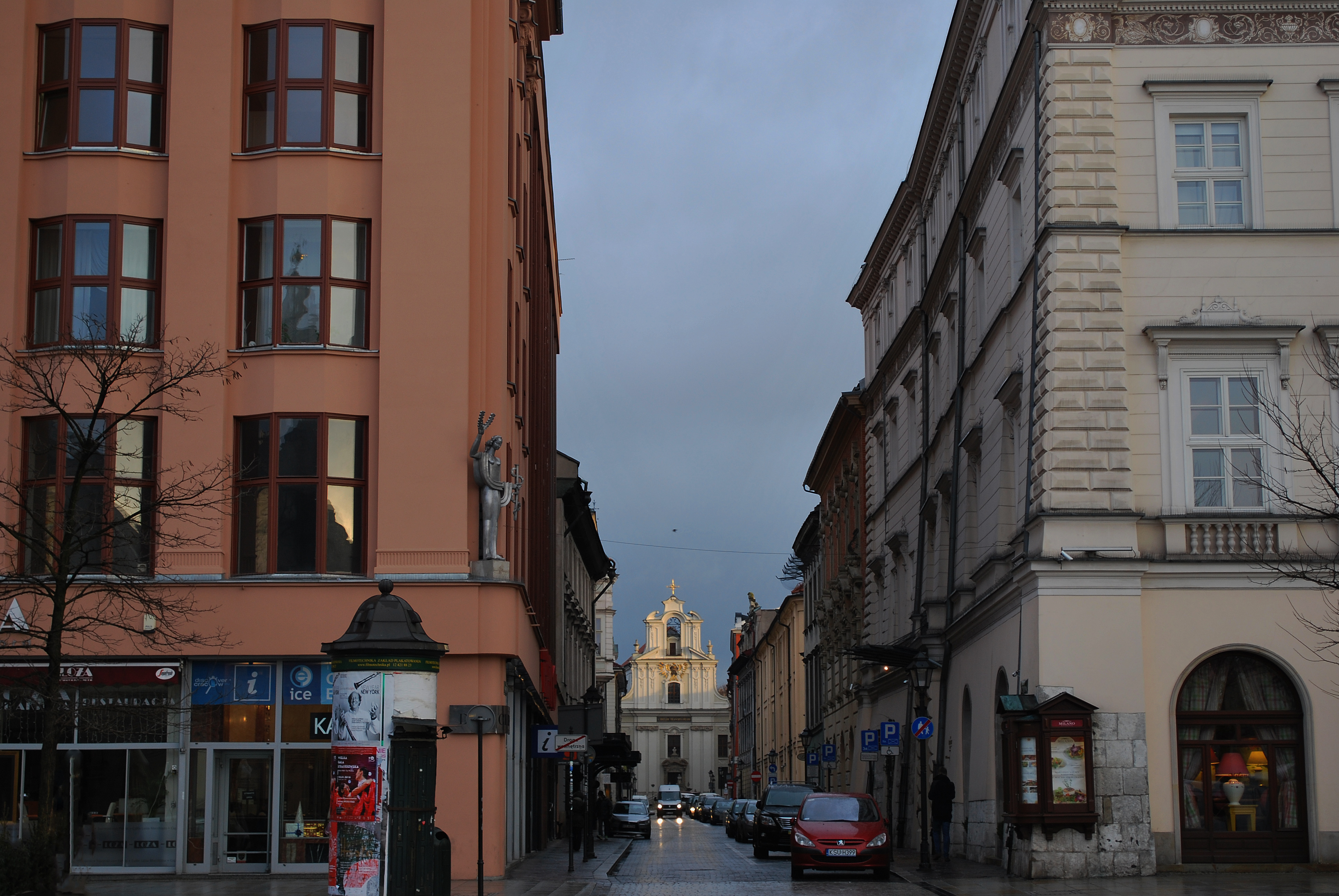
- Floriańska Street, running from the gate straight to the Main Market Square.
- The Planty, the green belt around the Old Town.
Frequently asked questions
When was the Barbican built? In 1498–1499.
How many turrets does it have? Seven, alternately round and octagonal.
Can you go inside? Yes. The Barbican is a branch of the Museum of Kraków and is open to visitors in season, with displays on the history of the city's fortifications.
What is the City Gates Opening Ceremony? A late-morning ceremony staged by the Museum of Kraków: the trumpeter, escorted by municipal guards, walks from the Main Market Square along Floriańska Street to the Barbican, plays the 15th-century tune "Cracovia Civitas", and the guards swing open the doors of the Kleparz Gate.
Is the Barbican a UNESCO site? Yes. Kraków's medieval fortifications are part of its UNESCO World Heritage listing.
Nearby places

Earn badges for the places you visit
Download NextOnTrip, discover new places and check off your trails.