About this place
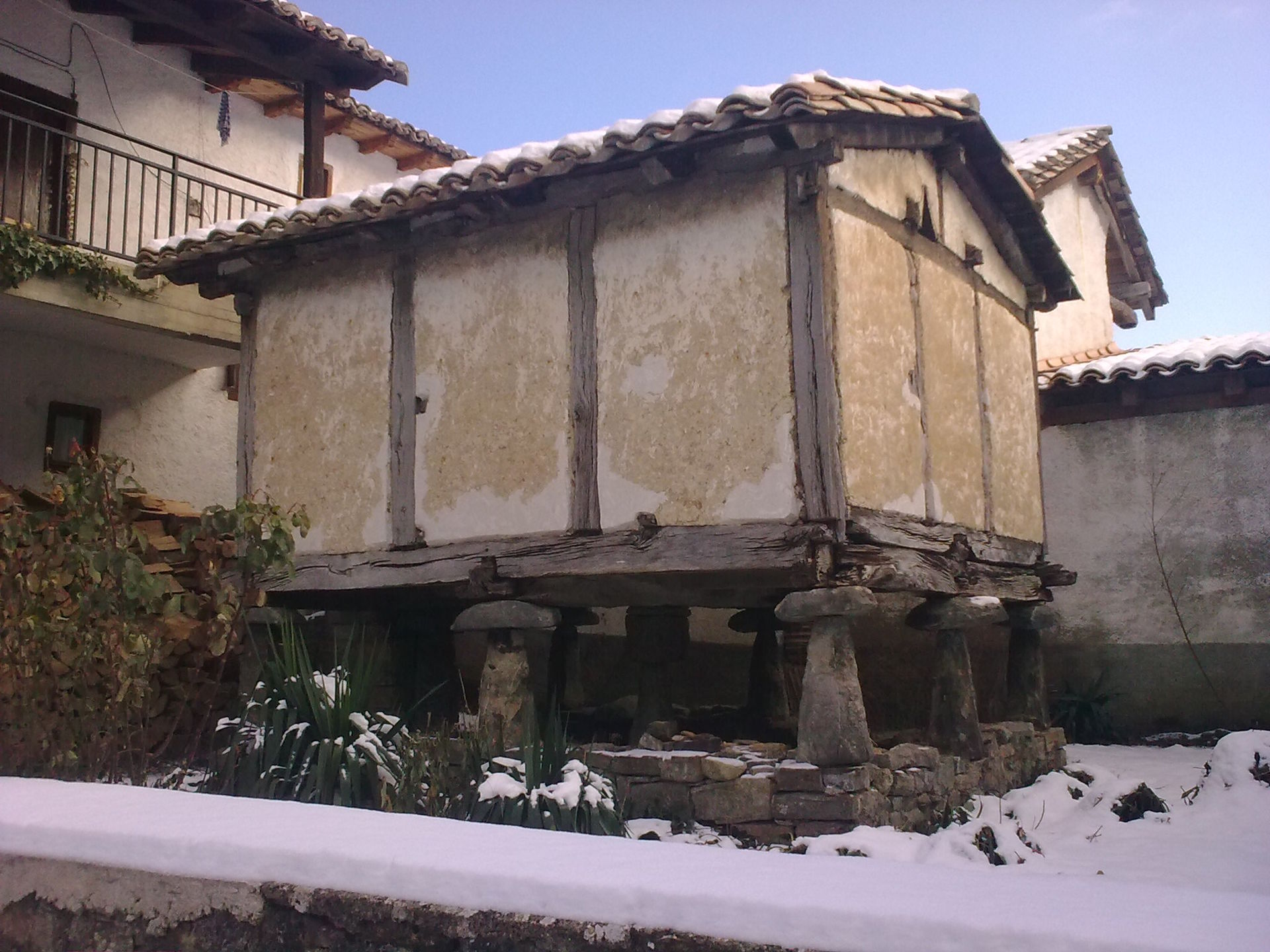
Ballaz is a historic granary, or hórreo, standing at Casa Ballaz in Izal, a village belonging to the municipality of Gallués/Galoze in the Salazar valley, Navarre. It is the only structure of its kind surviving in the entire valley, and it remains in excellent condition, making it a rare witness to the traditional agricultural architecture of the Pyrenees.
What exactly is this hórreo, and why does it matter?
A hórreo is a traditional raised granary built on a stone base, designed to keep stored grain and food safe from damp, rodents and pests. The example at Casa Ballaz dates back to the 17th century and blends Pyrenean building traditions with influences from the pre-Pyrenean lowlands, since Izal sits right at the boundary between the two zones. Stone forms the structural skeleton, shaping lintels, walls and arches, while timber was reserved for the roof frame and the granary's internal flooring. One distinctive trait is its gentler roof pitch, covered with curved tile rather than the beech shingle or flat ceramic tile seen on comparable buildings nearby. The rendered exterior of its stone walls also sets it apart from the hórreos typical of the neighbouring Urraúl area. Despite its modest, compact scale, the building still shows the solidity, slenderness and careful proportion, along with its clear separation from the ground, that mark the finest examples of Navarrese granary architecture.
How do you get to Ballaz?
Ballaz stands in Izal, a village under the administration of the Gallués/Galoze municipality, roughly 70 km from Pamplona. The Salazar valley occupies the northeastern corner of Navarre, bordered by France to the north, the Roncal valley to the east, the Aézcoa valley to the west, and the Navascués area to the south. A car is by far the easiest way in, since the valley has no rail connection and bus services are limited, so self-driving makes exploring the area far more practical. The building itself lies a few kilometres from Urizabe, another locality within Gallués, which gives a good sense of just how small and scattered the settlements in this part of the valley are.
What will you see on site?
Beyond the hórreo itself, Izal is worth a stop in its own right: a small stone village typical of Salazar valley architecture, with narrow lanes and houses built from rough-cut stone. The wider Gallués municipality holds other heritage buildings too, including churches and chapels characteristic of the region. The whole Salazar valley is criss-crossed by walking trails through beech and fir forest, appreciated by travellers looking for quiet corners away from Navarre's busier tourist routes.
When should you visit?
Spring and early autumn are the best times to come, when mountain temperatures are mild and the forest puts on a striking show of colour, autumn especially, when the valley's beech woods turn gold and copper. Summer draws travellers escaping the heat of lower-lying parts of Navarre, while winter can bring difficult conditions, with snow sometimes limiting access to some of the valley roads.
Frequently Asked Questions
What exactly is Ballaz? It is a historic hórreo, a traditional stone granary dating from the 17th century, located at Casa Ballaz in Izal, within the municipality of Gallués/Galoze.
Is it the only one of its kind in the area? Yes, it is the only hórreo still standing in the whole Salazar valley, and it survives in very good condition.
Can visitors go inside? The building sits on private property, so viewing is usually limited to the exterior; it is worth checking current access details with the Gallués municipal office before visiting.
What else is worth seeing nearby? The village of Izal itself with its traditional stone architecture, the other settlements of the Salazar valley, and the walking trails running through the surrounding beech forests.
Nearby places

Earn badges for the places you visit
Download NextOnTrip, discover new places and check off your trails.