About this place
Bachrovna is a historic villa in Kladno, one of the city's few surviving examples of mid-19th-century residential architecture, closely tied to the town's mining and steel-making past.
What is this building?
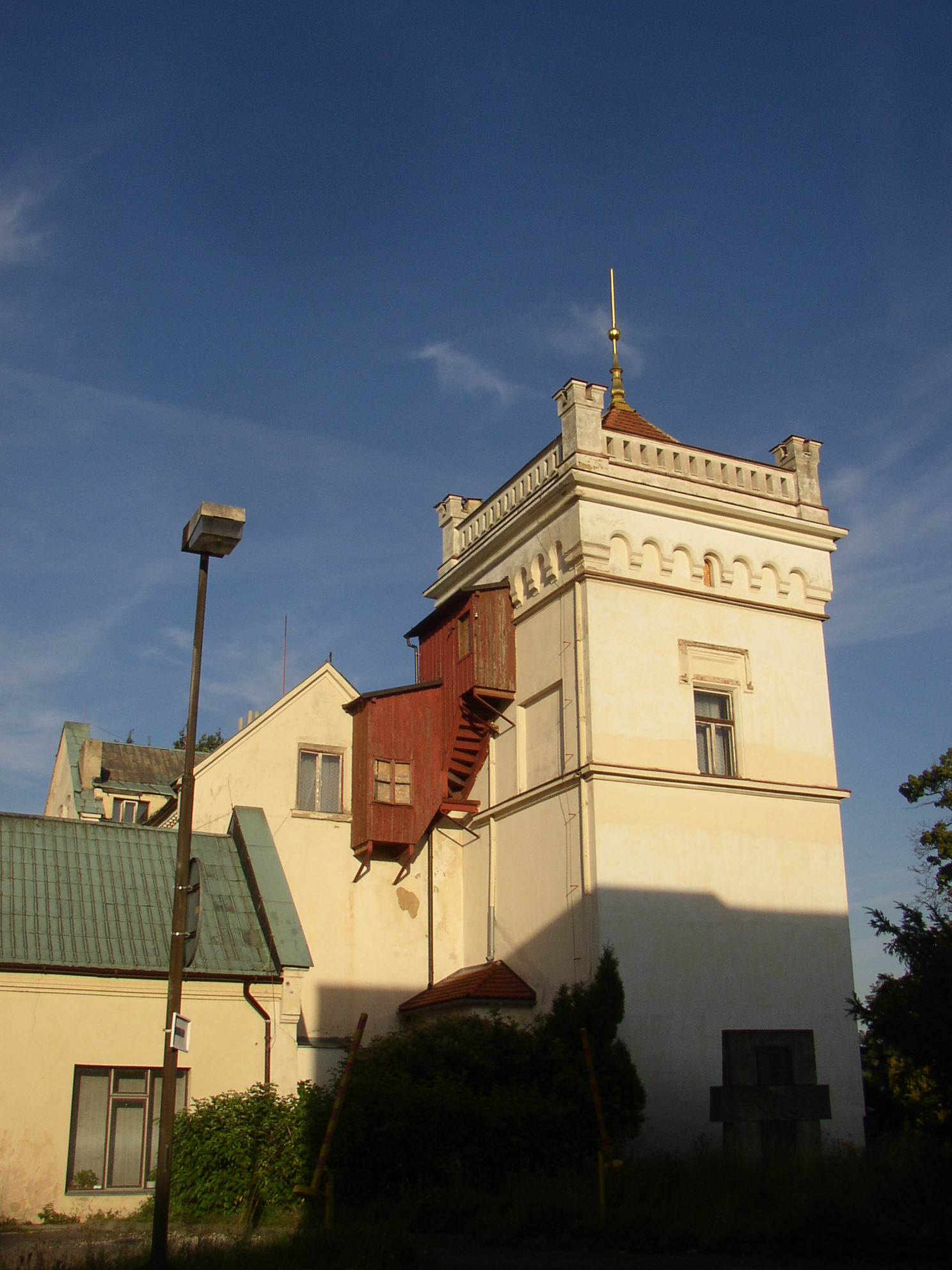
The villa was built between 1850 and 1854 as a stately residence in the English Neo-Romantic style, featuring a turret and decorative facade elements reminiscent of castle architecture. It was originally known simply as the Manor House (Panský dům). Its present name comes from Gottfried Bacher, a mine director who was among its early notable residents — over time his surname became attached to the building in local speech as "Bachrovna."
In 1860 the property was bought by the Prague Iron Company, which turned it into the official residence of the directors overseeing the mining and metallurgical works in Kladno. During this period the villa became a representative company building, home to the town's most influential industrial managers. In 1887 it underwent a major expansion — a tower and a second floor were added, giving the building the more imposing, castle-like silhouette it largely retains today.
A dramatic chapter in Kladno's history
Bachrovna is inseparably linked to one of the most dramatic episodes in the city's history. On 20 June 1889, during Corpus Christi celebrations, violent unrest broke out: an angry crowd surrounded the building, ransacked it, and set it on fire. The events became known as the "Bloody Corpus Christi of Kladno" and remain part of the local collective memory as a symbol of the social tensions that accompanied the region's industrial growth. The episode later found its way into culture — it is referenced in the novel "Siréna" by Marie Majerová, and in a film directed by Karel Steklý that brought the story to a wider audience.
The villa today
In the second half of the 20th century the building took on a new cultural role: from 1975 to 2006 it housed the Poldi Museum, dedicated to the history of Kladno's ironworks and steel industry — a key part of the city's identity as an industrial center. After the museum closed, the villa did not stand empty; today it hosts the offices of two private companies, while the building itself remains protected as a listed historical monument.
How to get there?
Bachrovna stands on Huťská Street in Kladno, right next to the site of the former ironworks, making it a natural stop on a walk through the city's industrial heritage. Kladno lies about 25 km west of Prague and is well connected by both road and rail, so a visit here is easy to combine with a day trip from the Czech capital.
What can you see?
The building's exterior — with its distinctive tower and castle-inspired details — is the main draw, since the interior is now occupied by private companies and not open to visitors. Still, it's worth stopping to admire the architecture against its surroundings and to recall the turbulent events of 1889 that unfolded here.
Frequently asked questions
Can you visit the inside of Bachrovna villa? No — the building is currently used by private companies, so the interior is not accessible to tourists. The exterior, however, can be freely viewed and photographed.
Where does the name "Bachrovna" come from? It derives from Gottfried Bacher, a mine director associated with the building in its early history.
What happened at the villa in 1889? During Corpus Christi celebrations, a crowd rioted, ransacking and setting fire to the building — an event remembered as the "Bloody Corpus Christi of Kladno."
What was the villa used for in the 20th century? Between 1975 and 2006 it housed the Poldi Museum, dedicated to the history of ironworking in Kladno.
Nearby places

Earn badges for the places you visit
Download NextOnTrip, discover new places and check off your trails.