About this place
Muíño das Aceas (As Aceas) is a historic tide mill in Xuvia, part of the municipality of Narón, in Galicia, in northwestern Spain, close to Ferrol.
What is the As Aceas tide mill?
It is considered one of the largest tide mills in Europe. Unlike a conventional watermill, it did not rely on a river's current but on the rise and fall of the sea. The complex was built on a dam across an estuary where two rivers meet near Narón, and for decades it operated as one of the region's main flour-production sites.
How did the mechanism work?
The principle behind the mill was simple, though it required an impressive amount of infrastructure. Seawater flowed into a reservoir through a rotating sluice gate capable of holding more than 50,000 cubic meters of water. As the tide went out, the stored water was released in a controlled way to drive the grinding stones. This system let the mill run independently of rainfall or river levels, making it notably efficient compared with other mills of its time.
What is the history behind the site?
The mill was built in the second half of the 18th century on the initiative of Santiago Beaujardín, the French vice-consul, and Juan Lembeye, as part of a broader network of mills run by French entrepreneurs active in Galicia at the time. In 1798, King Charles IV granted the site the status of Royal Factory (Real Fábrica), a recognition of its economic importance. During the 19th century, the Narón mill became one of the leading flour producers in all of Galicia.
What will you see on site?
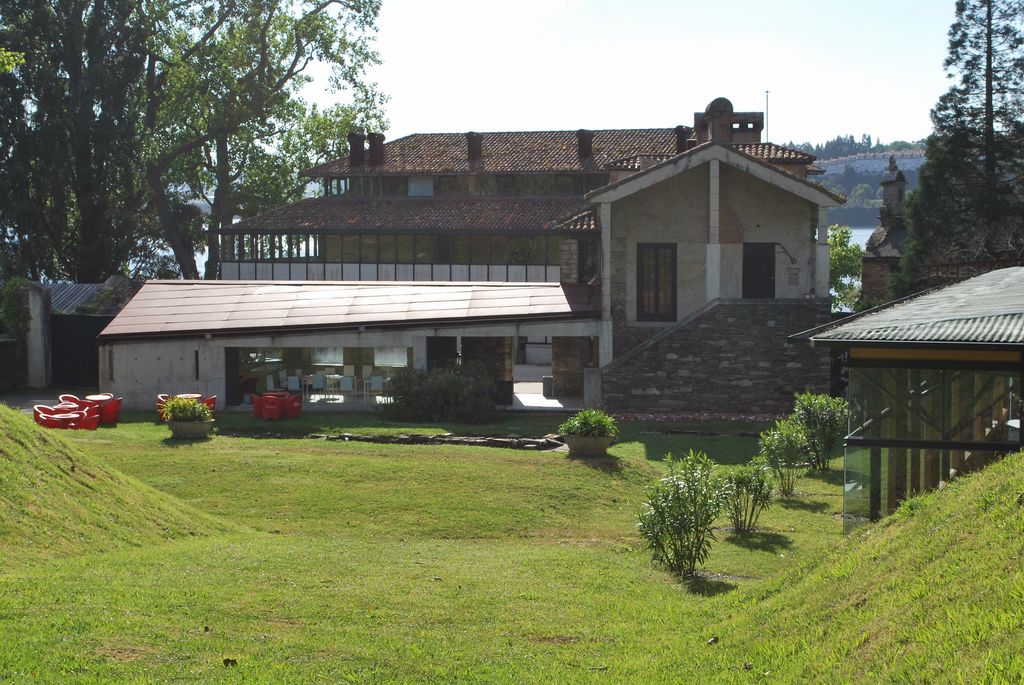
The As Aceas complex is far more than the mill building itself. It includes a dam, warehouses, a dwelling attached to the mill, and an additional recreational building, with the whole ensemble enclosed by a stone wall. The site was restored in 2006, which helped preserve its original layout and most of its structural elements. Visiting gives a clear sense of the scale that tide-powered milling could reach, a form of industry rarely seen elsewhere in this state of preservation.
How do you get there?
The mill sits in Xuvia, a locality within the municipality of Narón, in the province of A Coruña. The nearest major city is Ferrol, about a fifteen-minute drive away. A local road running along the estuary leads to the site, and a stretch of the pilgrim route (Camino del Peregrino) passes nearby — a path the Narón council has been restoring together with the surrounding dam area.
When should you visit?
Spring and autumn are the best times to explore the area around the mill, when temperatures are mild and walking along the river and estuary is most comfortable. Because the site's character is tied to the tides, it's worth checking local opening times before arriving, since access to the interior can vary depending on scheduled events and conservation work.
Frequently asked questions
How is a tide mill different from a regular watermill? A tide mill uses the energy of rising and falling seawater instead of a constant river current. Water stored during high tide is released as the tide falls, driving the grinding mechanism.
When was the As Aceas mill built? The complex dates to the second half of the 18th century, and in 1798 it was granted Royal Factory status by King Charles IV.
Can you visit the mill? The site was restored in 2006 and is part of Narón's local tourist routes, though it's worth confirming interior access locally before a visit.
How does its size compare with other European tide mills? Muíño das Aceas is regarded as one of the largest tide mills on the continent, largely due to the scale of its dam and a reservoir able to hold over 50,000 m³ of water.
Nearby places

Earn badges for the places you visit
Download NextOnTrip, discover new places and check off your trails.