About this place
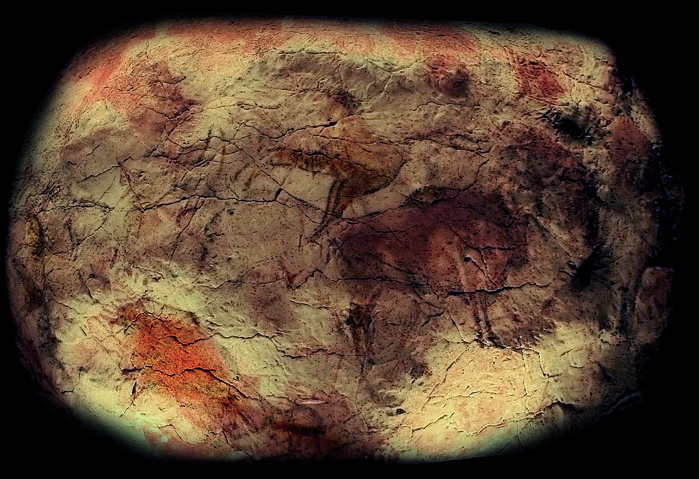
Altamira is a cave near Santillana del Mar in Cantabria, home to one of the most significant collections of Paleolithic art on Earth. The bison, horses, deer and boars painted across its ceiling are many thousands of years old, and the site has held UNESCO World Heritage status since 1985. Few places let you stand this close to the very beginnings of human art.
What will you see at Altamira?
The centerpiece is the so-called Great Hall of Polychromes, a ceiling covered in animal figures rendered in red ochre and outlined in black. The original artists used the natural bulges and contours of the rock to give the animals a sense of volume — a technique that still feels striking today. Since the original cave is almost entirely off-limits to visitors, the heart of any visit is the Neocueva, a faithful reproduction of the painted chamber built using the same materials and techniques as the original. It sits inside the National Museum and Research Centre of Altamira, alongside an exhibition on Paleolithic life and the history of the cave's discovery.
Can you actually visit the original cave?
Yes, but only in a very limited way. Humidity, carbon dioxide and heat generated by visitors pose a real threat to the paintings, so access to the real cave is restricted to a handful of people per week. Entry requires special clothing and takes place under strict environmental controls, with the visit itself lasting around 37 minutes. Spots are assigned by lottery rather than sold directly, which is why the Neocueva remains the realistic — and genuinely satisfying — option for the vast majority of visitors.
How do you get to Altamira?
Santillana del Mar sits in Cantabria, a short drive from Santander, and is best reached by car or a local bus service. The museum is on the edge of the town and has its own parking area. Santillana del Mar itself, with its medieval streets and cobbled lanes, is worth pairing with the museum visit as an attraction in its own right.
When should you visit?
The museum is open year-round, though it gets busiest during the summer months of July and August, particularly around midday. Spring and autumn offer a quieter experience, and booking tickets online in advance helps you skip the queue at the entrance. Plan for at least 1.5 to 2 hours to comfortably take in both the Neocueva and the permanent exhibition.
Frequently asked questions
Can visitors see the real Altamira paintings? Only to a very limited extent — access to the actual cave is granted to a small number of visitors each week, chosen by lottery, under conditions designed to protect the artwork. Most visitors instead experience a faithful replica in the Neocueva.
How old are the paintings at Altamira? They are Paleolithic works many thousands of years old, depicting mainly bison, horses, deer and boars painted in red ochre with black outlines.
Is Altamira a UNESCO World Heritage Site? Yes, the cave has been on the UNESCO World Heritage List since 1985 as one of Europe's key sites of Paleolithic art.
How long does a visit take? A visit to the museum, including the Neocueva, typically takes 1.5 to 2 hours, enough time to see both the reproduced paintings and the exhibition on prehistoric life.
Nearby places

Earn badges for the places you visit
Download NextOnTrip, discover new places and check off your trails.