About this place
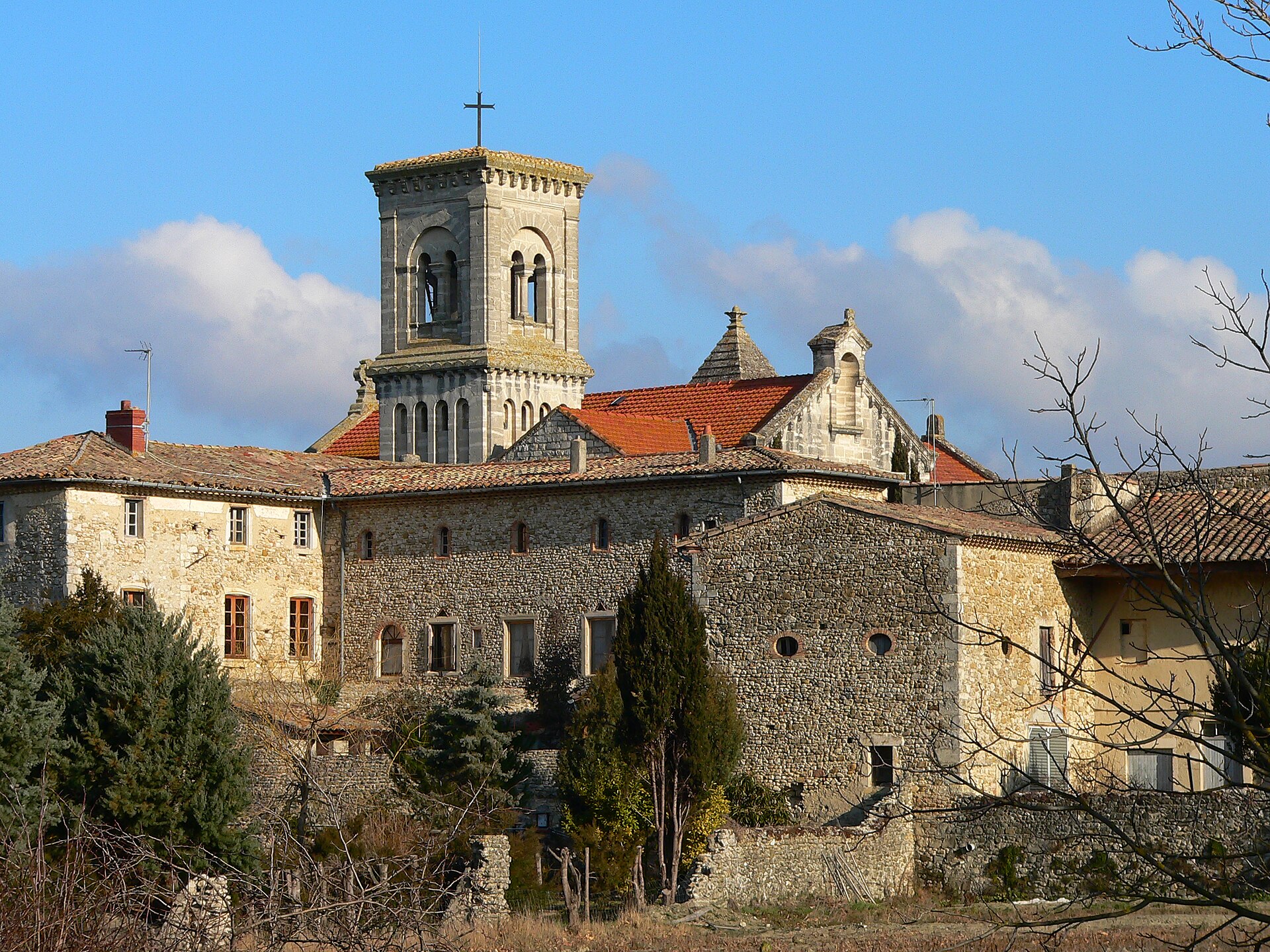
Abbaye Saint-Pierre de Rompon is the ruined remains of a medieval Benedictine priory perched on a hilltop above the town of Le Pouzin in the Ardèche department of southeastern France. The site has looked down on the valley where the Drôme meets the Rhône for over a thousand years, and although little more than stone fragments survive, it still draws visitors interested in history and quiet panoramic walks.
Where is the priory and how do you get there?
The ruins sit on a plateau overlooking Le Pouzin, roughly a short drive south of Valence. Getting there by car is easiest — a local road leads from the center of Le Pouzin, and the last stretch to the plateau itself has to be covered on foot, usually a gentle fifteen-to-twenty-minute climb. There's no visitor infrastructure right at the ruins, so bring water and sturdy shoes, especially in summer when the hilltop offers little shade.
What's the history behind the site?
The plateau was already settled in the 5th century, enclosed by earthworks covering roughly five hectares — evidence of a substantial fortified late-antique settlement. A text known as the Charta vetus suggests a church may have stood here as early as the 7th century. The priory itself was formally established in 977 following a donation, and the church dedicated to Saint Peter passed into the care of the Benedictines of Cluny. By 1112 the priory oversaw eight parishes stretching from Le Pouzin in the south to La Voulte-sur-Rhône in the north and Privas in the west, home to a prior and twelve monks. The church was rebuilt in the Romanesque style, and it's from that phase that today's surviving wall fragments date. The 13th century marked a period of prosperity, followed by a long decline tied to the broader troubles facing monastic orders and the kingdom. The final blow came in 1562, when the buildings were destroyed during the Wars of Religion, in the fighting linked to the Catholic League. In 1927 the ruins were listed as a historic monument in recognition of their heritage value.
What can you actually see there?
What remains today is mainly sections of the perimeter walls and fragments of the Romanesque church — enough to get a sense of the scale of the former monastic complex, though nothing stands complete. Locally the site is known informally as "Couvent des Chèvres," or Goats' Convent, a nickname tied to how the grounds were used after the monastic community left. Beyond the ruins themselves, the main draw is the view: from the plateau you look out over the Rhône valley and the point where the Drôme joins it.
When's the best time to visit?
Spring and autumn are the most comfortable seasons for the climb, with mild temperatures and generally good visibility across the valley. In summer the hilltop is exposed and can get very hot with no shade, so an early morning or late afternoon visit is worth planning for.
Frequently asked questions
Can anyone visit the ruins? Yes, the plateau is open to independent visitors, reached on foot from Le Pouzin.
Is there a guide or information point on site? No, there's no permanent staff or visitor center — this is a self-guided visit to an open ruin site.
Where does the "Couvent des Chèvres" nickname come from? It's a local, informal name linked to how the site was used after the religious community abandoned it.
How long does a visit take? Walking the ruins and taking in the viewpoint usually takes 30 to 45 minutes, not counting the walk up the hill.
Nearby places

Earn badges for the places you visit
Download NextOnTrip, discover new places and check off your trails.