About this place
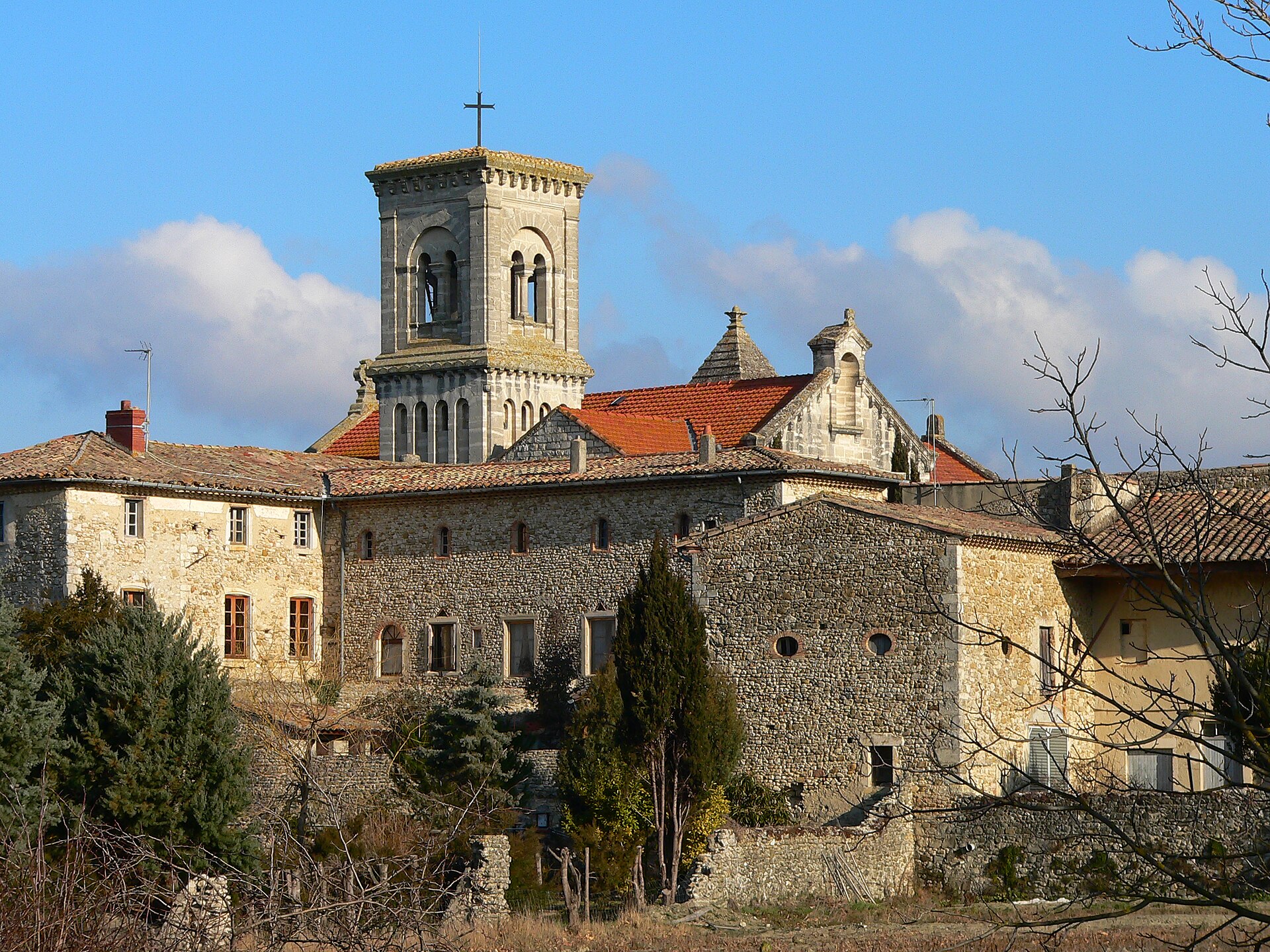
Abbaye de Valcroissant is a former Cistercian abbey tucked into a quiet valley a few kilometers from Die, in the Diois area of the Drôme department in southeastern France. Founded in the twelfth century, it has passed through monastic life, near-ruin, and a slow rebirth as a working farm that still welcomes visitors today.
Where is the abbey located?
The site sits away from the main roads, surrounded by fields and woodland close to Die, once an episcopal town. Its coordinates place it at roughly 44.746 N, 5.432 E, in a small valley south of the city center. Because the abbey now functions as an active farm, checking opening times before a visit is worthwhile.
When and how was the abbey founded?
The abbey's story begins in November 1188, when a group of Cistercian monks from the abbey of Bonnevaux settled by a stream known as Valcroissant to establish a new community. Their arrival was part of the broader Cistercian reform movement, launched in 1098 at Cîteaux by Robert of Molesme, Alberic, and Stephen Harding, who sought to follow the Rule of Saint Benedict as literally as possible, in a spirit of simplicity and withdrawal from the world.
Valcroissant never grew into a major monastic center. The community usually numbered around a dozen monks, and the abbey founded no daughter houses, remaining a modest outpost on the margins of the wider Cistercian network.
What happened to the abbey after the Middle Ages?
The Wars of Religion in the sixteenth century left the buildings badly damaged. From 1568 onward, even though the abbatial title was formally kept, Valcroissant functioned only as a farm. Agricultural use deepened through the seventeenth century, and the property was sold as national property during the French Revolution.
How did the abbey survive into the present?
The turning point came in the mid-twentieth century. In the 1950s, the mathematician and philosopher Marcel Légaut and his wife bought the property. They chose to restore the buildings while keeping the farm running alongside them. That work led to the site's listing as a monument historique on October 25, 1971. Notably, the abbey was never fully rebuilt, so it still shows its original twelfth-century character — a rare, unpolished example of early Cistercian architecture.
What can visitors see today?
Guided visits cover the refectory, the chapter house, the sacristy, and part of the abbey church. Outside these visits, the site remains first and foremost a working farm, combining livestock and crop farming with rural tourism: a farmhouse gîte and a group gîte on site accommodate travelers and hikers.
Frequently asked questions
Can you visit the Abbaye de Valcroissant? Yes. The refectory, chapter house, sacristy, and part of the church can be visited with a guide, though the grounds remain an active farm.
When was the abbey founded? Cistercian monks from Bonnevaux settled at Valcroissant in November 1188.
Why did the abbey stop functioning as a monastery? The Wars of Religion damaged the buildings in the sixteenth century, and from 1568 the site operated only as a farm, despite formally keeping its abbatial title.
Who saved the abbey from ruin? In the 1950s, mathematician and philosopher Marcel Légaut and his wife bought the property and restored it while keeping its farming activity.
Can visitors stay overnight? Yes, a rural gîte and a group gîte on site offer accommodation for tourists and hikers during the season.
Nearby places

Earn badges for the places you visit
Download NextOnTrip, discover new places and check off your trails.