Save this place and discover nearby attractions with NextOnTrip
In the app you can add it to your favorites, see what else is worth visiting nearby on the map, and earn a badge for your visit.
The app is available for iPhone and Android.
About this place
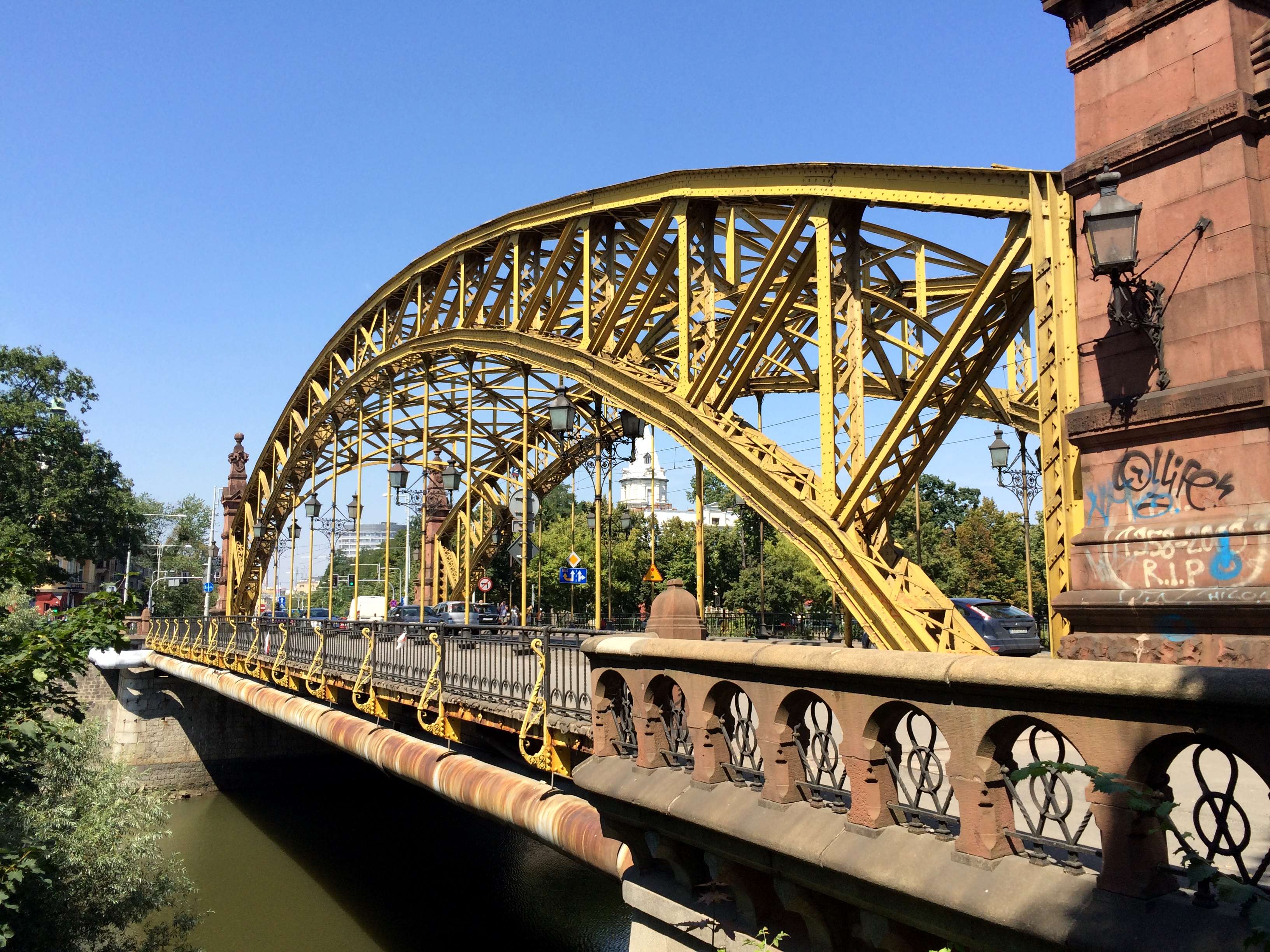
Most Zwierzyniecki (Zwierzyniecki Bridge) is a steel crossing over the Old Oder in Wrocław, and one of the most distinctive historic structures in this part of the city. It links the centre with the neighbourhoods across the river and leads towards places most visitors to Wrocław want to see: the Centennial Hall, the Pergola, the zoo and the Japanese Garden.
Why see Zwierzyniecki Bridge?
It is a fine example of how late nineteenth-century builders combined engineering with decoration. The steel structure is not bare and purely technical. The abutments are crowned with richly worked pylons of red sandstone, and ornamental balustrades complete the picture. The result is more than a road over water: it is part of Wrocław's cityscape, worth a closer look and a photograph.
What is the history of the bridge?
The first wooden crossing here appeared in the mid-seventeenth century, in 1655. The present bridge was built in 1895-1897. In the German period it was known as the Passbrücke. The architectural design was by K. Klimm and R. Plüddemann, and the steel structure was prepared by A. Fruhwirth Scholtz. The bridge has served the city without a break for well over a hundred years.
In 1973 it was entered in the register of monuments, which gave it conservation protection. The reasons were its high aesthetic and architectural value: the decorative pylons, the balustrades and the characteristic silhouette. Over the decades the bridge has undergone repairs and later restoration work aimed at preserving its original appearance and bringing back its historic colour scheme.
Where does the bridge lead?
The bridge is an important transport link. On one side lies the centre of Wrocław, on the other the districts of Biskupin, Dąbie and Bartoszowice. Crossing it is a natural part of a walk towards:
- the Centennial Hall, a UNESCO World Heritage site,
- the Pergola and its multimedia fountain,
- the zoo,
- the Japanese Garden,
- the student dormitories of Wrocław University of Science and Technology.
For many tourists it is simply the way to these attractions, but it is worth stopping for a moment to look at the structure itself.
How to explore the area
The most pleasant way is on foot or by bike. From the bridge and the nearby embankments you can see the Old Oder, and on warm days there are plenty of walkers by the water. Combining a visit with the Centennial Hall complex is a good idea, as the two are a short distance apart. The bridge looks good at any time of day, and particularly interesting in low side light, when the texture of the sandstone and the details of the balustrades stand out.
Frequently asked questions
Is Zwierzyniecki Bridge a listed monument? Yes. It was entered in the register of monuments in 1973.
When was the current bridge built? In 1895-1897. Earlier, in 1655, a wooden crossing stood here.
Which river does it cross? The Old Oder in Wrocław.
What is it made of? A steel structure, with pylons at the abutments made of red sandstone.
Can I walk from the bridge to the Centennial Hall and the zoo? Yes. The bridge leads towards the Centennial Hall, the Pergola, the zoo and the Japanese Garden, so it fits naturally into a sightseeing route through this part of the city.
Nearby places

Earn badges for the places you visit
Download NextOnTrip, discover new places and check off your trails.