Save this place and discover nearby attractions with NextOnTrip
In the app you can add it to your favorites, see what else is worth visiting nearby on the map, and earn a badge for your visit.
The app is available for iPhone and Android.
About this place
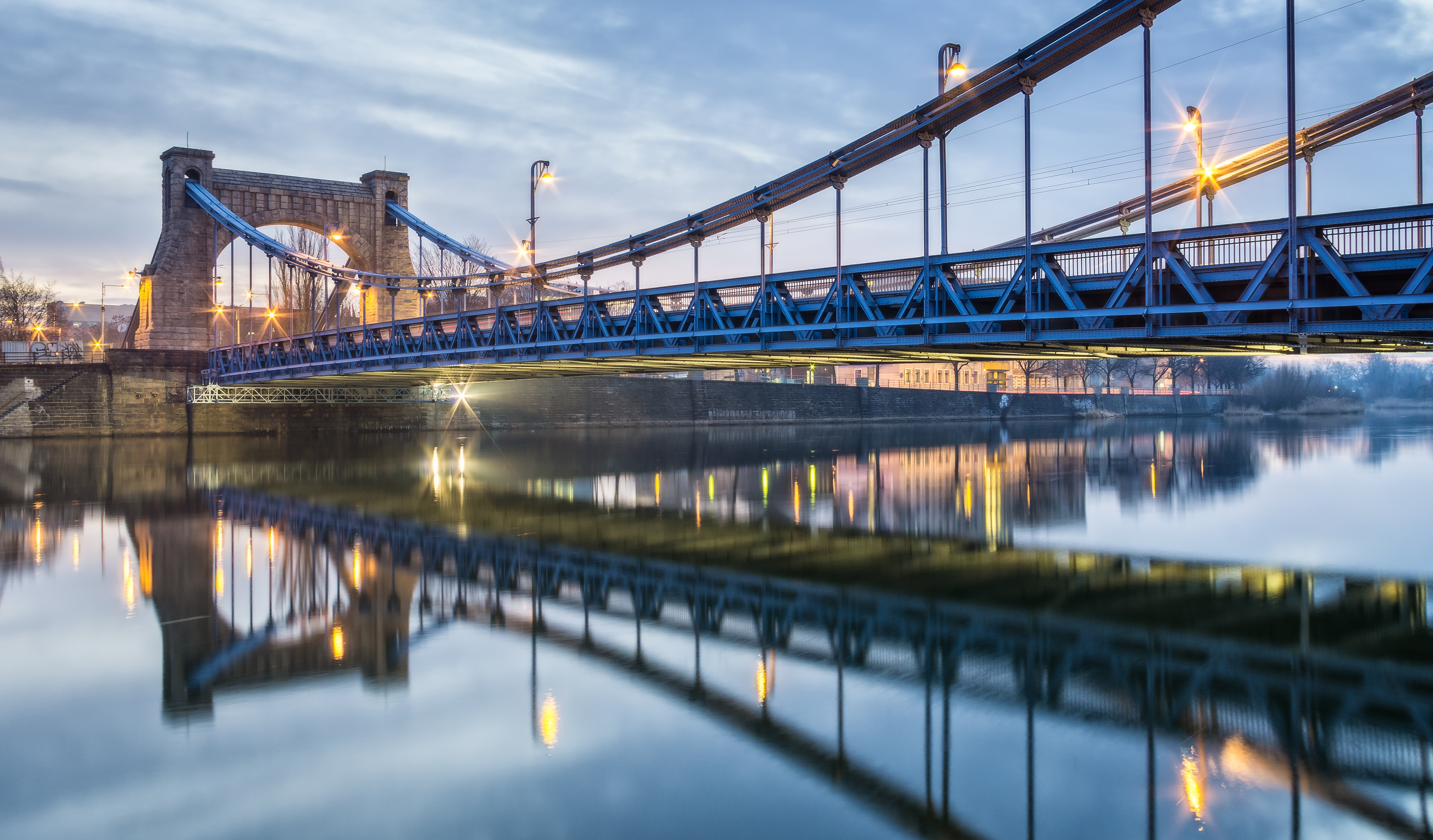
Grunwaldzki Bridge in Wrocław is one of the best-known crossings of the Odra and a listed suspension bridge that has linked the city centre with the Cathedral Island side and Grunwaldzki Square for over a century. Its open steelwork and tall granite pylons make it a rewarding place for a walk and for photos.
What does Grunwaldzki Bridge look like?
The bridge hangs from a riveted steel structure. The load-bearing elements rest on two pylons about 20 metres high. The pylons are built of clinker brick and faced with granite, giving them a heavy, monumental look that contrasts with the lighter steel above. The crossing was designed to carry road traffic, trams and pedestrians at once, and it still does all three.
When and why was it built?
Construction ran from 1908 to 1910, and the bridge opened on 10 October 1910. It was designed by Richard Plüddemann, then the city councillor in charge of building. The growing city of Breslau needed a modern new crossing, and at the time the bridge counted among the most technically advanced suspension bridges in Europe. Around 2,300 tonnes of steel went into it, along with granite from Silesian quarries and more than 7,000 cubic metres of concrete.
Why has it had so many names?
The bridge's names mirror the turbulent history of the city. It opened as the Kaiserbrücke, or Imperial Bridge, named after Emperor Wilhelm II. It was later called the Freedom Bridge (Freiheitsbrücke), and after the Second World War it received its present name, a reference to the Battle of Grunwald.
What happened in 1945?
During the siege of Festung Breslau, decorative finials, some reliefs and other ornamental details were removed from the pylons so that a makeshift airfield could operate around today's Grunwaldzki Square. The bridge survived and remained an important part of the city's transport network. It is now a protected monument, and ideas for restoring the lost decoration come up whenever renovation work is planned.
What to see nearby
- The Odra embankments – views of the university buildings and the city skyline, both from the bridge and from the riverbanks.
- Grunwaldzki Square – at one end of the bridge, known for its university buildings and modernist tower blocks.
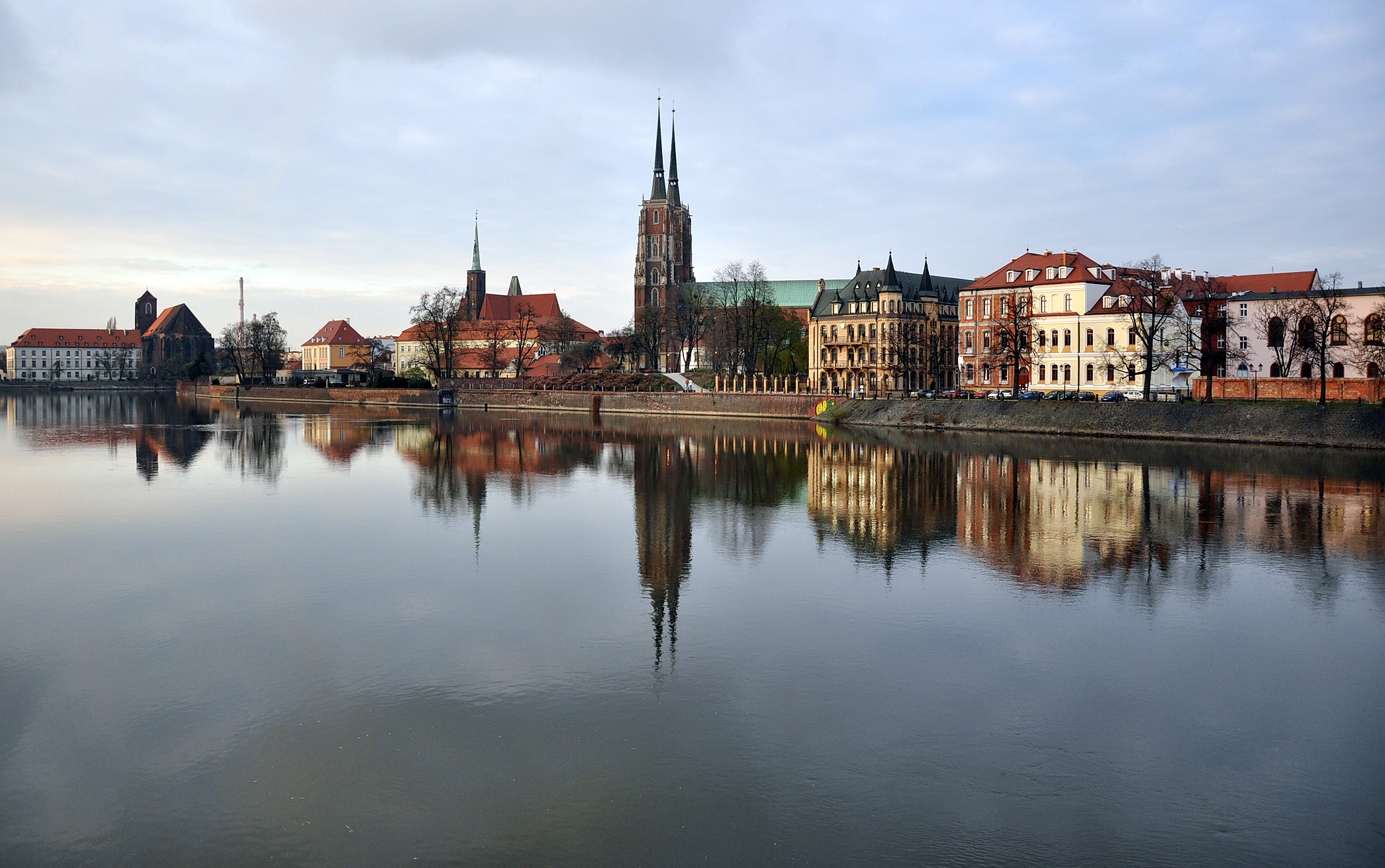
- Ostrów Tumski – the oldest part of Wrocław, with the cathedral and quiet lanes, an easy walk away.
- The riverside boulevards – calm walking routes along the water, pleasant in any season.
Frequently asked questions
Can you walk across Grunwaldzki Bridge? Yes. The bridge has pavements for pedestrians, so you can look at the pylons up close and enjoy the river views as you cross.
Do trams and cars use the bridge? Yes, tram lines and road traffic both run across it.
How tall are the pylons? About 20 metres. They are made of clinker brick with a granite facing.
Where does the name come from? The current name dates from after the Second World War and refers to the Battle of Grunwald. Earlier the bridge was known, among other names, as the Imperial Bridge and the Freedom Bridge.
When is the best time for photos? Sunset and the evening are the most flattering, when the granite pylons and steelwork are lit and the light plays on the water of the Odra.
Who is it for?
Architecture and engineering fans, photographers, anyone interested in the history of Wrocław, and visitors who want to combine a stroll through the centre with a look at an early twentieth-century technical landmark. Crossing takes only a few minutes, but the bridge fits easily into a longer route along the Odra, through Ostrów Tumski and the university district.
Nearby places

Earn badges for the places you visit
Download NextOnTrip, discover new places and check off your trails.