About this place
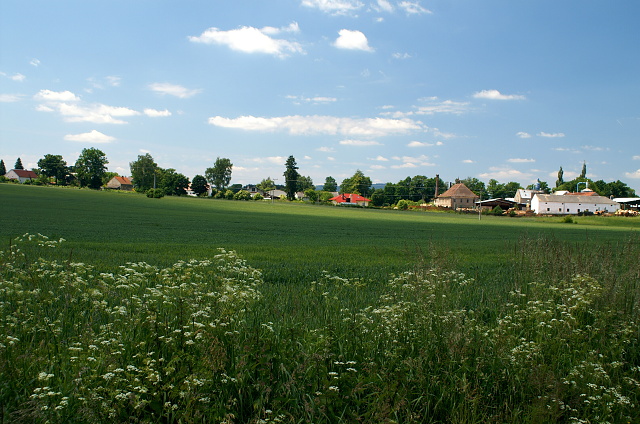
Zámek Lhotka is a modest Baroque manor house standing at the northern edge of the village of Lhotka, part of the municipality of Tisová in the Tachov district of the Pilsen Region, just a short drive from the German border. It's a stop for travelers who enjoy tracking down lesser-known corners of the Czech countryside and appreciate historic architecture without the crowds.
How to get there?
Lhotka lies in a rural stretch of the Tachov district, an area historically dotted with manor farms and minor gentry estates. The easiest way to reach it is by car, following the roads connecting Tachov with the surrounding villages. The manor stands on the grounds of a former farmstead, clearly visible from the road. Because the building belongs to the State Land Fund and is not a public attraction, visits are limited to viewing the exterior.
What will you see?
The current building is a simple, Late Baroque manor: a rectangular, multi-story structure topped with a hip roof crowned by a small metal turret. It was built on the site of an older fortified stronghold, of which almost nothing survives in the present-day structure. Next to the manor stands a preserved granary, a reminder that this was once a working farmstead with a larger cluster of estate buildings.
The site's history reaches back to the Middle Ages. The first written mention of Lhotka dates to 1374, when its owner was the local vladyka (petty nobleman) Racek. A fortified residential tower here is documented from 1519, when it belonged to the Rendl family of Úšava. Later owners included the Švamberk family, Heinrich Peter of Gutstein, and Christoph Jonas Tucher of Soberov. The stronghold gradually lost its importance as a noble seat and fell into disrepair.
The turning point came between 1673 and 1795, when the estate belonged to the Perglár family of Perglas, who built the Late Baroque manor on the site of the old fortress — the same building that, in its essential form, survives today. The last noble owners were the Windischgrätz family, who folded Lhotka into their larger Tachov estate.
During the 20th century the building was used by the Tachov State Farm, and years of utilitarian use took their toll on its condition. After 1989 it passed into the holdings of the State Land Fund. On 27 November 2009 it was declared a cultural monument, which opened the way for its first proper maintenance — culminating in a complete roof replacement in 2019.
When to visit?
Since the interior isn't open to the public, spring and summer are the best times to come, when longer daylight hours make it easy to view the building and the surrounding grounds of the old farmstead. It's worth combining a stop here with a look at other historic sites in the Tachov area, a region rich in old manors, churches, and remnants of the former border fortifications.
Frequently asked questions
Can you visit the inside of Zámek Lhotka? No — the building belongs to the State Land Fund and its interior is not open to visitors. It can only be viewed from the outside.
How old is this monument? The site's recorded history goes back to 1374, the first mention of the settlement, while a fortified residential tower is documented from 1519. The manor took its current Baroque form during a rebuilding carried out by the Perglár family between 1673 and 1795.
Who were the last noble owners? The last owners from the nobility were the Windischgrätz family, who attached Lhotka to their Tachov estate.
What else survives from the original estate? Besides the manor house itself, a historic granary still stands on the grounds of the former farmstead.
Nearby places

Earn badges for the places you visit
Download NextOnTrip, discover new places and check off your trails.