About this place
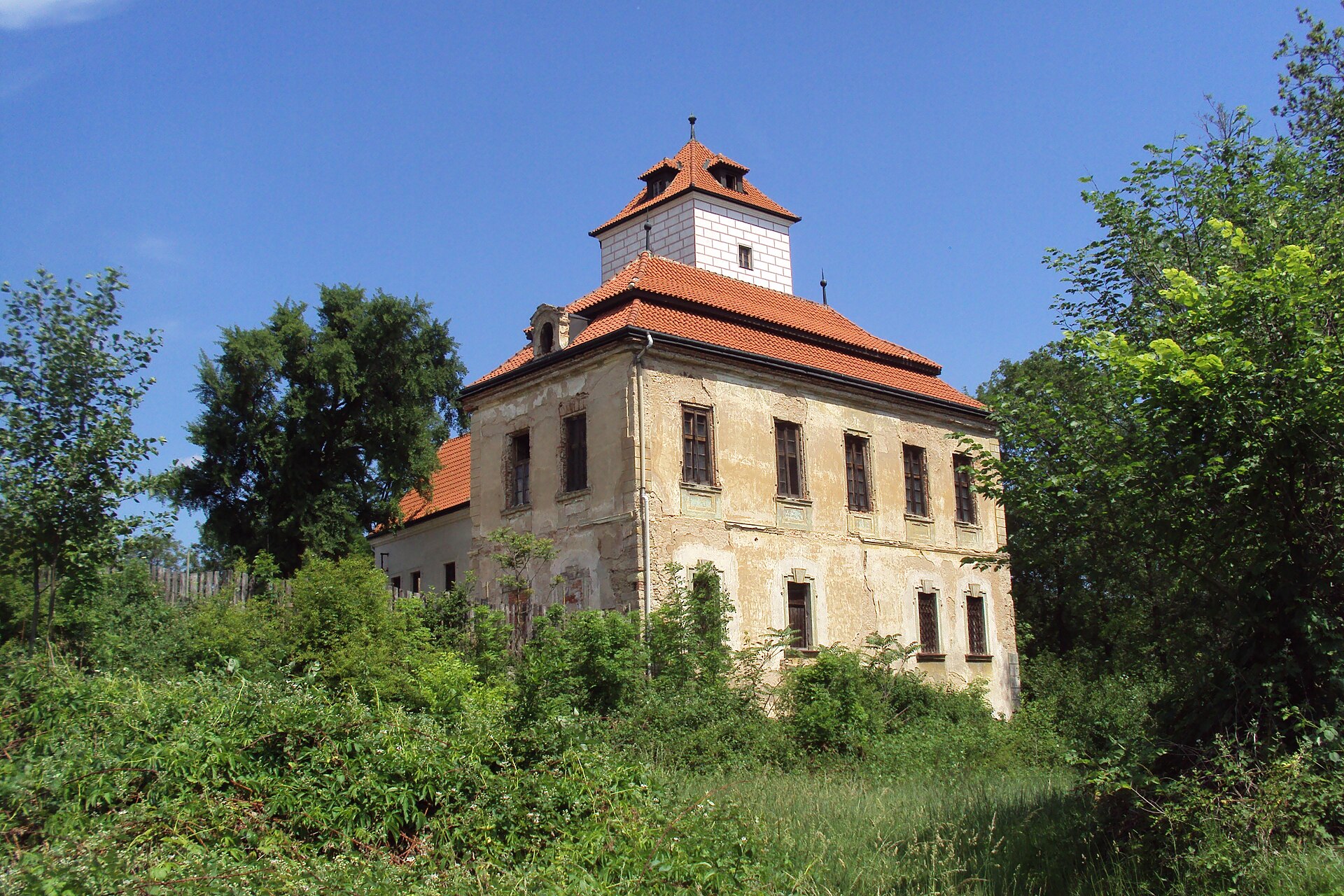
Zámeček Na Štěpáně is a small, historicizing château standing in Semilkovice, at the crossroads of Na Štěpáně and Mělnická streets, on a site long associated with a river crossing over the Elbe.
How to get there?
The château sits on the route linking Obříství and Libiš, close to the Štěpánský bridge, built in 1912 to replace an older ferry that carried the same name and gave the surrounding area its identity. The easiest way to reach the site is by car or bicycle along the local roads connecting Mělník with the area around Neratovice — the building stands roughly halfway between Obříství and Libiš.
What will you see?
The present building dates from around 1860 and was designed by Prague builder Jan Bělský, replacing an older structure already recorded on maps from 1842. The château has a historicizing character, blending architectural elements typical of the second half of the 19th century — a style favored at the time by well-off owners of country residences.
The ownership history is just as interesting as the architecture itself. Among the owners were Antonie Thun-Waldstein and later Leopold Thun of Hohenstein, whose wife was the last pupil of composer Bedřich Smetana, one of the towering figures of Czech national music. During the Thun family's tenure, a small tower with a bell was added to the building, and it still gives the château its distinctive silhouette today.
A turning point in the château's story came in 1916, when the property was bought by František Štěpánek, a Zlín entrepreneur and owner of a shoe factory. He had the building remodeled in a geometric modernist style, giving it a form much closer to what visitors see today.
The château, together with its surrounding grounds — a farm building, two greenhouses, a garden, and a perimeter wall — has been listed as a protected cultural monument since 2000. It is worth noting that the interior is not open to the public, but the exterior can be admired while passing along the road or cycling through the area.
When to visit?
Since the main appeal here lies in the exterior architecture and the surrounding landscape, spring and summer are the best times to visit, when the garden and nearby grounds are at their greenest. The stretch of the Elbe near the château is also popular with cyclists and walkers following the riverside trails.
The story of the crossing
It is worth knowing that the name "Na Štěpáně" is considerably older than the château building itself. Back in 1618, Václav Pětipeský purchased the village of Semilkovice along with its manor farm, mill, sawmill in Obříství, and the right to operate the ferry crossing the Elbe at this very spot. The ferry ran here for centuries, until the bridge was built in 1912, a change that significantly reshaped transport in the region and made nearby villages easier to reach.
Frequently asked questions
Can the interior of the château be visited? No, the building is privately owned and not open to the public. It can, however, be viewed from the outside while passing along Na Štěpáně road.
When was the château built? The current building dates from around 1860, although an earlier structure on the same site is already documented from 1842.
Where does the name "Na Štěpáně" come from? It comes from the ferry crossing the Elbe that operated here from at least the 17th century, before the bridge replaced it in 1912.
Is the site legally protected? Yes, since 2000 the château, along with its farm building, greenhouses, garden, and perimeter wall, has been listed as a protected cultural monument.
Nearby places

Earn badges for the places you visit
Download NextOnTrip, discover new places and check off your trails.