About this place
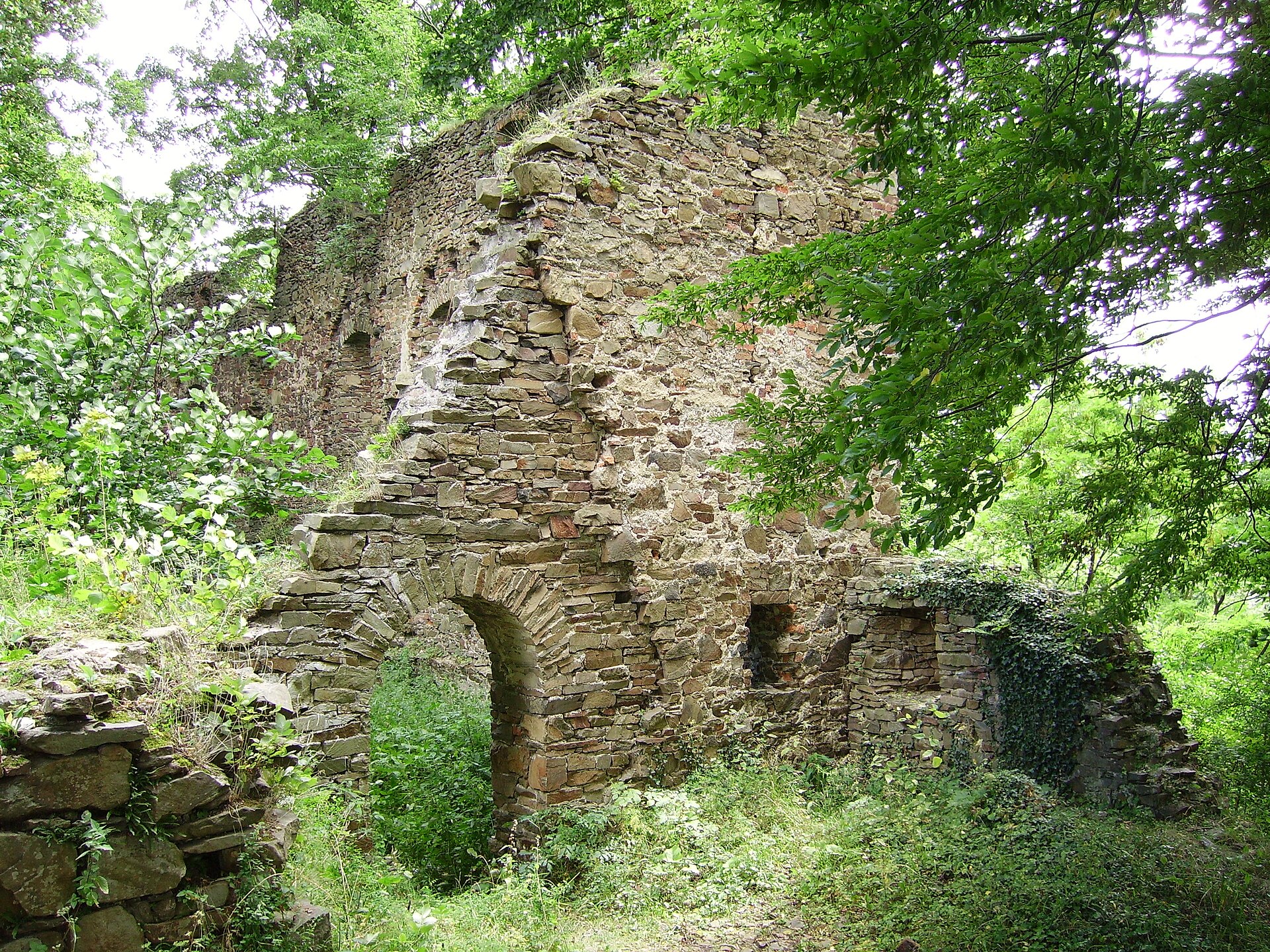
Wigsztyn (Czech: Vikštejn, German: Wigstein) is a ruined medieval castle perched on a rocky spur above the Moravice river, within the municipality of Radkov, in the Opava District of the Moravian-Silesian Region in the Czech Republic.
When was Wigsztyn built, and by whom?
The stronghold was founded by Vítek of Kravaře in the second half of the 13th century, on a high rocky promontory overlooking the Moravice valley. The earliest surviving written record dates from 1377, though the Gothic structure itself is at least a century older than that first mention.
Who owned the castle through the centuries?
By the late 14th century, Wigsztyn had passed to the Dukes of Opava. In 1447 it came under the local gentry of Moravice, and later to the Bírek family of Násilí. The castle's fortunes turned sharply in 1474, when troops of the Hungarian king Matthias Corvinus captured and destroyed it. It was rebuilt around 1530 by the Planknar family of Kynšperk, then held by the Oderský family of Lidéřov from the late 16th century until 1708, when ownership passed to the Reich family.
How did the castle end up in ruins?
The Thirty Years' War brought fresh damage, as Danish and Swedish raiding parties struck the site. The final blow came in 1648, when imperial troops blew up the fortress. A partial rebuilding followed in the late 17th century, but the castle's role was over for good after 1776, once a new residence went up nearby — from that point on, the old stronghold stood abandoned.
What replaced the old castle as the family seat?
In the neighbouring village of Dubová — part of the Radkov municipality and formerly known as Horní Vikštejn (German: Ober-Wigstein) — Jan Julius Frobel, then owner of the Wigsztyn estate, built a Baroque chateau with an adjoining farmyard between 1774 and 1776. In 1884, the estate was bought by Count Kamillo Razumovsky, a nobleman of Russian descent, together with his wife Maria.
What can visitors see there today?
The ruins have been a protected cultural monument since 1964. The site is open year-round with no restrictions on access, and visitors can climb a recently restored lookout tower for views across the Moravice valley. Wigsztyn lies in the area known as Vítkovsko, near the town of Vítkov, within the Nízký Jeseník uplands.
Frequently asked questions
Where does the name Wigsztyn come from? It's a Polonised version of the German name Wigstein, used alongside the Czech name Vikštejn for the same castle above the Moravice river near Radkov.
How old is the castle? It was founded in the second half of the 13th century, with the first written record dating to 1377 — well over seven centuries of documented history.
Why is the castle a ruin today? It was captured and destroyed by the forces of Matthias Corvinus in 1474, partly rebuilt afterwards, and then blown up by imperial troops during the Thirty Years' War in 1648.
Is there anything else nearby tied to the castle's history? Yes — the neighbouring village of Dubová, formerly Horní Vikštejn, has a Baroque chateau built in 1774–1776 by the owners of the Wigsztyn estate after the old castle was abandoned.
Can the ruins be visited? Yes, the site is freely accessible year-round, and a restored lookout tower offers views over the Moravice valley.
Nearby places

Earn badges for the places you visit
Download NextOnTrip, discover new places and check off your trails.