About this place
Vrkoč is a basalt rock formation rising above the Elbe river valley near Ústí nad Labem in the Czech Republic, celebrated for its dramatic columnar basalt structure. The name translates roughly as "braid," describing how the radiating, fan-shaped columns of rock resemble strands of plaited hair. Located within the České Středohoří (Central Bohemian Uplands) protected landscape area, about 4 km south of the center of Ústí nad Labem, Vrkoč has held the status of a national natural monument since 1966, covering roughly 1.4 hectares.
How did Vrkoč form?
The formation is a remnant of a volcanic basalt vein that once extended all the way to the Elbe riverbed. As the molten basalt cooled, it fractured into the polygonal columns typical of this kind of rock — a process seen in other well-known basalt formations elsewhere. What sets Vrkoč apart is the fan-like, radiating arrangement of its columns, making it one of Europe's notable examples of this particular type of columnar basalt disintegration.
Why wasn't it discovered until the 19th century?
Although the rock had existed for millions of years, its full extent was only exposed during the late 19th century, while a railway line connecting Dresden and Prague was under construction. The building work required quarrying away much of the original basalt vein that reached toward the river, which uncovered the striking columnar cross-section visible today and made the site accessible to visitors for the first time.
What else is there to see nearby?
The protected area also includes the Vaňov waterfall, fed by the Podlešínský stream, which forms a scenic stop along the educational trail leading to the site. The roughly 4-kilometer Větruše–Vrkoč nature trail includes nine stops with information panels covering the area's history, geology, ecology, and local plant and animal life.
How do you get to Vrkoč?
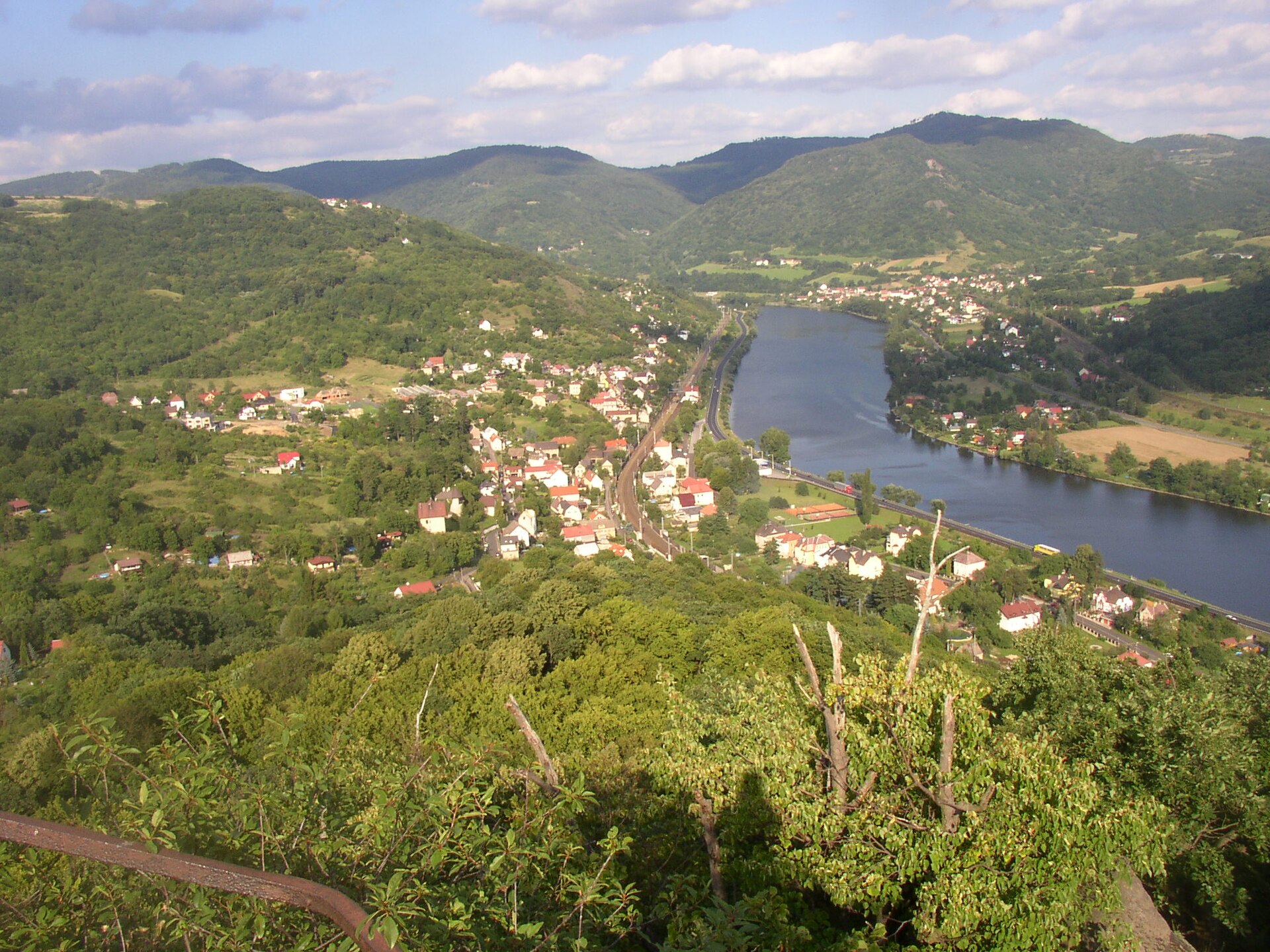
Visitors can reach the formation on foot from the village of Vaňov, climbing a steep path up the hillside, or by following the green-marked trail from Větruše chateau, which overlooks Ústí nad Labem. Both routes pass through the České Středohoří landscape and offer views over the Elbe valley.
Frequently asked questions
Can you climb directly onto the Vrkoč rock formation? No — the area is protected as a natural monument, so visits are limited to the marked paths and viewpoints along the nature trail; the rock formation itself is off-limits to climbing.
Where does the name Vrkoč come from? It refers to the visual resemblance between the radiating, fan-arranged basalt columns and a braid of hair.
How long is the trail to Vrkoč? The Větruše–Vrkoč educational trail is about 4 km long and includes nine themed stops.
Since when has Vrkoč been legally protected? It has held national natural monument status since June 10, 1966.
Nearby places

Earn badges for the places you visit
Download NextOnTrip, discover new places and check off your trails.