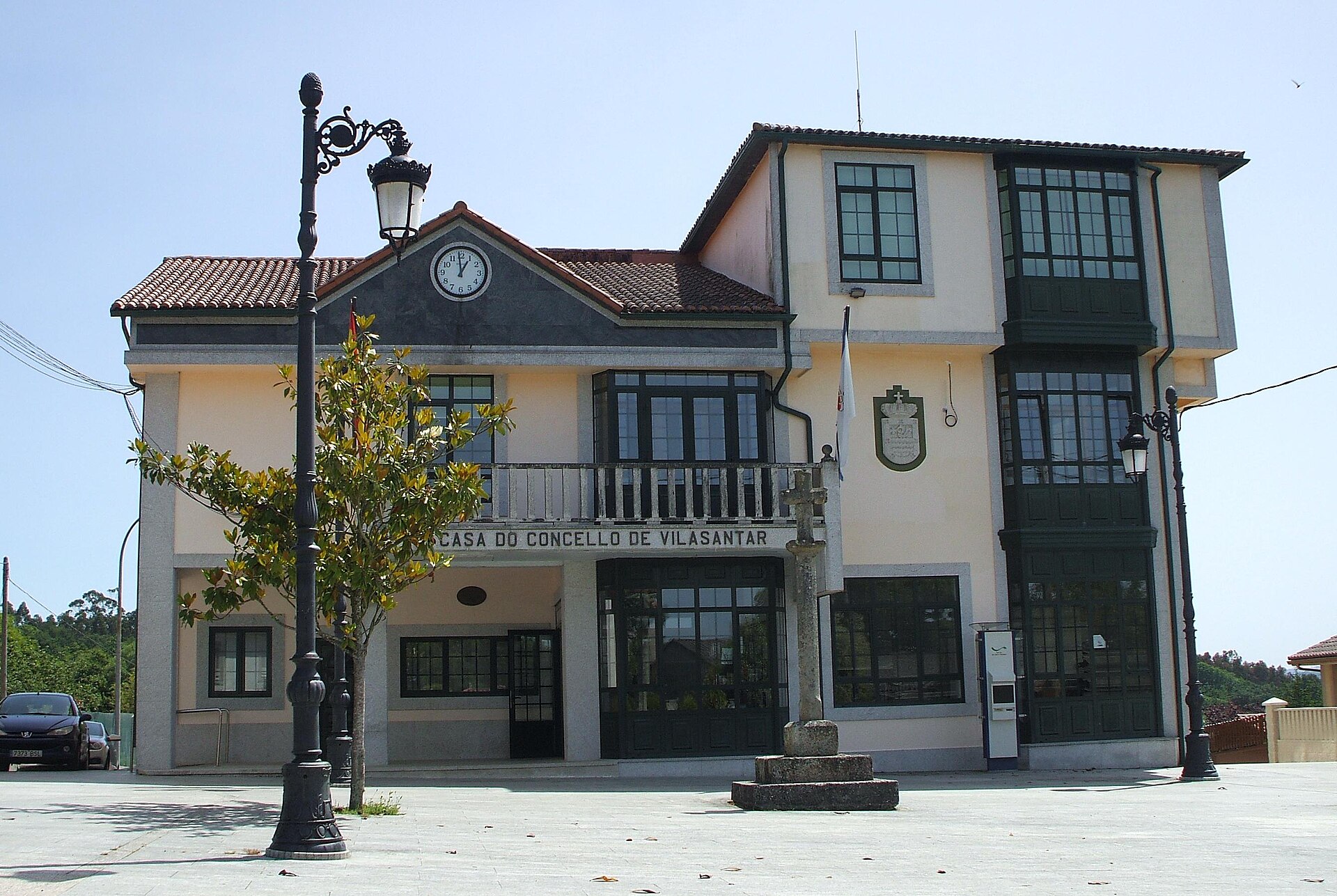
About this place
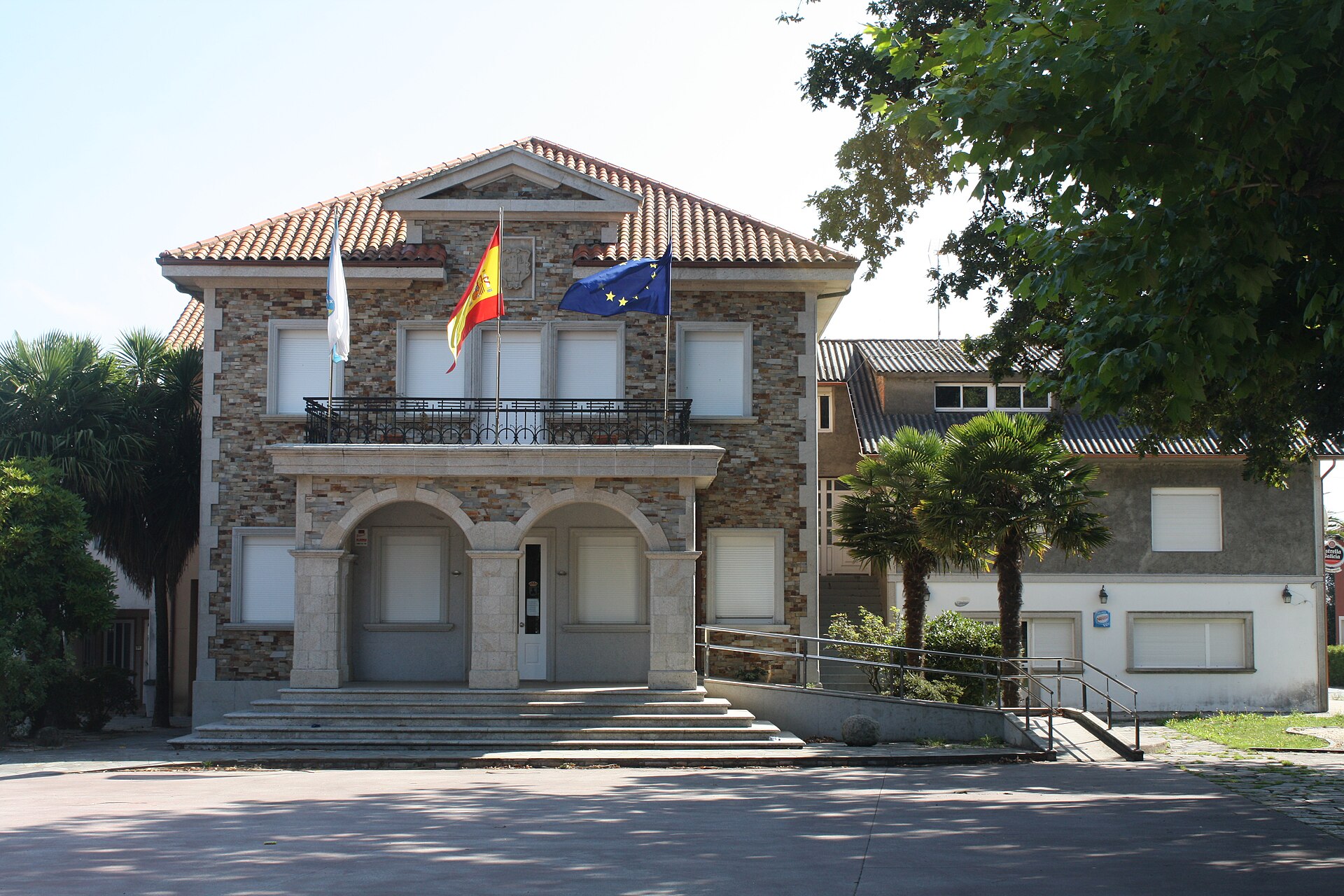
Vilasantar Town Hall sits at the administrative heart of the small municipality of Vilasantar, in the province of A Coruña, in Galicia, in northwestern Spain. The building houses the local council and serves as the natural reference point for anyone exploring this rural municipality, which is spread across seven parishes rather than concentrated in a single town.
Where is Vilasantar and what kind of municipality is it?
Vilasantar belongs to the comarca of Betanzos, one of the territorial districts of the province of A Coruña. The municipality has no urban core in the usual sense — it is made up of seven parishes: Armental, Barbeito, Mezonzo, Présaras, San Vicenzo de Curtis, Vilariño, and Vilasantar itself. That structure is typical of rural Galicia, where community life has historically centred on parish churches rather than a single dominant town. The town hall, found at coordinates 43.0728° N, 8.1216° W, is therefore the administrative centre for an area that in practice stretches across more than a dozen smaller settlements.
How do you get to the town hall?
Vilasantar lies inland, roughly an hour's drive from both Santiago de Compostela and the city of A Coruña. Travelling by car is by far the most practical option — the municipality has no railway station of its own, and bus connections to the outlying parishes can be infrequent. Anyone relying on public transport should plan the trip well in advance.
What history lies behind this region?
The town hall building itself is modern, but the land it stands on carries a much older story. A key role in the area's past belongs to the monastery of Santa María de Mezonzo, whose origins predate the 8th century — its church still holds capitals dated to the 6th or 7th century, and the foundation appears in Latin documents under the name Mosontio. Community life in the area crystallised around this religious centre long before today's administrative boundaries existed.
Even older traces of settlement survive as castros, the fortified hilltop settlements typical of the Castro culture that developed in Galicia roughly two thousand years ago. Remains of such settlements can still be found within the municipality, notably in the parish of Vilariño and at a site known as Congostras. Numerous burial mounds and megalithic monuments discovered across the region confirm that the area was densely populated well before recorded history.
Vilasantar's history is also closely tied to the neighbouring municipality of Sobrado — the land once formed part of the county of Présaras, a name that survives today as one of the municipality's parishes.
What is there to see nearby?
Visitors don't come to Vilasantar looking for big-city sights — this is a destination for travellers drawn to quiet Galician countryside, traces of ancient Castro-culture settlements, and the parish churches scattered across the municipality. The monastery church at Mezonzo and the castro sites around Vilariño make for a natural short itinerary through the municipality, one that can easily be planned starting from the town hall as a central landmark.
Frequently asked questions
Where exactly is Vilasantar Town Hall located? At the centre of the municipality of Vilasantar, in the province of A Coruña, at coordinates 43.0728° N, 8.1216° W.
How many parishes make up the municipality of Vilasantar? Seven: Armental, Barbeito, Mezonzo, Présaras, San Vicenzo de Curtis, Vilariño, and Vilasantar.
What is the oldest heritage site in the municipality? The Castro-culture remains at Vilariño and Congostras, along with the monastery of Santa María de Mezonzo, whose roots go back to before the 8th century.
What's the best way to reach Vilasantar? By car — the municipality is inland, about an hour's drive from Santiago de Compostela and A Coruña, and public transport options are limited.
Nearby places

Earn badges for the places you visit
Download NextOnTrip, discover new places and check off your trails.