About this place
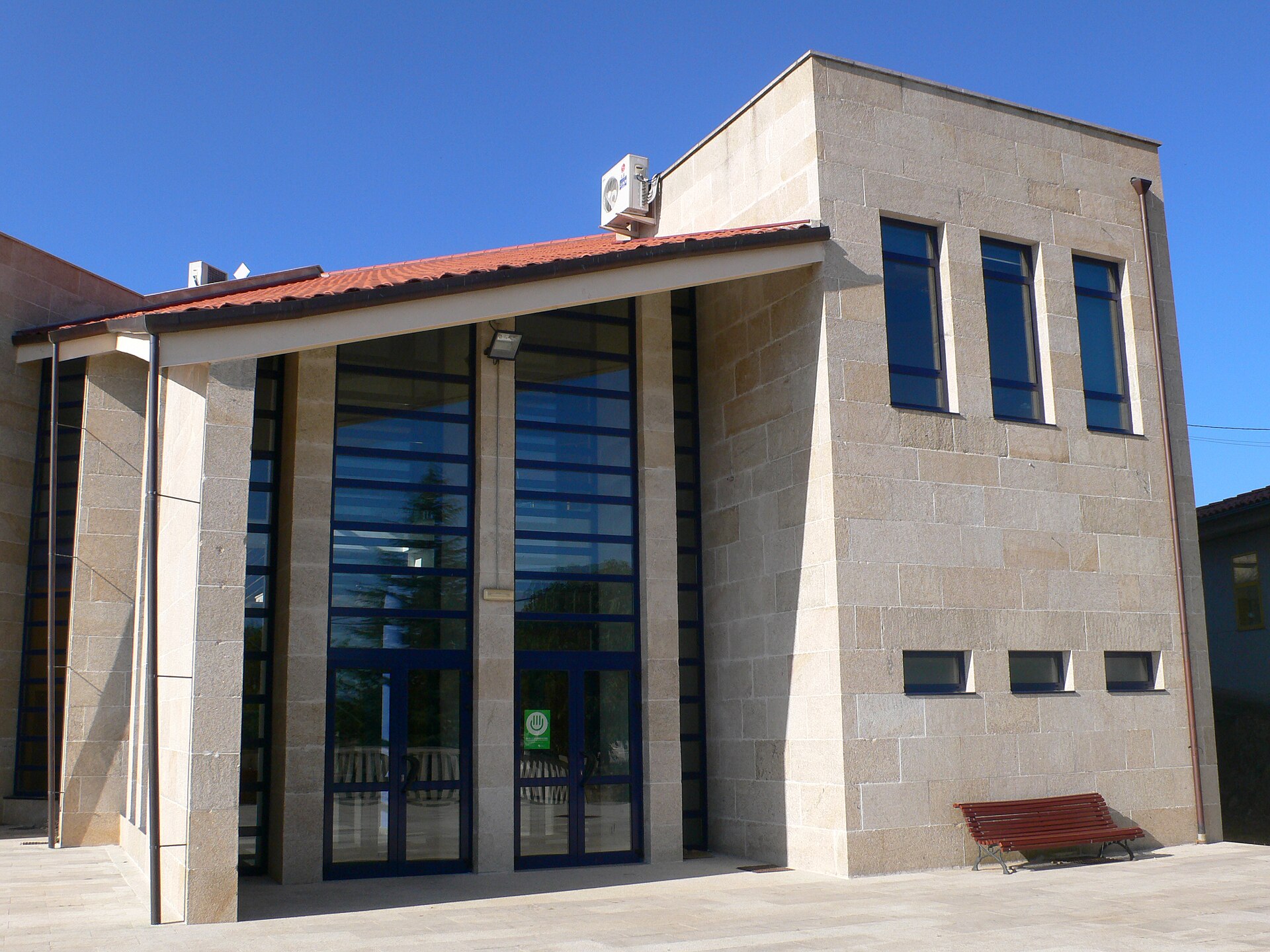
Vilar de Barrio town hall sits at the administrative heart of Vilar de Barrio, a small rural municipality in the province of Ourense, in inland Galicia, Spain. It's a useful landmark for travellers crossing this quiet corner of Galicia — an area built around scattered villages, granite hills and a surprising density of archaeological remains.
What kind of place is Vilar de Barrio?
The municipality has just over a thousand residents spread across a dozen or so hamlets, all administered from the town hall building in the main settlement. The surrounding landscape is classic inland Galicia: green pastureland, low hills and narrow local roads connecting villages that feel far removed from the coastal tourist routes most visitors follow.
What can you see nearby?
Despite its size, the municipality holds real interest for anyone drawn to rural heritage and archaeology. Villages such as A Edreira, Vilar de Gomareite, Padreda, San Miguel and Penouzos still preserve traditional hórreos — raised stone granaries on stilts, a hallmark of Galician farmhouses, historically used to store maize and other harvests away from damp and rodents.
History runs deeper here than the granaries suggest. Two castros — fortified pre-Roman hillfort settlements — survive at Bóveda and Padreda, giving a sense of how the area was settled long before Roman roads reached it. At Arnuíde, a well-preserved Roman bridge still spans the Arnoia river, a reminder that this quiet countryside once sat along an active route of communication. Older still is the Pedra Alta de Antela, a standing stone (menhir) dated to the 4th–3rd century BC, rising alone in open ground as a marker of the megalithic culture once common across this part of the Iberian Peninsula.
When is the best time to visit?
The municipality's calendar is built around two local festivals. The San Fiz festival takes place on the first weekend of August, while October brings the Festa da Pataca — a potato festival celebrating the region's farming traditions with local food and gatherings. Either one is a good excuse to see the community at its liveliest rather than simply passing through.
Weather-wise, the stretch from May to October offers the most comfortable conditions, since the castros, the menhir and the Roman bridge are all outdoor sites best explored without rain or winter mud underfoot.
How do you get there?
Vilar de Barrio lies well inland within Ourense province, so a car is by far the easiest way to reach it — local roads connect the municipality with neighbouring towns in the A Limia comarca and with the city of Ourense itself, under an hour's drive away. Public transport in this rural stretch of Galicia is limited, and since the main sights — the hórreos, the two castros and the Roman bridge — are spread across several different villages rather than clustered in one spot, having your own vehicle makes a real difference to how much you can see in a day.
Frequently asked questions
What is the town hall of Vilar de Barrio? It's the seat of local government for the municipality of Vilar de Barrio, a small rural community in Ourense province, Galicia.
What is there to see around Vilar de Barrio? Traditional stone granaries (hórreos) in several villages, two pre-Roman hillfort sites (castros) at Bóveda and Padreda, a Roman bridge over the Arnoia river at Arnuíde, and the Pedra Alta de Antela menhir dating to the 4th–3rd century BC.
When are the local festivals? The San Fiz festival is held on the first weekend of August, and the Festa da Pataca (potato festival) takes place in October.
What's the best way to get to Vilar de Barrio? By car. The municipality is well inland in Ourense province, and public transport options are scarce, so driving gives the most flexibility for visiting sights spread across several villages.
Nearby places

Earn badges for the places you visit
Download NextOnTrip, discover new places and check off your trails.