About this place
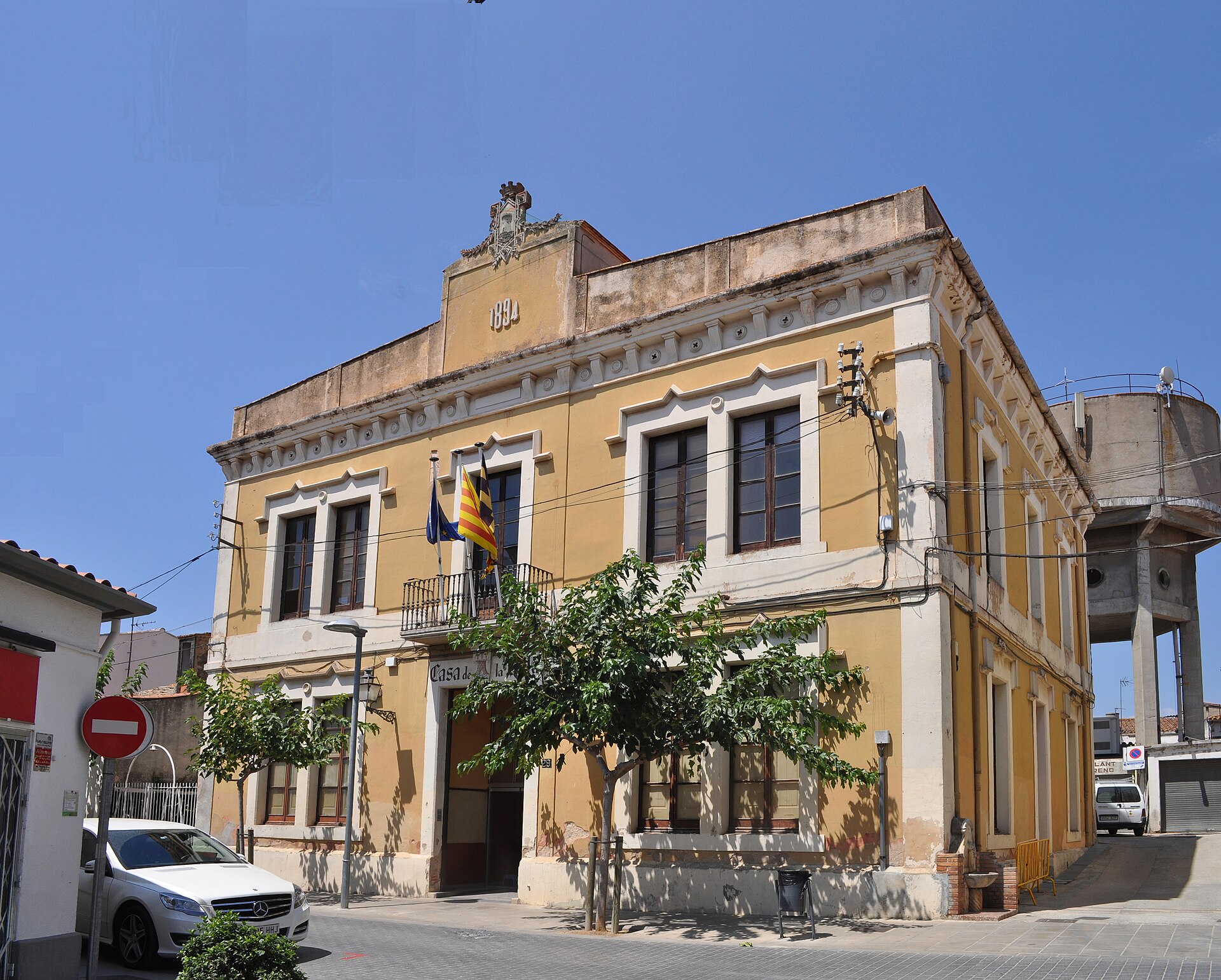
Vidreres town hall stands on Plaça Catalunya in the heart of this small town in Girona province, in Catalonia's La Selva region. Completed in 1894, it has served without interruption as the seat of the local mayor and municipal administration ever since.
What does the building look like?
The town hall was built in an eclectic style with classical references. Its façade is split into three sections, the central one being the most prominent: it houses the ground-floor main entrance and a distinctive cast-iron balcony one level up, from which the mayor traditionally addresses residents during civic events. Moulded window surrounds add refinement to the elevation without tipping into heavy ornamentation.
Inside, the building is organised into three parallel sections divided by load-bearing walls set perpendicular to the street. The ground floor holds a vestibule with a two-arch portico resting on a single column — one arch opens onto the staircase leading up to the "piano nobile," the formal upper floor. That level contains the plenary hall where council sessions are held, the former residence of the town secretary, and a number of administrative offices.
Why is it worth a stop?
The building is listed as a cultural asset of local interest, recognised as an example of late-19th-century Catalan municipal architecture. Anyone curious about the region's civic history or period architecture will find it a worthwhile short stop while exploring central Vidreres — the square in front of it is a natural gathering point for locals and a good starting point for wandering the rest of the town.
How do you get there?
The town hall sits at Plaça Catalunya 29, right in the centre of Vidreres, a short drive from the Costa Brava coastline and close to the main roads linking Girona with Lloret de Mar. Reaching the town centre is easiest by car or local bus; once there, the square and surrounding streets are fully walkable, with no need for underground parking or special tourist infrastructure.
What else is nearby?
The streets around the town hall form a typical Catalan old town, lined with houses and local shops. It's worth pairing a stop at the town hall with a stroll through the surrounding lanes, where the town's historic street layout survives largely intact, and with a visit to the wider natural attractions of the La Selva region on the way toward the Costa Brava.
When should you visit?
The façade and balcony look best in afternoon light, when the sun falls directly on the square-facing elevation. Since the building remains an active municipal office, its interior — the plenary hall and administrative offices — isn't open to visitors day to day; plan on viewing it from outside unless the town is hosting a public event, such as a local festival, that opens it up.
Frequently asked questions
Can visitors go inside Vidreres town hall? No — it functions as an active municipal office, so the interior, including the plenary hall and offices, isn't routinely open to the public. The façade and portico can be viewed freely from outside.
When was the building constructed? It was completed in 1894, in an eclectic style drawing on classical architectural references.
What's the most distinctive architectural feature? The cast-iron balcony on the formal upper floor, and the ground-floor vestibule with its two-arch portico supported on a single column.
Is the town hall a protected heritage building? Yes, it's listed as a cultural asset of local interest, valued as an example of late-19th-century Catalan municipal architecture.
Nearby places

Earn badges for the places you visit
Download NextOnTrip, discover new places and check off your trails.