About this place
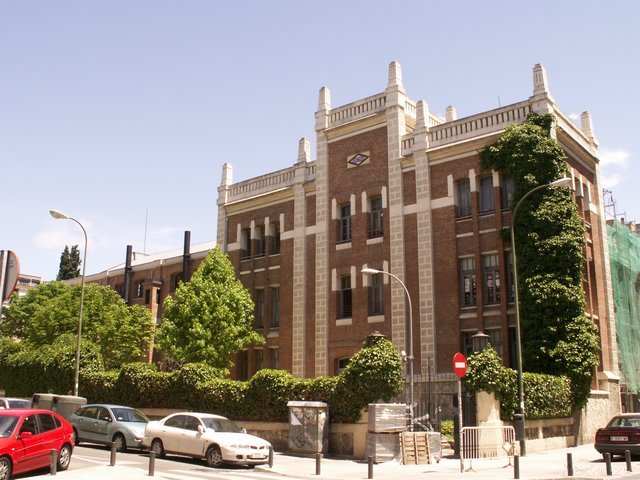
Vicálvaro District Hall is the seat of the district government of Vicálvaro, one of Madrid's 21 administrative districts, located on Plaza Don Antonio de Andrés. The building houses the Junta Municipal de Vicálvaro, the local governing body within Madrid's decentralized district-administration system, headed by a district councillor-president.
What is Vicálvaro, and why does it have its own hall?
Until 1951, Vicálvaro was an independent town on the south-eastern edge of Madrid. When it was absorbed into the capital, it kept a fair amount of administrative autonomy — which is why it still has its own district assembly, based in the building known today as the District Hall. The district is officially split into two wards, Ambroz and Casco Histórico de Vicálvaro (the old quarter), and in practice covers three distinct neighborhoods: historic Vicálvaro, Valdebernardo, and Valderrivas, a newer area built up in the 1990s.
How do you get there?
Vicálvaro sits in the south-eastern part of Madrid, well outside the tourist center — and that distance is part of its appeal. It feels like a different city from downtown Madrid, with its own pace and a strong local identity. Plaza Don Antonio de Andrés is the natural reference point, since district administrative life is centered around it. The district connects directly to the rest of Madrid by public transport, making it an easy side trip for anyone who wants to step off the main tourist circuit for an afternoon.
What is there to see nearby?
The district hall itself is an administrative building, but the surrounding area has a handful of worthwhile stops. The oldest landmark is the Church of Santa María de la Antigua, a 16th-century baroque church that was heavily restored in 1999 after damage sustained during the Spanish Civil War. Local history and traditions are documented at the Vicálvaro Museum. Families often head for Faunia, a 14-hectare zoo and botanical park with recreated ecosystems and interactive animal encounters. For anyone interested in geology or archaeology, Almodóvar hill is a notable stop — it holds the world's largest sepiolite deposit, and in 2013 archaeologists uncovered a Palaeolithic workshop there estimated at around 200,000 years old. In 1998, the district also gained an academic dimension when King Juan Carlos University opened its Faculty of Law and Social Sciences there.
When is the best time to visit?
Vicálvaro is best visited during the day, when the local offices, the museum, and nearby attractions are open. Spring and autumn offer the most comfortable temperatures for Madrid's climate — summers here get just as hot as in the rest of the city. If Faunia is on the itinerary, it is worth setting aside a full day, since the park is large enough to fill one.
Frequently asked questions
What is Vicálvaro District Hall? It is the building housing the Junta Municipal de Vicálvaro, the local district administration office for Madrid's Vicálvaro district, located on Plaza Don Antonio de Andrés.
Was Vicálvaro once its own town? Yes — it was an independent municipality until 1951, when it became part of Madrid as one of the city's 21 districts, while keeping its own local administration.
What can you see near the district hall? Nearby you'll find the 16th-century Church of Santa María de la Antigua, the Vicálvaro Museum, Faunia zoo and botanical park, and Almodóvar hill with its Palaeolithic archaeological site.
Is Vicálvaro worth visiting for travelers based in central Madrid? Yes. It has a different character from the city center — quieter, with its own local identity and a few specific attractions — making it a good option for visitors who want to see a side of Madrid away from the main tourist route.
Nearby places

Earn badges for the places you visit
Download NextOnTrip, discover new places and check off your trails.