About this place
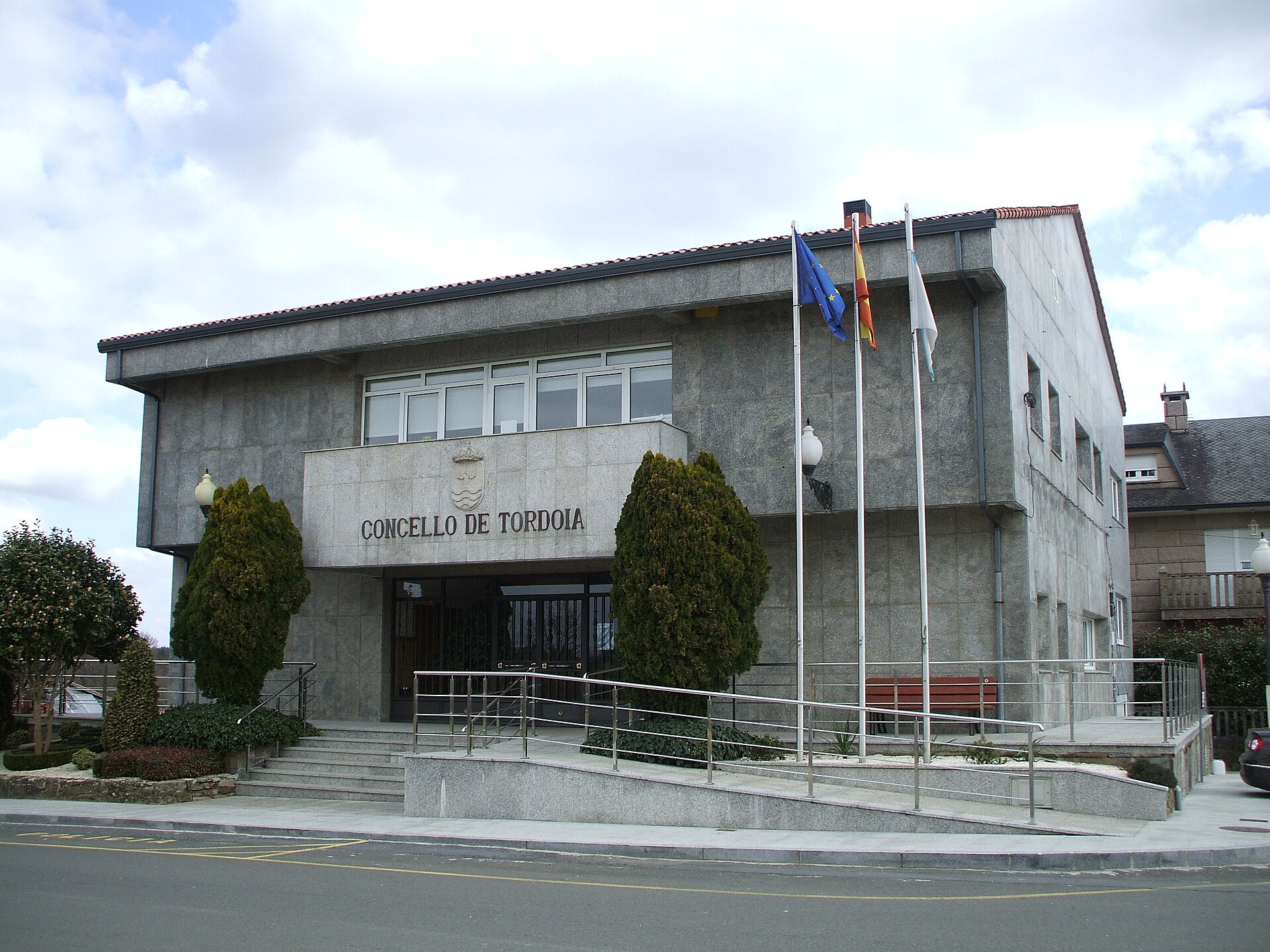
Val do Dubra Town Hall is the seat of local government for the municipality of Val do Dubra, a small district in the province of A Coruña, in the Galicia region of northwestern Spain. Sitting at the administrative heart of the municipality, it makes a practical starting point for exploring the surrounding countryside — green valleys, river paths, and sites tied to the early history of this part of Galicia.
Where is the town hall and what is Val do Dubra?
Val do Dubra belongs to the Santiago comarca and covers just over 100 km², home to a little more than three and a half thousand people spread across numerous small parishes — a typical pattern of scattered rural settlement in inland Galicia. The town hall itself, at coordinates 43.0266, -8.6561, serves residents across the whole municipality and functions as the administrative center.
The municipality takes its name from the Dubra river, which runs through the valley (val in Galician) that gives the area its rolling, deeply folded landscape of meadows, eucalyptus and pine woodland, and streams feeding toward the Tambre river.
How old is this land?
The area has been inhabited since the Iron Age, and several castros — the fortified hilltop settlements typical of the Galician-Lusitanian culture — survive within the municipality, including those at Portomeiro, Buxán, Niveiro, Rial, Pazo, Paramos, Portomouro, and Malvares. Some are still visible on the ground as earthen ramparts overgrown with vegetation.
The earliest written reference to the area appears in the medieval Cronicón Iriense, which records the Suebi king Miro granting land called "Dubriam" to the episcopal see of Iria Flavia. It's one of the oldest documented legal acts tied to this part of Galicia and a key reference point for the area's early history.
The castro at Portomeiro, spanning the transition from the Iron Age into the early Middle Ages, is particularly notable: excavations there have shed light on how local power was organized in this region during pre-Roman and early medieval times, layering castro-period settlement beneath later defensive structures.
What else is there to see in the municipality?
Beyond the town hall itself, a handful of sites reward visitors looking for something beyond standard tourist stops:
- Castelo de Portomeiro — a rise overlooking the whole Val do Dubra valley, combining castro remains with later medieval features.
- Necrópolis de Pedra do Home — a rock-cut burial site with several tombs carved into a granite outcrop, evidence of burial practices from the distant past.
- The ruined chapel at Novais — the remains of a small religious building that some researchers link to a monastery once located here.
None of these sites are commercialized — they're better suited to visitors who want to experience rural Galicia away from crowds, walking through fields and woodland along the Dubra valley.
Frequently asked questions
Can the Val do Dubra town hall be visited as a tourist site? The building serves an administrative function, but its location at the center of the municipality makes it a convenient starting point for exploring the nearby castros and other historic sites.
Where does the municipality's name come from? From the Dubra river, which flows through the valley where the municipality sits — val means "valley" in Galician.
How far are the nearest historical sites? The Portomeiro castro and the Pedra do Home necropolis both lie within the municipality, a short distance from the administrative center, making them typical targets for a walk through the area.
Does Val do Dubra have ties to early medieval Galician history? Yes — the Cronicón Iriense's record of the land grant called "Dubriam" to Iria Flavia is one of the oldest known documents referring to this territory.
Nearby places

Earn badges for the places you visit
Download NextOnTrip, discover new places and check off your trails.