About this place
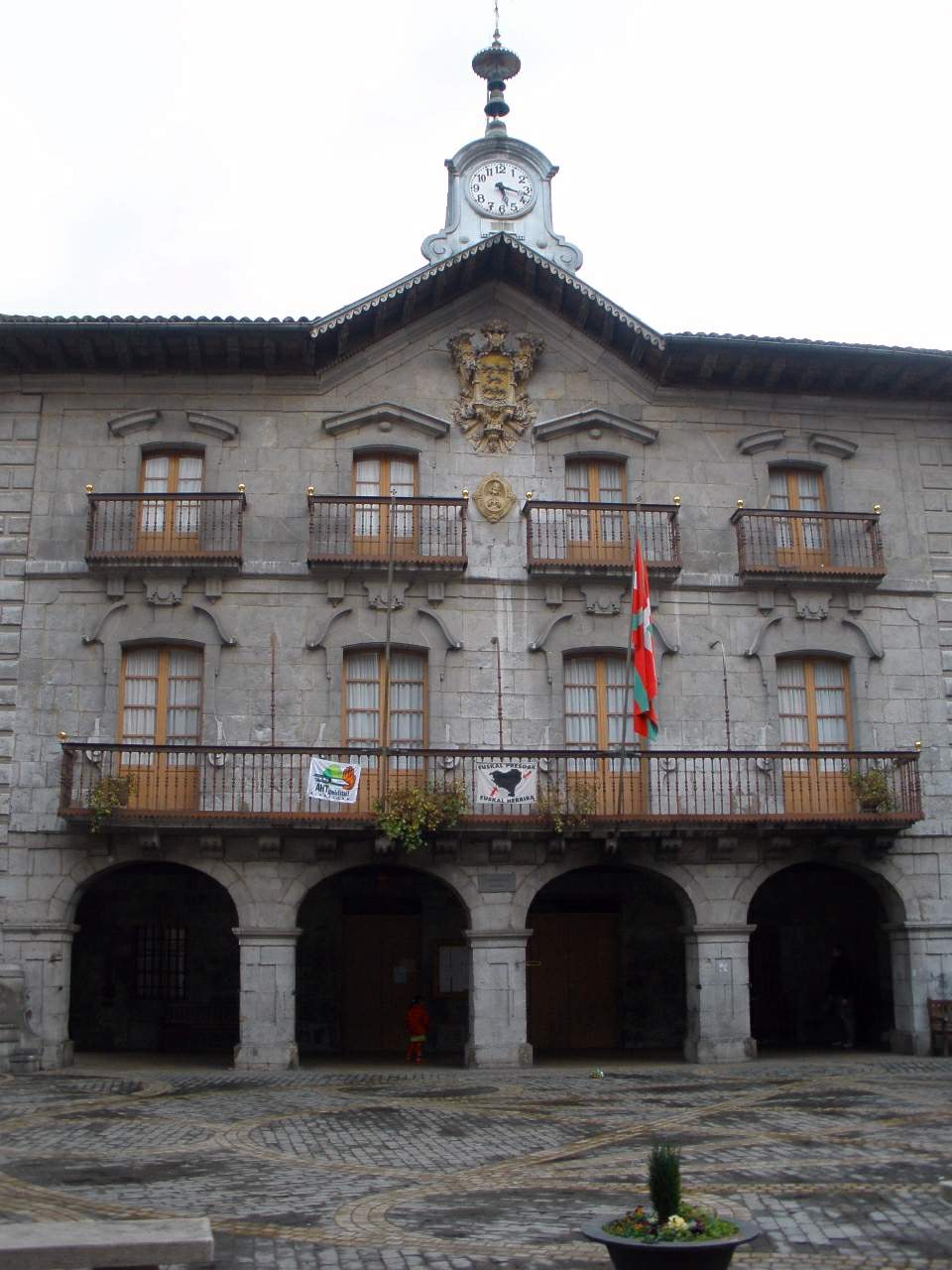
The Town Hall of Legorreta (Basque: Legorretako udaletxea) is a modest administrative building standing at the heart of Legorreta, a small town in the Gipuzkoa province of the Basque Country. It sits on Kale Nagusia, the town's main street, directly facing the parish church of San Salvador, together forming the civic core of the settlement.
Where is the town hall and what does it look like?
The current building opened in 1996, making it one of the more recent additions to the town's architecture - unlike many Basque town halls, which often trace their origins back to the 17th or 18th century. Despite its modern construction, the building was deliberately placed within the traditional layout of the centre: its façade opens onto the main street and the square dominated by the tower of San Salvador. This close pairing of church and town hall is typical of Basque towns, where the square in front of the parish church has for centuries served as the gathering point for community decisions.
What stands out on the balcony?
What sets this town hall apart from other public buildings in the region is the sculpture decorating its balcony. The work, created by Koldobika Jáuregui, depicts a tree growing from within a traditional Basque farmhouse, or baserri - a motif that fuses natural imagery with the rural architecture so characteristic of the Gipuzkoa landscape. The sculpture is carved from stone and wood, materials long tied to local craftsmanship and building traditions.
What history lies behind Legorreta's self-government?
Although the building itself is young, it represents a centuries-long path toward administrative independence. From 1399, Legorreta remained bound to neighbouring Ordizia (formerly known as Villafranca), falling under its jurisdiction for more than two hundred years. That changed on 4 February 1615, when a royal privilege granted the town the title of "Noble and Loyal Town" (Basque: Herri Noble eta Leial). To secure this status, the 108 families living in Legorreta at the time had to pay 25 ducats to the king himself, plus a further 150 ducats for the issuing of the deed. From that point on, Legorreta began writing its own separate administrative history, apart from Ordizia - and today's town hall, though far younger, stands as the direct heir of that self-government.
Why is the town hall worth seeing on a visit to Legorreta?
For anyone exploring the Basque Country, the town hall of Legorreta brings several threads together in one spot: contemporary local art in Jáuregui's sculpture, the memory of a centuries-old struggle for self-rule, and late 20th-century architecture deliberately fitted into a traditional town square. It also makes a convenient starting point for further exploration - the church of San Salvador and the rest of Kale Nagusia, the town's main street, are only steps away.
Frequently asked questions
When was the current town hall built? The building opened in 1996.
Where exactly is it located? On Kale Nagusia, the town's main street, directly facing the parish church of San Salvador.
What does the sculpture on the balcony show? A tree growing from within a traditional Basque farmhouse (baserri), created by Koldobika Jáuregui from stone and wood.
What is the historical significance of Legorreta? The town was under the jurisdiction of Ordizia from 1399, until a royal privilege on 4 February 1615 granted it the title of "Noble and Loyal Town," marking the start of its own separate administrative history.
Can visitors go inside the town hall? As a working administrative building, it primarily serves local residents, so visitor access is generally limited to viewing the façade and balcony from outside.
Nearby places

Earn badges for the places you visit
Download NextOnTrip, discover new places and check off your trails.