About this place
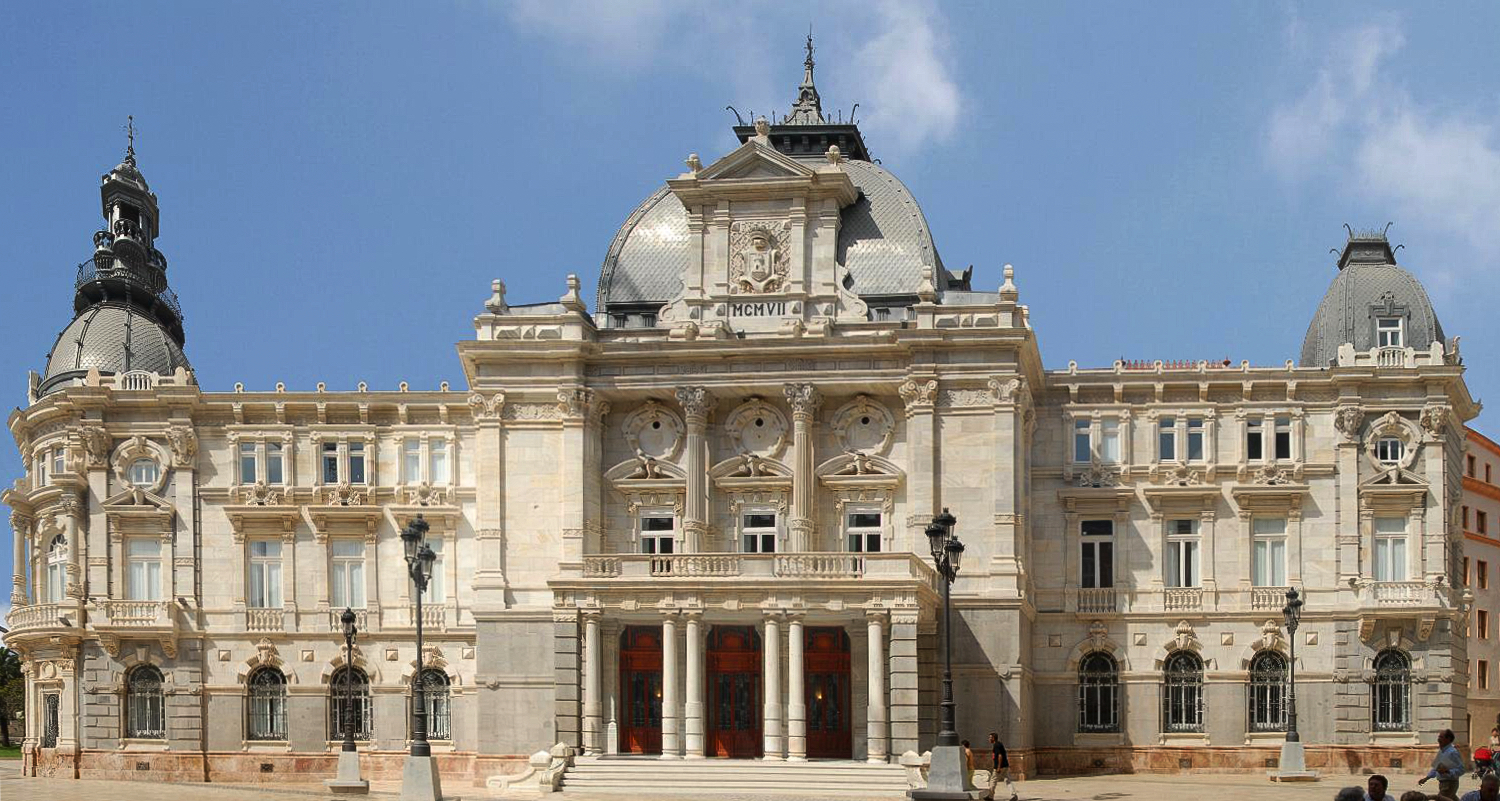
The Town Hall of Cartagena (Palacio Consistorial) is one of the most recognizable buildings in the historic center of Cartagena, a port city on the southeastern coast of Spain, in the Region of Murcia. It stands along the harborfront promenade, on the same plot once occupied by an older, sixteenth-century town hall built in the Herrerian style.
Why was the current building constructed?
In the early twentieth century, Cartagena was going through an economic boom driven by mining and port trade, and the old town hall had become too small for the growing municipal administration. Construction of the new Palacio Consistorial started in 1900 and finished in 1907. The design came from architect Tomás Rico Valarino, who was originally from Valladolid, working together with Francisco de Paula Oliver. King Alfonso XIII personally presided over the inauguration, a sign of how much weight the city placed on the project.
What architectural style does the town hall follow?
The building is eclectic in style, with clear French influence typical of Spanish civic architecture from that period. Its base is built from gray granite, while the facades are finished in white marble, creating a striking contrast that stands out from a distance. The floor plan is triangular, which gives the building three separate facades, each one densely decorated with broken pediments, elliptical windows, classical moldings, and ornamental female heads and civic shields worked into the stonework.
What can visitors see inside?
The first floor houses the Chamber of Sessions, a hall with walls carrying baroque-influenced details beneath a wooden artesonado ceiling. The building also includes a grand staircase known as the imperial staircase, a plenary hall, and the mayor's office, decorated in a modernist style with paintings by Inocencio Medina Vera. A collection of paintings is distributed throughout the interior, and the city occasionally opens the building for guided visits so the public can see these rooms up close.
How does the town hall fit into Cartagena's wider history?
Cartagena has one of the longest continuous histories of any city on the Spanish coast, tracing back to Carthaginian and Roman times, when its natural harbor made it a strategic hub in the western Mediterranean. The Palacio Consistorial, though far younger than the ancient remains scattered around the city, became a new symbol of civic identity at the turn of the twentieth century and still functions as the seat of local government today. It stands close to the port, surrounded by other buildings raised during the same period of prosperity.
Frequently Asked Questions
When was the Cartagena town hall built? Construction ran from 1900 to 1907, and the building was formally inaugurated in 1907.
Who designed the building? The architect was Tomás Rico Valarino, working with Francisco de Paula Oliver.
What architectural style is the town hall built in? It is an eclectic building with French influence, standing on a gray granite base with facades faced in white marble.
Can the interior be visited? The city organizes guided visits to parts of the interior, including the Chamber of Sessions, the imperial staircase, and the mayor's office — it's worth checking current details directly with the municipality, since access can change.
Nearby places

Earn badges for the places you visit
Download NextOnTrip, discover new places and check off your trails.