About this place
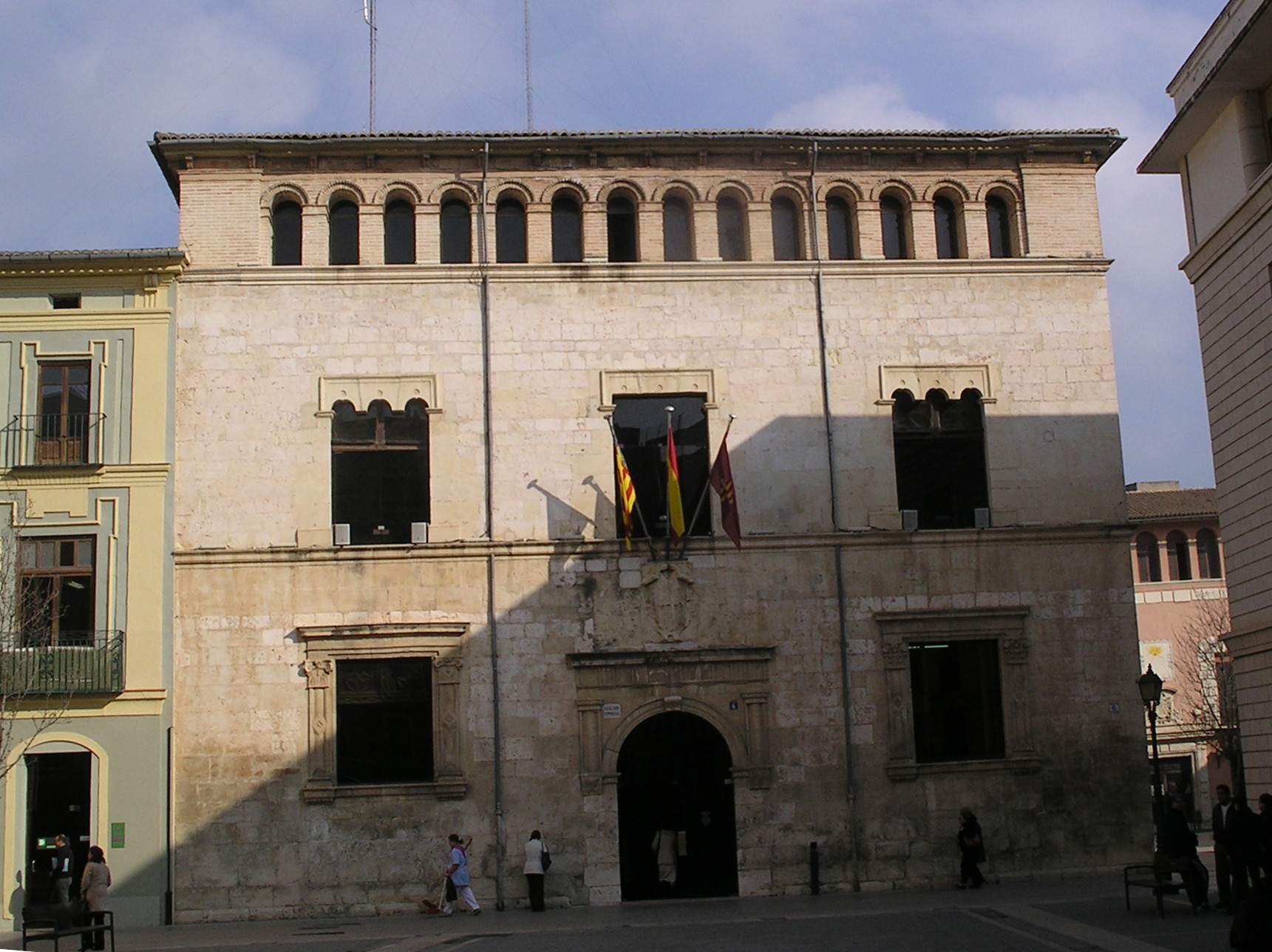
The town hall of Alzira stands at the heart of this riverside town in the Valencia province, its Renaissance frame dating back to 1540. Recognized as a monument of national cultural interest, the building carries three architectural periods on a single façade — Gothic, Renaissance and Baroque details sit side by side, an unusual mix for a municipal building of this scale.
What makes this town hall worth a stop?
The structure takes the shape of a civil Gothic palace, a design common among Valencian noble houses of the era: a plain stone front, an even rhythm of window openings, and restrained but carefully carved stonework. Rather than the grander town halls found in bigger regional cities, this one preserves the layout typical of small Valencian municipal seats from the 16th century, before neoclassical remodeling became the norm elsewhere.
What does the building hold inside?
The town hall houses the "Aureum Opus," an illuminated codex from the 15th century and one of the most significant historical documents tied to the city. It isn't displayed as a everyday museum piece, but the fact that a working administrative building still safeguards it says something about Alzira's institutional continuity — the town has run its affairs from this same site for centuries.
How does the town hall fit into Alzira's history?
Alzira began as the Iberian settlement of Algezira Sucro, built on an island formed by two branches of the Sucro River, known today as the Júcar — hence the Arabic-derived name "al-jazira," meaning "island." The town was incorporated into the Christian Kingdom of Valencia in 1242, following the conquest led by James I of Aragon. Erected three centuries later, the town hall is a witness to the period when Alzira operated as a fully established Christian Spanish town with a municipal government in need of a representative headquarters.
The town's prosperity was not uninterrupted, however: after the expulsion of its large Morisco population in the early 17th century, Alzira went through a noticeable economic and demographic decline. The town hall survived those shifts as a fixed reference point in the fabric of the city.
What else is worth seeing nearby?
Alzira sits in the Ribera Alta region, known for its orange groves — the orchards surrounding the town are part of the everyday landscape and worth a look on any walk through the old center. Near the Júcar River, a Roman bridge still stands, evidence of settlement here even before the Iberian Algezira Sucro existed. Visiting the historic center of Alzira, with the town hall as a natural anchor point, typically takes no more than an hour or two, making it easy to combine with a longer day trip around the Ribera Alta.
Frequently Asked Questions
When was the town hall of Alzira built? The building dates to 1540, in the Renaissance period, though its architecture also shows Gothic and Baroque elements added over time.
Can visitors go inside the town hall? As a working municipal administrative building, the town hall does not operate as a conventional tourist attraction with set visiting hours — it's worth checking locally or with the tourist information office for any public access.
What is the "Aureum Opus"? It is an illuminated 15th-century codex kept at the town hall, one of the historical documents connected to Alzira's past.
Why is Alzira sometimes called "the island"? The town's name derives from the Arabic word for island — the original settlement grew on land encircled by two branches of the Júcar River, formerly known as the Sucro.
Nearby places

Earn badges for the places you visit
Download NextOnTrip, discover new places and check off your trails.