About this place
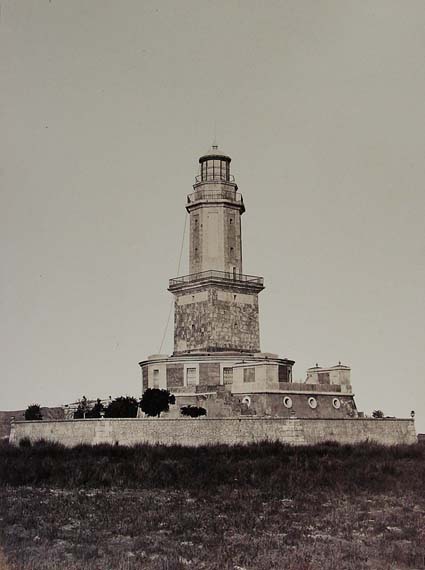
Torre del Rellotge is a small but historically significant tower standing in Barcelona's old harbour, Port Vell, right on the Moll de Pescadors quay. Despite its name meaning "Clock Tower," it wasn't built as a clock at all — it started out as the city's first lighthouse and one of the oldest lighthouses on the entire Mediterranean coast.
What is the history behind the tower?
The tower was designed in 1772 by engineer Jorge Próspero de Verboom, who was in charge of rebuilding and modernizing Barcelona's port at the time. Its original purpose was to light the harbour entrance and guide ships safely to the quay, a job it performed for well over a century.
The tower also has a surprising place in scientific history. Between 1792 and 1798, French geodesist Pierre Méchain used it as one of his reference points during the famous expedition that measured the meridian arc between Dunkirk and Barcelona. Those measurements helped establish the length of the metre, the base unit of the metric system now used across most of the world.
When the port underwent another major expansion around the turn of the 20th century, the lighthouse function was no longer needed at this spot. In the early 1900s, a large four-faced clock was installed at the top of the tower, visible from several directions at once. The clock mechanism was built and maintained for years by local clockmaker Josep Besses. From that point on, the structure became known as Torre del Rellotge — the Clock Tower — and its original role as a lighthouse gradually faded from memory.
How do you get to Torre del Rellotge?
The tower sits within Port Vell, Barcelona's "Old Port," an area bordering the Barceloneta neighbourhood and within easy reach of the city centre. It's a highly walkable part of the waterfront, close to the Rambla de Mar footbridge, the city aquarium, and the Port Vell marina, so the simplest way to reach it is on foot, strolling along the harbour from the lower end of La Rambla or from Barceloneta. The area is also served by public transport, so it's worth checking current metro and bus connections to Port Vell before heading over.
What will you see there?
The tower itself is short and easy to miss among Port Vell's bigger attractions, but that low-key presence — tucked into the small fishermen's corner of Moll de Pescadors, right at the water's edge — is part of its charm. Its pale stone body and the four clock faces at the top set it apart from the surrounding harbour buildings. It makes a good short stop on a longer walk through Port Vell, easily combined with a stroll toward the yacht marina, the Rambla de Mar, or Barceloneta beach.
When is the best time to visit?
You can view the tower from the outside all year round, since it stands in an open harbour area rather than being a ticketed attraction with fixed opening hours. Spring and autumn tend to be the most pleasant times, with mild temperatures and a quieter waterfront than in the height of summer. In the evening, the tower is often lit up, adding a nice touch to an after-dark walk along the port.
Frequently Asked Questions
Is Torre del Rellotge still an active lighthouse? No. It served as a lighthouse from 1772 until the early 20th century, when a clock replaced its light and it stopped guiding ships into the harbour.
Why is it called the "Clock Tower" if it was originally a lighthouse? The name comes from the large four-faced clock installed at the top in the early 1900s, which took over from the tower's earlier role as a navigational light.
Is there an entrance fee to visit the tower? No. It's viewed from the open harbour promenade, so there's no admission charge to see it.
What else is worth seeing nearby? Port Vell is a great starting point for a walk toward the yacht marina, the Rambla de Mar, and Barceloneta's beaches, so a stop at the tower fits easily into a longer waterfront visit.
Nearby places

Earn badges for the places you visit
Download NextOnTrip, discover new places and check off your trails.