About this place
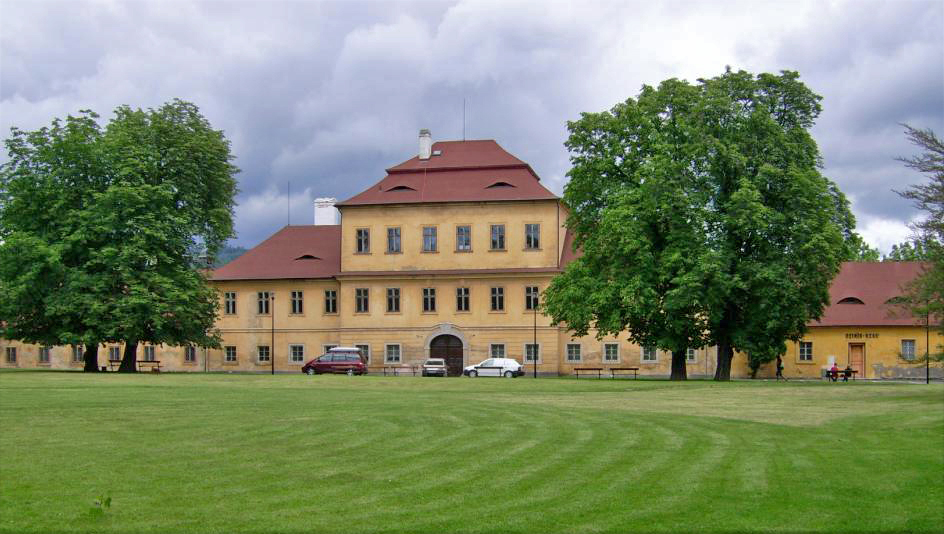
Teplice Castle stands at the heart of Teplice, a spa town in the Ústí nad Labem Region of northern Bohemia. Built on the site of a medieval convent, the complex grew over centuries into a baroque-classicist residence that today houses a regional museum.
How did the castle come to be?
The story begins in the second half of the 12th century, when the Czech queen Judith founded a Benedictine convent "by the hot springs," dedicated to St. John the Baptist — those same thermal springs later gave the town its name, Teplice. The convent was destroyed and abandoned during the Hussite Wars. Under Johanka of Rožmitál, a secular keep rose on the ruins, which subsequent owners — Volf of Vřesovice and later the Kinský (Vchynský) family — expanded step by step into a proper castle. From 1634 to 1945 the estate belonged to the Clary-Aldringen family, who gave it much of the representative character visible today.
What can you see inside?
Originally a Gothic stronghold raised over the old Benedictine convent, the castle was rebuilt in Renaissance style and later enriched with Baroque and Classicist elements. Highlights among the preserved interiors include a hall with a painted coffered ceiling, a Rococo hall with lavish stucco decoration, and rooms furnished in Rococo, Empire and Biedermeier styles. The visitor route also takes in the inner courtyard, an exhibition called "In the Footsteps of the Lost Monastery in Teplice," an artificial 17th-century grotto, and a Romanesque crypt with exceptionally well-preserved interiors — one of the oldest and most valuable parts of the whole complex.
What does the castle hold today?
The building now houses the Regional Museum in Teplice, an institution run by the Ústí Region that focuses on the archaeology, history and nature of northwestern Bohemia. Its exhibitions trace the region's story from prehistoric times through the monastic and aristocratic eras up to the present day, and a walk through the courtyard and underground spaces gives a real sense of how many layers of history are stacked on this one site.
How do you get there?
The castle sits right in the center of Teplice, close to the main square and pedestrian zone, so it's an easy walk of about ten to fifteen minutes from the town's train or bus station. Teplice itself is well connected within the Ústí nad Labem Region, with good links to Prague and across the border to Dresden, making the castle a convenient stop when exploring the Ore Mountains (Krušné hory) or the town's spa facilities.
When is the best time to visit?
Spring through autumn is the most rewarding window, when the museum runs full opening hours and the courtyard and grotto look their best in natural light. Plan for roughly one to two hours to cover the exhibitions and underground spaces, more if you combine the visit with a stroll through Teplice's old town.
Frequently asked questions
Is Teplice Castle open to visitors? Yes. The building houses a regional museum, and visitors can explore the castle interiors, the courtyard, the grotto, and the Romanesque crypt.
Where does the name Teplice come from? It comes from the hot thermal springs beside which Queen Judith founded a Benedictine convent in the 12th century — the site has been known as a spa location ever since.
What architectural style is the castle? It began as a Gothic fortress, was rebuilt in the Renaissance period, and later gained Baroque and Classicist additions, which is why the interiors show such a mix of styles.
What's the highlight of a visit inside the castle? The exceptionally well-preserved Romanesque crypt and the 17th-century artificial grotto are usually considered the most unique stops on the tour, alongside the Rococo stucco halls.
Nearby places

Earn badges for the places you visit
Download NextOnTrip, discover new places and check off your trails.