About this place
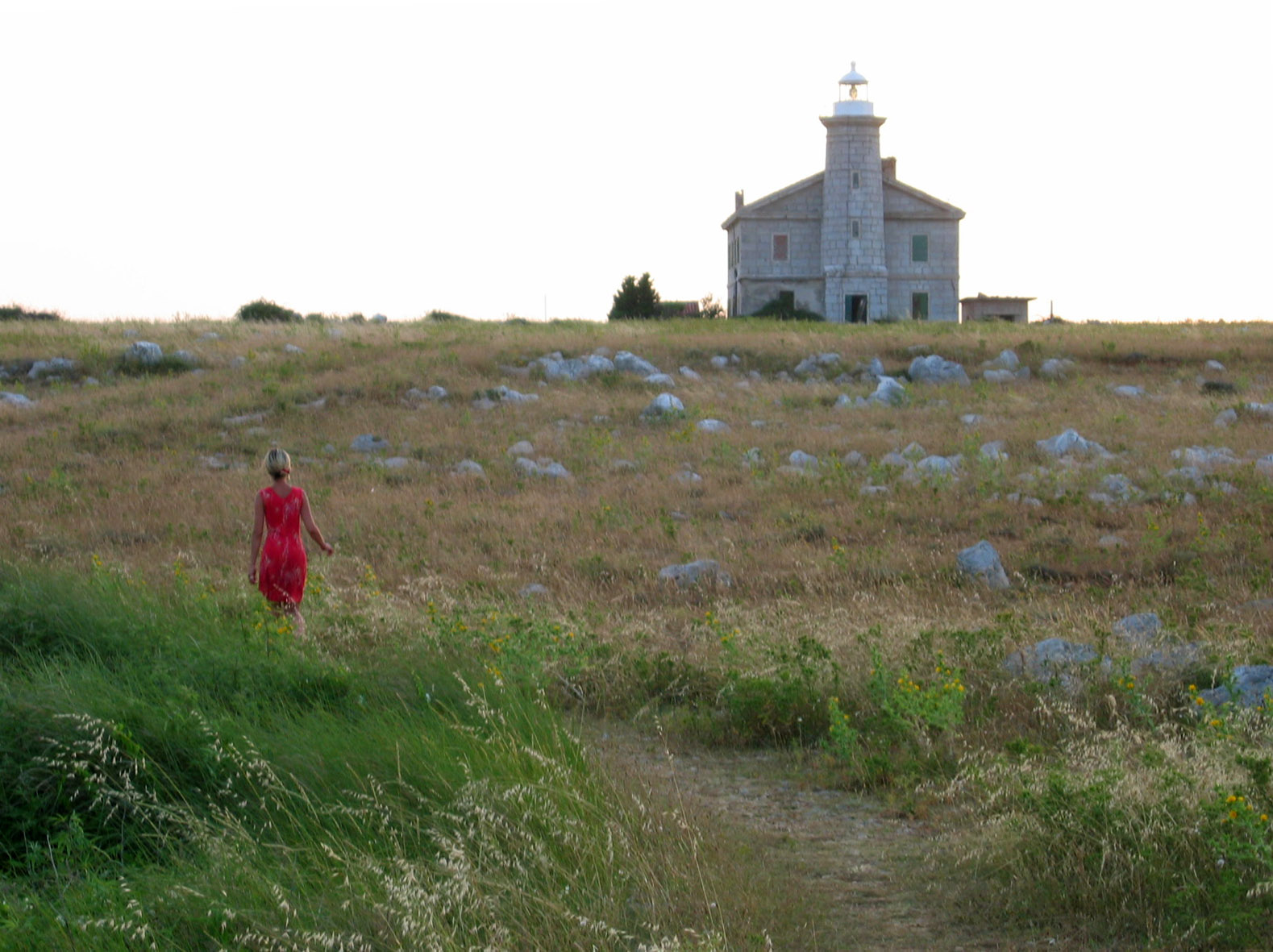
Stražica Lighthouse rises alone on the island of Prvić in the Adriatic Sea, a compact rocky outpost long known as one of Croatia's last untouched islands. It's a destination for travelers drawn to quiet coastal history rather than crowded beaches — a place to see the Adriatic stripped of resorts and marinas.
Where is the lighthouse located?
The structure sits on Prvić, roughly at 44.93°N, 14.77°E. The site is modest by design: a small stone keeper's house paired with a slender, five-metre tower — a scale typical of 19th-century Adriatic lighthouses, where function mattered far more than grandeur.
When was it built, and who lived there?
Construction dates to 1875. For nearly a century afterward, lightkeepers occupied the station, tending the beam and living as the island's only permanent residents — Prvić had no other inhabitants during that stretch. Life on the post meant real isolation: supplies, mail, and any contact with the mainland depended entirely on the sea and the weather. That arrangement ended in 1974, when the lighthouse was fully automated and a human presence was no longer required to keep it running.
How does the lighthouse operate today?
Automation in 1974 wasn't the last upgrade. In 1993, the original gas-powered system was swapped for solar panels, letting the light run without relying on fuel deliveries — a practical fix on an island where every shipment was a logistical hurdle. Today the beam is monitored remotely by Plovput, the state company responsible for Croatia's entire lighthouse network. No staff live on site anymore; the light simply runs on its own, watched from shore.
Why is Prvić sometimes called a record-holder?
For years, Prvić carried the reputation of being Croatia's largest uninhabited island — a distinction that added to its appeal for travelers chasing genuine wilderness. That status held until 2004, when updated measurements revealed that another island, Žut, was actually larger by about 2 square kilometres. The title changed hands, but Prvić's identity hasn't: for a century, its only residents were the people keeping a light burning for passing ships.
What should visitors know before going?
Stražica Lighthouse isn't a polished tourist stop with cafés or marked trails — it's a target for maritime history buffs, landscape photographers, and sailors cruising the Adriatic. Reaching Prvić typically means arranging your own boat or chartering one, since the island has little permanent infrastructure or tourist development. Bring water and sun protection, and check the marine forecast beforehand, since the crossing depends on conditions.
Frequently asked questions
Can visitors go inside Stražica Lighthouse? The lighthouse operates as an automated navigational aid remotely managed by Plovput, so it isn't set up as a museum with regular public access — it's mainly a sight to view from outside or from the water.
When did the lighthouse stop having live-in keepers? The keepers left in 1974, when the station was fully automated and constant human presence was no longer needed to run it.
What powers the light today? Since 1993, solar panels have supplied the power, replacing the earlier gas-based system — a sensible switch for an isolated island without permanent energy infrastructure.
Is Prvić really Croatia's largest uninhabited island? No — that was the long-held belief, but updated measurements in 2004 showed the island of Žut is actually larger, by roughly 2 square kilometres.
Nearby places

Earn badges for the places you visit
Download NextOnTrip, discover new places and check off your trails.