About this place
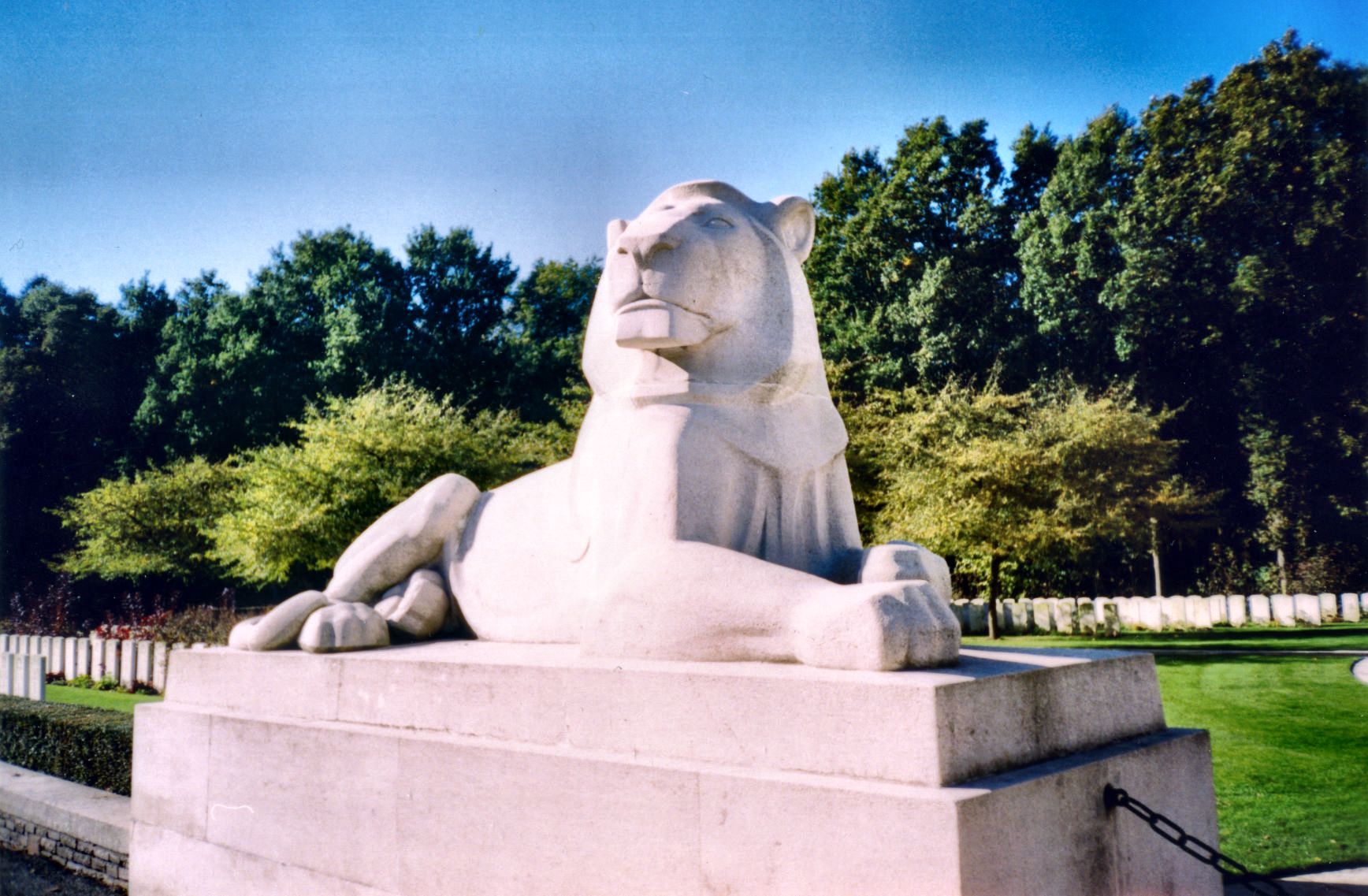
Strand Military Cemetery is a British war cemetery located in the municipality of Comines-Warneton (Komen-Waasten), right beside the N365 road connecting Ypres to Armentières, just before the village of Ploegsteert. The site sits roughly 13 km south of Ypres town centre, in an area that formed one of the most contested sections of the Western Front in Flanders during the First World War.
Where does the cemetery's name come from?
The name recalls a communication trench that soldiers nicknamed "the Strand," which ran toward the nearby Ploegsteert Wood — known to British troops by the affectionate nickname "Plugstreet." The point where that trench ended was dubbed "Charing Cross" by the men, a nod to the famous London junction. It was here, close to an advanced dressing station, that the first burials took place.
How did the cemetery develop over time?
The earliest two burials were made in October 1914, right at the start of trench warfare on this stretch of the front. For several years afterward, the site saw no further use for burials. Only between April and July 1917 were Plots I to VI completed, as fighting in the area intensified once more. Plots VII to X were added after the Armistice, during the post-war concentration of graves, when remains were brought in from a number of smaller battlefield cemeteries and from the surrounding battlefields stretching mainly between Wytschaete and Armentières.
How many burials does the cemetery hold, and who designed it?
The cemetery contains 1,162 war burials. Its layout and architectural features were designed by Charles Holden, one of the architects who worked with the Imperial War Graves Commission (today's Commonwealth War Graves Commission), the body responsible for the care of Commonwealth war cemeteries and memorials from both world wars.
Why was it once known as the "Australian Cemetery"?
For a period after the war, the site was informally referred to as the "Australian Cemetery," likely reflecting the significant number of Australian soldiers who fought and were buried in this part of Flanders. The name was changed to the current one during the later phase of grave concentration, as the Commission standardised naming across cemeteries in the region.
How can visitors reach the site?
The cemetery stands directly on the N365 road, on the left-hand side when travelling from Mesen (Messines) toward Ploegsteert — about 4 km beyond Mesen and just before entering the village itself. This route links Ypres with Wijtschate, Mesen, and onward to Armentières on the French side of the border, making the cemetery a relatively easy stop on a battlefield tour of western Flanders.
Frequently asked questions
Can the cemetery be visited independently? Yes — like most Commonwealth War Graves Commission sites, it is freely accessible year-round with no admission charge.
What is the earliest burial date at the site? The oldest graves date back to October 1914, from the first months of trench warfare on the Western Front.
Is this the only war cemetery near Ploegsteert? No — the area around Ploegsteert Wood and Mesen holds several First World War cemeteries, reflecting how intensely this section of the front was fought over during the four years of the conflict.
Nearby places
-
Berks Cemetery Extension
Comines-Warneton - Komen-Waasten
-

Hyde Park Corner (Royal Berks) Cemetery
Comines-Warneton - Komen-Waasten
-
Underhill Farm Cemetery
Comines-Warneton - Komen-Waasten
-
Lancashire Cottage Cemetery
Comines-Warneton - Komen-Waasten
-
London Rifle Brigade Cemetery
Comines-Warneton - Komen-Waasten
-
Ploegsteert Wood Military Cemetery
Comines-Warneton - Komen-Waasten
Earn badges for the places you visit
Download NextOnTrip, discover new places and check off your trails.