About this place
The Statue of Saint Thecla is a Baroque stone sculpture standing in Podivín, in South Moravia, right next to the Church of St. Peter and Paul on Komenský Street. Modest in size, it carries a striking trace of the fears that once gripped the town's farmers — fear not of fire or war, but of disease sweeping through their livestock.
Where does the statue stand?
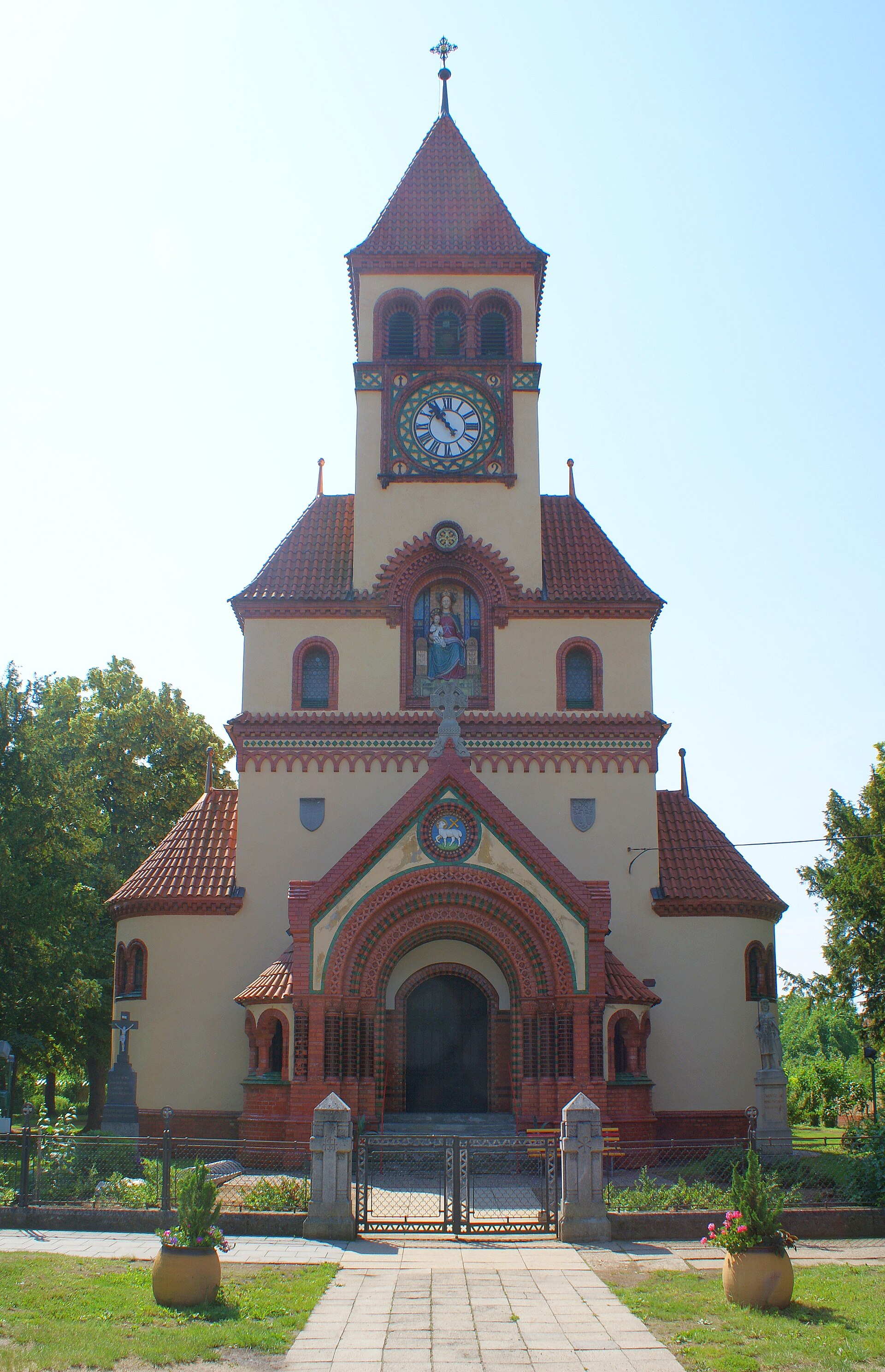
The statue is located in Podivín, immediately beside the Church of St. Peter and Paul on Komenský Street, one of the town's most important historic buildings. This placement is typical for Baroque devotional statues, which in the 18th century were usually erected near churches, on squares, or along important roads so they would be visible to both townspeople and travelers passing through.
When was it made, and by whom?
The statue dates back to 1751 and is attributed to the sculptor Ignác Lengelacher, who was active in the region during the Baroque period. The life-size figure of the saint stands on a four-sided pedestal decorated with scrolled, wing-like side elements, itself resting on square stone steps. The work is considered a high-quality piece of period stone carving.
Why was this particular saint chosen?
Carved into the pedestal is a German inscription: "ZV EHREN DER H. MART. THECLA IN GROSER VIEHSEÜCH ERNEÜERT" — "In honor of the holy martyr Thecla, renewed during a great cattle plague." The inscription reveals that the statue was tied to an epidemic affecting livestock in the area, and that it was renewed at some point after its original erection. For the farming community of Podivín, where cattle raising was central to daily survival, an outbreak of disease among the animals was an existential threat — which explains the need for a votive monument invoking divine protection.
Who was Saint Thecla?
Saint Thecla was an early Christian martyr, one of the most venerated figures from the earliest centuries of Christianity. In folk tradition she was invoked, among other things, as a protector against fire and epidemics — which fits neatly with why her image was chosen as a votive offering at a time when disease was threatening the town's livestock.
What is the statue's status today?
The Statue of Saint Thecla is listed in the register of immovable cultural monuments of the Czech Republic, together with the neighboring Church of St. Peter and Paul and its adjoining rectory. This designation means the whole ensemble — church, rectory, and Baroque statue — is under heritage protection as a testament to the region's local history and sacred art.
What can visitors see on site?
Visitors can examine the stone sculpture up close, including its distinctive scrolled pedestal and the founding inscription, which remains legible even after nearly three centuries. Because the statue stands right beside the Church of St. Peter and Paul, a visit naturally pairs with a walk through Podivín's historic center.
Frequently asked questions
Where exactly is the Statue of Saint Thecla in Podivín? Next to the Church of St. Peter and Paul, on Komenský Street, in the town center.
What year does the statue date from? 1751, from the Baroque period.
Who created the sculpture? It is attributed to the sculptor Ignác Lengelacher.
Why was this particular statue erected? The pedestal inscription states it was renewed "during a great cattle plague," linking it to a livestock epidemic that affected the area.
Is the statue legally protected? Yes, along with the Church of St. Peter and Paul and its rectory, it is listed as an immovable cultural monument of the Czech Republic.
Nearby places

Earn badges for the places you visit
Download NextOnTrip, discover new places and check off your trails.