About this place
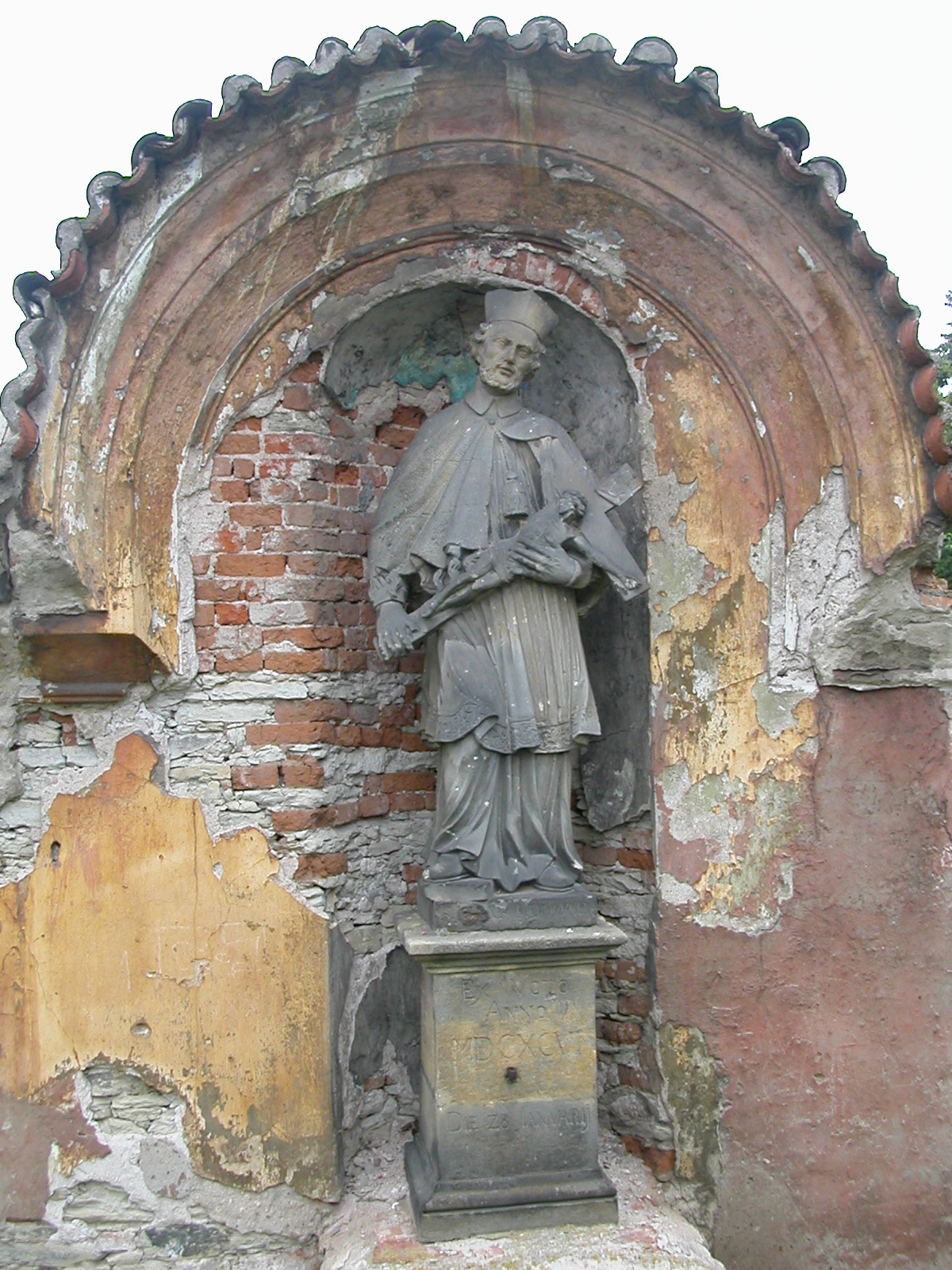
The Statue of John of Nepomuk in Nymburk is an early Baroque sandstone sculpture standing by the road bridge over the Elbe, one of two statues of this saint in town — and by far the older one, carved in 1696, nearly half a century before the second figure appeared near the parish church.
Where exactly does the statue stand?
The sculpture sits in a niche that survives from the enclosure wall of a 17th-century Dominican monastery, right next to the parking area by the road bridge crossing the Elbe. This is not its original spot: the statue used to stand in a niche of a dye-works building, long since demolished, which also happened to be the birthplace of the Czech writer František Rachlík. Visitors on foot can reach it from Nymburk's railway station along a roughly 1,200-metre stretch of a marked blue tourist trail that passes the Church of St. Giles on the way.
Who carved it, and for whom?
The statue was made by Jan Brokoff, founder of a renowned dynasty of sculptors active around the turn of the 18th century, best known for the statues lining Prague's Charles Bridge. The commission came from Samuel Benátský, a Nymburk burgher and town official — a private foundation typical of the votive Baroque statues that wealthier townspeople placed in public space, whether as thanks for protection already granted or as a plea for it.
Why John of Nepomuk specifically?
John of Nepomuk, a chaplain at the court of King Wenceslaus IV, died in 1393 after being thrown from Prague's Charles Bridge into the Vltava River — tradition holds it was punishment for refusing to break the seal of confession. He went on to become one of the most venerated saints in the Czech lands, honoured as a protector against floods, a guardian of bridges and river crossings, and a patron of confessional secrecy. Placing his statue precisely by the Elbe bridge, in a town that has long faced the river's floods, follows the standard pattern of this cult: statues of John of Nepomuk were traditionally erected near bridges, fords and riverbanks.
Is it a protected monument?
Yes — the 1696 statue has been listed as a cultural monument since 1988. That formally sets it apart from Nymburk's other, younger statue of the same saint, dated 1742 and standing by the Church of St. Giles on the church square, which was only listed in 1965. The two are easy to confuse, sharing a town and a subject, but they have different patrons, different original locations, and nearly fifty years between them.
What is there to see on site?
The statue is freely accessible year-round, with no entrance fee or restriction — it stands in open public space at a busy road junction. The niche itself is worth a closer look: it is a surviving fragment of the old monastery wall, a quiet witness to a layer of Nymburk's urban fabric that has otherwise largely disappeared. The pairing of the weathered wall and the Baroque figure leaves a small but genuine trace of the town's history in a spot that today mostly functions as an ordinary traffic node.
Frequently asked questions
When was the statue of John of Nepomuk by the bridge in Nymburk made? In 1696, making it older than Nymburk's other statue of the same saint, which dates to 1742.
Who sculpted it? Jan Brokoff, founder of a well-known family of sculptors and creator of several statues on Prague's Charles Bridge.
Where exactly does the monument stand? In a niche left from the wall of a former Dominican monastery, next to the parking area by the road bridge over the Elbe in Nymburk.
Has it always stood in this location? No — it originally stood in a niche of a now-demolished dye-works building, the birthplace of writer František Rachlík.
Is it a legally protected monument? Yes, it has been listed as a cultural monument since 1988.
Why is a statue of St. John of Nepomuk placed by a bridge? He is venerated as a protector against floods and a patron of bridges, which is why his statues were traditionally set up near river crossings.
Nearby places

Earn badges for the places you visit
Download NextOnTrip, discover new places and check off your trails.