About this place
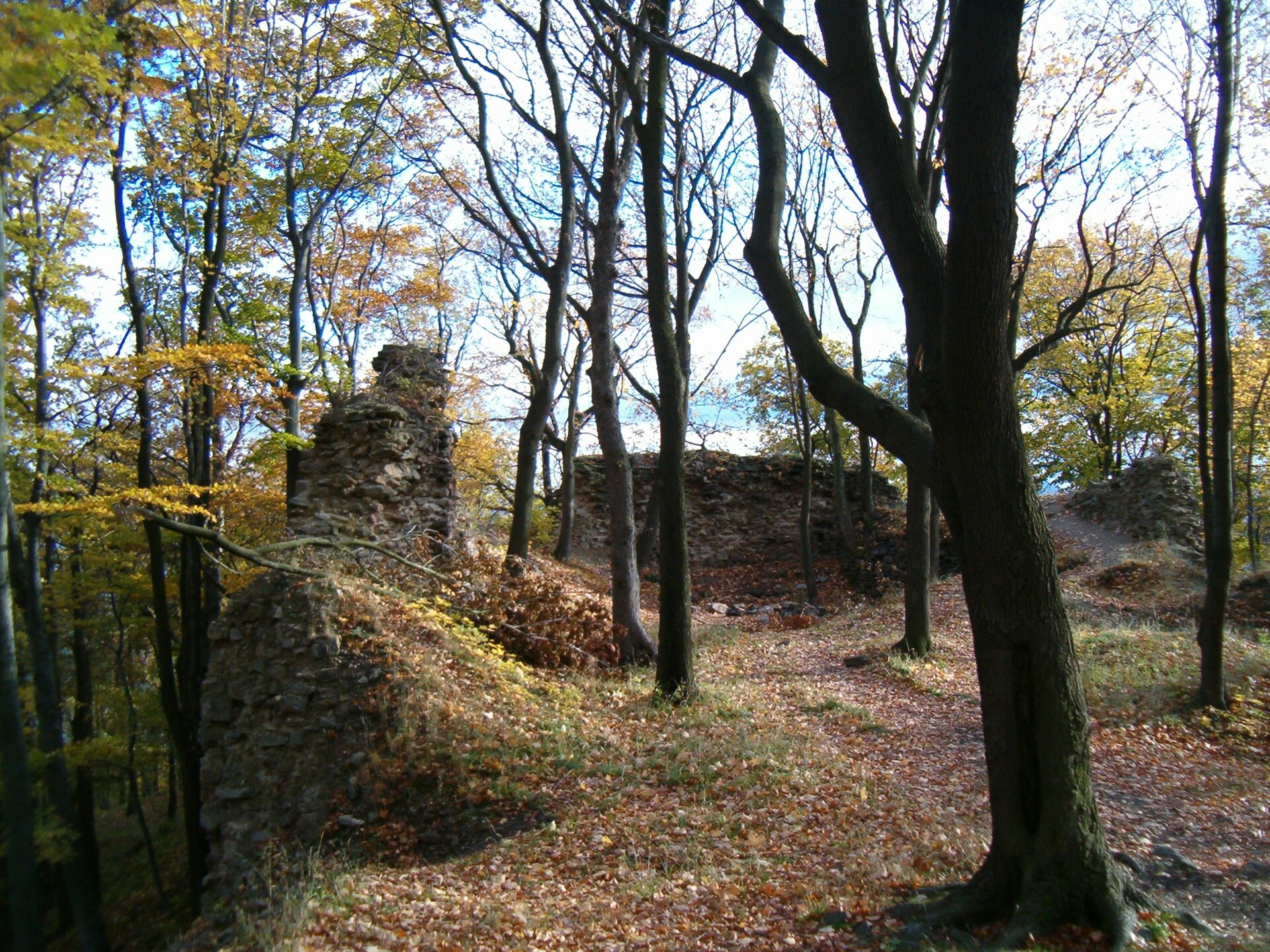
Starý dvůr is the earthen remains of a medieval fortified manor in the town of Krupka, in the Krušné hory (Ore Mountains) of the Czech Republic, close to the border with Saxony.
What is this site and where does its name come from?
The site is also known by its German name, Althof, meaning "old manor" — a fitting label, since it counts among the oldest noble seats in the Krupka area. The earliest written record dates to 1443, though historians believe the fortification itself was built earlier, most likely in the 14th century. It originally stood between two separate settlements, Bohosudov and Krupka, which later grew together into a single town, which is why the site now falls within present-day Krupka.
How was the manor built and fortified?
Starý dvůr took the form of a circular earthwork roughly 23-24 meters across, ringed by an outer wall and a stone-lined moat nearly 14.5-15 meters wide, once filled with water. A four-arch stone bridge carried visitors across the moat to the manor itself. Inside the earthwork stood a rectangular residential building measuring about 8 by 11 meters, with vaulted cellars and a stair annex added onto its northwest corner. This layout — an earthen ring, a water-filled ditch, and a masonry house at the center — was typical of smaller fortified manors built to protect landed estates, as opposed to the larger defensive castles raised to guard mining operations or trade routes.
Who owned it, and what happened to the buildings?
Over the centuries the manor passed through several hands. In 1443 it belonged to the family of Martin Hengst; by 1450 it is recorded under Hanuš Glac; toward the end of the 16th century, in 1594, the owner was Jiří Klippel. Ownership later passed to Diviš Kluge, and by 1637 to Adam Pecelius von Adlerheim. In 1651 the estate was taken over by the Jesuit college of Chomutov. The residential building itself survived until 1883, when the remaining stonework was torn down and the cellars filled in. The earthen ring and the moat, however, have survived in relatively good condition to this day.
Where exactly is it, and can visitors see it today?
The earthwork sits above the municipal swimming pool in Krupka, roughly where the boundary between the former villages of Bohosudov and Krupka used to run. The site is open to the public, and visitors can walk along the preserved rampart and moat without restriction. One detail worth knowing: part of the moat was lined with concrete in the 1980s, when it was pressed into service to help preheat water for the nearby swimming pool — an unusual case of a historic earthwork doubling as modern municipal infrastructure.
Frequently asked questions
When was Starý dvůr built? The first written mention dates to 1443, but the fortification itself is thought to have been built earlier, most likely during the 14th century.
What happened to the manor's stone buildings? The last remnants of the residential building were demolished in 1883 and the cellars were filled in. Only the earthen fortification ring and the moat survive today.
Can Starý dvůr be visited today? Yes — the site is freely accessible, and visitors can view the preserved earthwork and moat, located just above Krupka's municipal swimming pool.
Is the site known by any other name? It is also referred to by its German name, Althof.
Nearby places

Earn badges for the places you visit
Download NextOnTrip, discover new places and check off your trails.