About this place
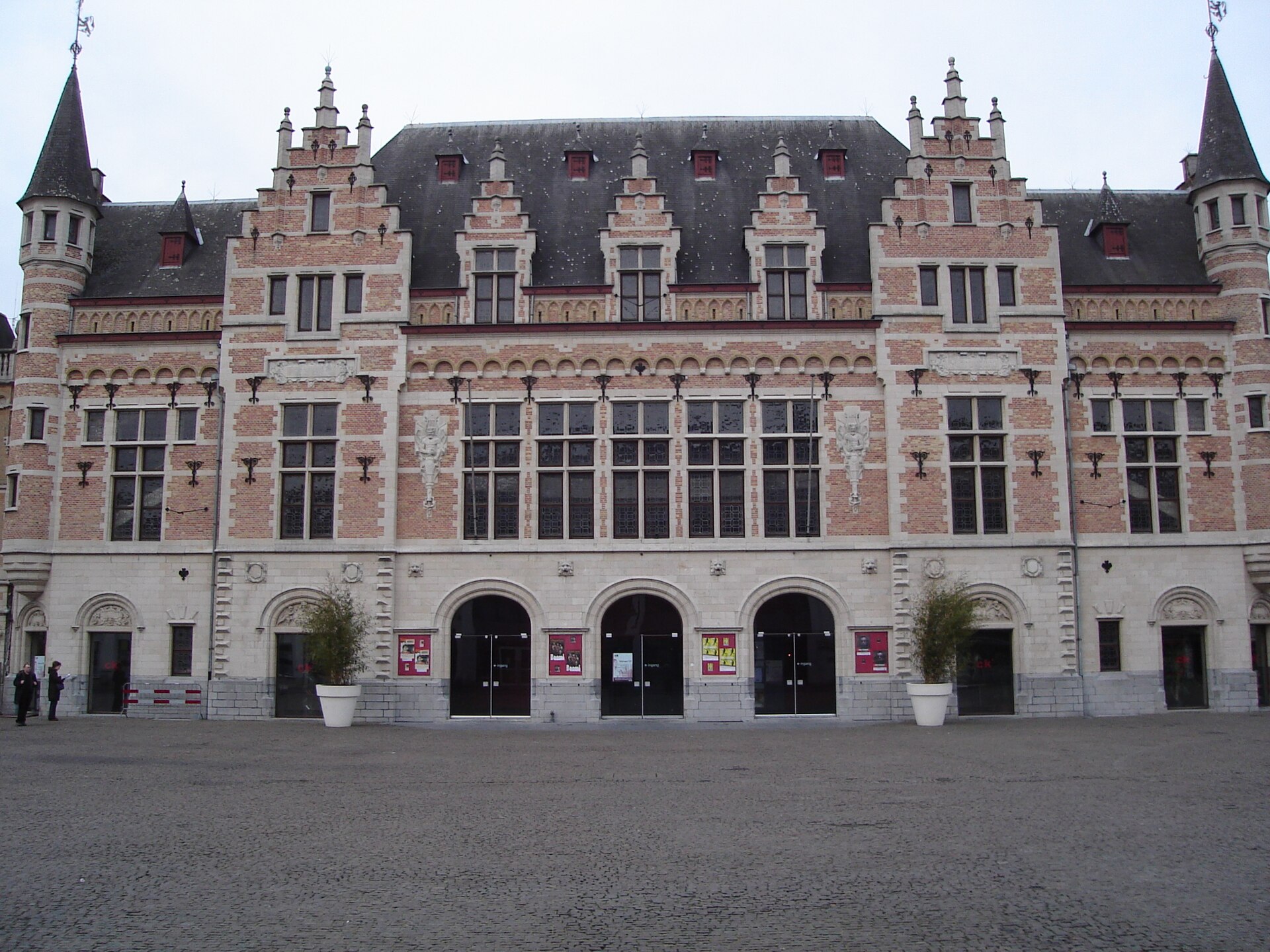
Stadsschouwburg Kortrijk is a historic city theatre standing at Schouwburgplein in the heart of Kortrijk, Belgium, widely regarded as one of the best-preserved city theatres in Europe. The building occupies a site where a monastery had stood since the 17th century, and the idea of building a theatre there was first raised back in 1903.
When was the theatre built?
The decision to go ahead with the project was finally made in 1911. The commission went to architect Jan Robert Vanhoenacker (1875–1958), and construction ran from 1912 to 1920. The theatre officially opened its doors on 27 November 1920 and has served as Kortrijk's municipal stage ever since.
What architectural style did the architect choose?
The Stadsschouwburg was built in neo-Flemish-Renaissance style, a design language often used for prestigious public buildings in Belgium during the early 20th century. The facade combines decorative elements drawn from the Flemish building tradition with a monumental, symmetrical composition befitting a theatre of civic importance.
How is the auditorium arranged?
In concept, Stadsschouwburg Kortrijk is a classic théâtre à l'italienne, with the audience seated in a horseshoe-shaped arrangement facing the stage. The auditorium originally accommodated more than 1,300 spectators across a parterre, two balconies, and an upper gallery. This layout was designed to give good sightlines and acoustics from almost every seat while reinforcing the ceremonial atmosphere of an evening at the theatre.
From the outset, the building was equipped with technically sophisticated stage machinery for its time, including mechanical lifts and stage wagons that allowed scenery to be changed quickly. This let the theatre stage complex opera and drama productions that required efficient backstage work.
What happened to the building over the decades?
The theatre underwent renovations and modernisation through the 20th century. In 1968, following a thorough facelift, it reopened to the public with a performance of Peter Benoit's Rubens Cantata, a work by one of Belgium's most important 19th-century composers. Later conservation work preserved the historic character of the interior while adapting the building to modern staging and safety requirements.
Is the theatre still in use today?
Yes — Stadsschouwburg Kortrijk remains an active municipal stage, hosting theatre performances, concerts, and other cultural events. Its reputation as one of Europe's best-preserved city theatres means the building itself is treated as a heritage landmark, not merely a performance venue.
Frequently asked questions
Where is Stadsschouwburg Kortrijk located? The theatre stands at Schouwburgplein in central Kortrijk, on the site of a former 17th-century monastery.
Who designed the theatre building? It was designed by architect Jan Robert Vanhoenacker, who oversaw its construction between 1912 and 1920.
How many people could the original auditorium seat? The théâtre à l'italienne auditorium, with its parterre, two balconies, and gallery, originally seated more than 1,300 people.
What makes this theatre stand out? It is considered one of the best-preserved city theatres in Europe, combining neo-Flemish-Renaissance architecture with over a century of original stage technology.
Nearby places

Earn badges for the places you visit
Download NextOnTrip, discover new places and check off your trails.