Save this place and discover nearby attractions with NextOnTrip
In the app you can add it to your favorites, see what else is worth visiting nearby on the map, and earn a badge for your visit.
The app is available for iPhone and Android.
About this place
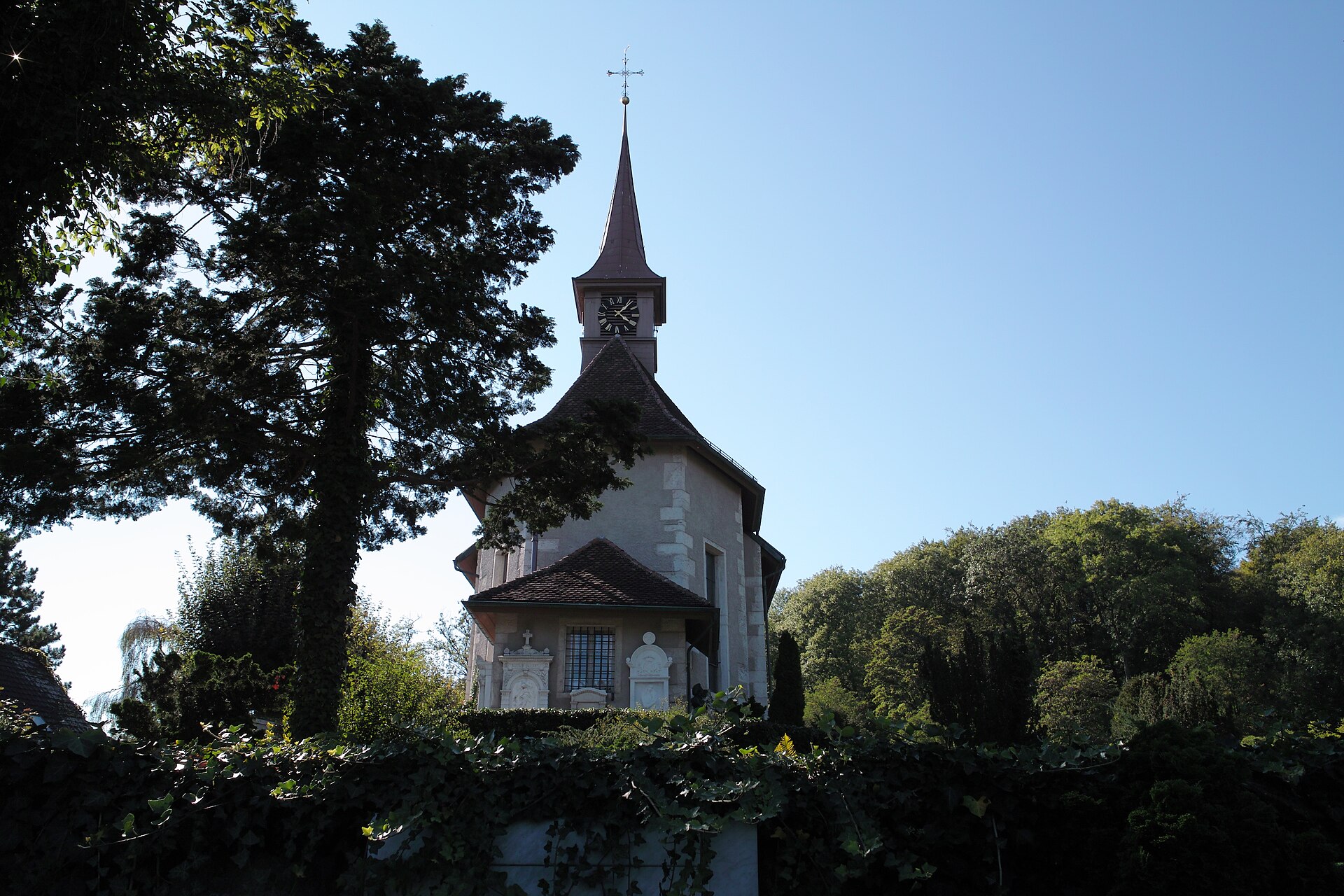
St. Niklaus Catholic Church in Feldbrunnen-St. Niklaus sits just east of Solothurn in north-western Switzerland. A churchyard with the graves of several well-known figures surrounds it, which makes the site worth a stop for anyone interested in architecture or local history.
What is the history of the church?
A chapel dedicated to St. Nicholas of Myra stood here from the Middle Ages, at the mouth of the Verena Gorge. Sources disagree on its first mention: the cantonal heritage office gives 1182, while the Historical Lexicon of Switzerland says 1295. The saint's name gave the village its "St. Niklaus" suffix, which gradually replaced the older name Wedelswil from about 1450. In 1627 the chapel became a parish church, and the parish still covers Feldbrunnen, Riedholz, Rüttenen and the Steingruben district of Solothurn.
What can you see?
The present building dates from 1683 and is built in the post-Gothic style. Inside, a set of neo-Gothic altars from 1861 carries paintings by Melchior Paul von Deschwanden. Since 1965 a stained-glass cycle by Max Brunner, showing scenes from the life of St. Nicholas, has completed the interior.
The churchyard is a sight in itself. It was enlarged several times, the last by 1877, and during the 19th century it became a favoured burial ground for prominent people from Solothurn. The painter Frank Buchser, the writer Charles Sealsfield and the geologist Amanz Gressly are all buried here. Several monuments, including the grave of Buchser and Sealsfield, appear on the canton's list of protected objects.
How do you get there?
Feldbrunnen-St. Niklaus lies in the Lebern district, directly next to Solothurn, so the church is a short ride or walk from the city centre towards the Verena Gorge. The village is small, with 975 residents in 2020, and the surroundings are quiet.
When should you visit?
The churchyard can be visited at any time of year, ideally during daylight. The interior is usually open around services, so check the parish's Mass times if you want to see the altars and windows. The church combines well with a walk through Solothurn's old town and a trip to the Verenaschlucht.
Frequently asked questions
Who is buried in the churchyard?
The painter Frank Buchser, the writer Charles Sealsfield and the geologist Amanz Gressly, among others.
When was the current church built?
In 1683. A chapel of St. Nicholas stood here earlier and became a parish church in 1627.
Is there notable art inside?
Yes: neo-Gothic altars from 1861 with paintings by Deschwanden, and Max Brunner's stained glass from 1965.
Is the site protected?
Yes. The church and selected grave monuments are on the cantonal heritage list for the municipality of Feldbrunnen-St. Niklaus.
Nearby places

Earn badges for the places you visit
Download NextOnTrip, discover new places and check off your trails.