About this place
Square Frère-Orban is a small, intimate park in the European Quarter of Brussels, the kind of green pocket that's easy to walk past while hurrying between EU institutions and the city center. That would be a shame, though, since this spot has a history and character that set it apart from the more formal, showcase squares elsewhere in the Belgian capital.
Where does the name come from?
The park is named after Walthère Frère-Orban, a Belgian statesman who served as prime minister during the nineteenth century. Naming a public square after him reflects a common practice of that era, when rapidly expanding Brussels honored its leading political figures through the urban landscape itself.
How did this green corner come to be?
The story of the site goes back to 1837, when architect Tilman-François Suys laid out this part of the city, an area that at the time extended beyond Brussels's old defensive walls. The square as it's recognizable today, however, took shape later, in 1862, when landscape architect Louis Fuchs gave it its distinctive English-style layout.
Interestingly, it wasn't originally open to the public in the way we'd expect now. It began as a private initiative: a green enclave surrounded by townhouses belonging to aristocrats and the wealthy middle class. Only over time, as the heart of the Leopold district was folded into a far more ambitious urban development plan led by city authorities, did the square take on its more public, urban character.
What style does the park follow?
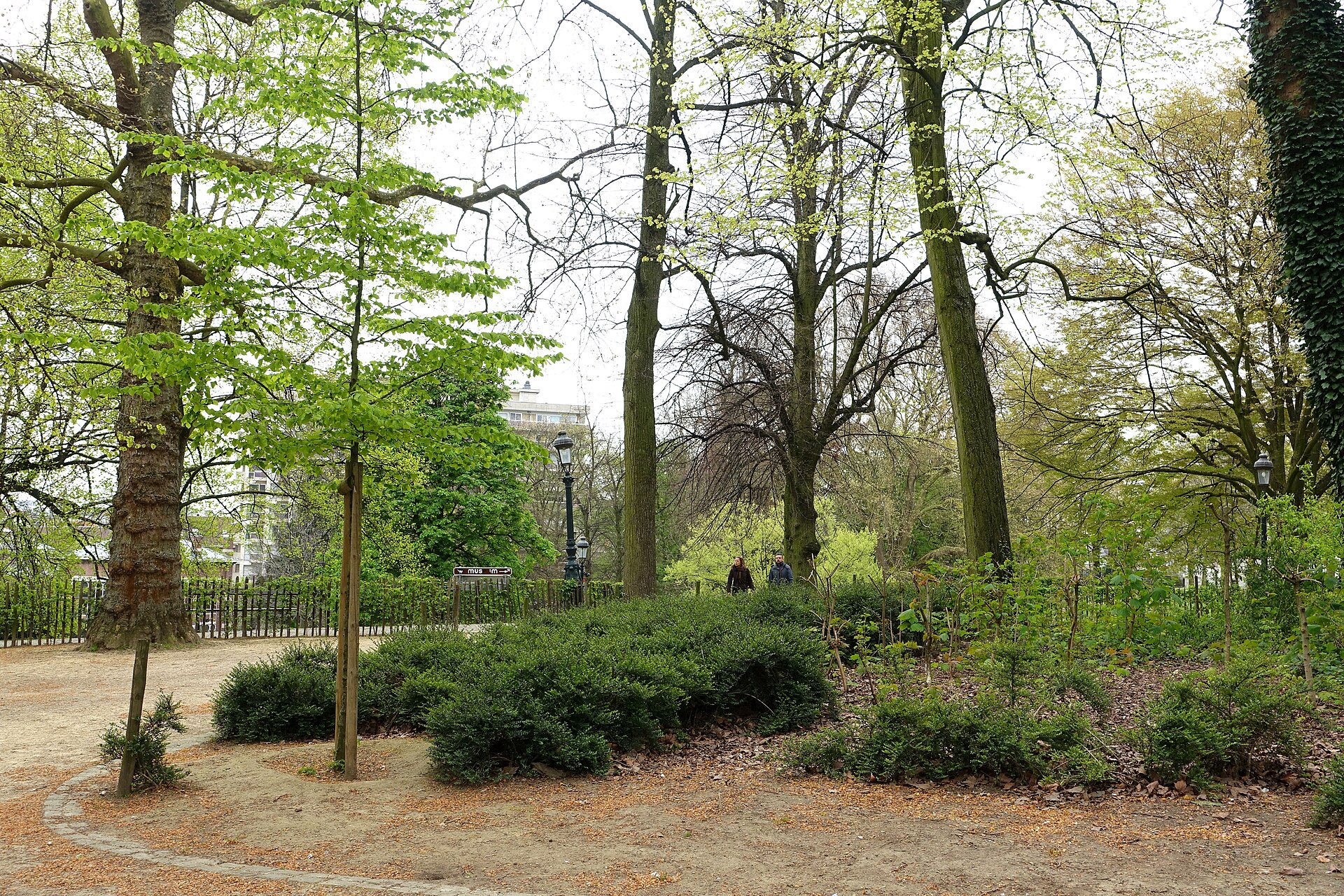
Square Frère-Orban was designed in the English landscape garden tradition, with soft, meandering paths and tree groupings meant to evoke a natural setting, in deliberate contrast to the rigid geometric symmetry of French formal gardens. This style was highly fashionable across nineteenth-century Europe whenever new, aspirational city districts were being laid out.
What can you see in the park?
Among the greenery, four particularly striking trees stand out: two golden-leaved sycamore maples and two common horse chestnuts. It's this mature tree cover that gives the square its distinctive, sheltered atmosphere, offering a contrast to the dense urban fabric of the European Quarter that grew up around it in the decades that followed.
What's nearby?
The square sits next to the seat of the Council of State (Raad van State), Belgium's highest administrative advisory and judicial body, as well as the nineteenth-century Church of St. Joseph, whose silhouette is a notable landmark in this part of Brussels. Because of this proximity, a walk through the park pairs naturally with exploring the architecture of the Leopold district.
Frequently asked questions
Is the square open to the public? Yes. Despite its private origins, it functions today as a fully public park, open to residents and visitors alike.
How old is this park? The surrounding urban layout was designed in 1837, while the square itself took on its current English-style form in 1862, making it well over 160 years old.
Who is this spot good for? It's a pleasant stop for anyone touring the European Quarter, looking for a quiet break from the bustle around the EU institutions, or interested in historic landscape architecture.
Is it worth a visit while sightseeing in Brussels? If your route takes you near the European Quarter, yes. It's a calm space with mature, historic trees that reveals a quieter side of this part of the city than the surrounding office buildings and institutions might suggest.
Nearby places

Earn badges for the places you visit
Download NextOnTrip, discover new places and check off your trails.