About this place
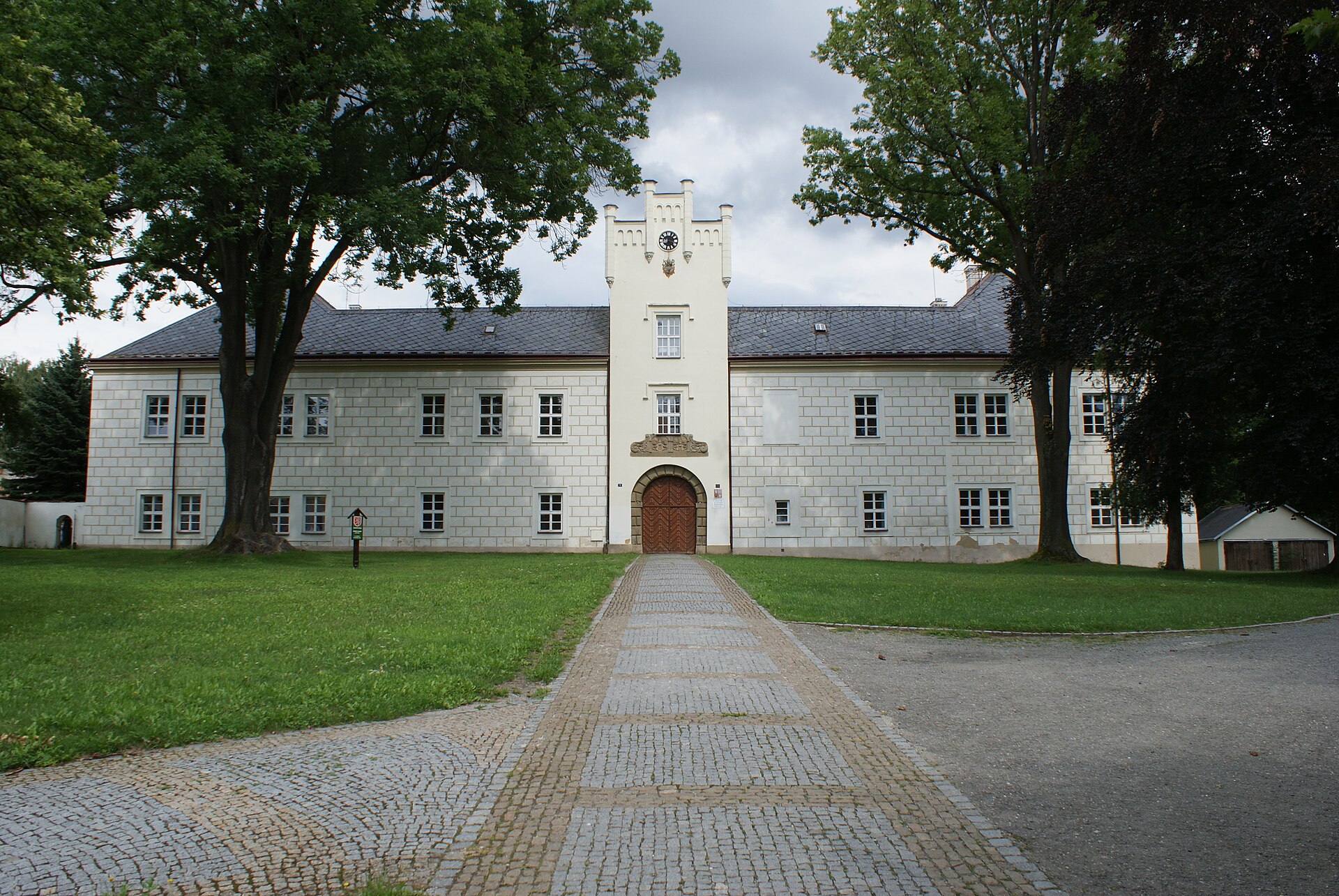
Spálené Poříčí Castle is a Renaissance residence standing at the heart of the small town that shares its name, in the Plzeň-South District of the Plzeň Region. These days it mostly serves as a school building, but its walls have witnessed a medieval stronghold, a devastating fire during the Thirty Years' War, and decades of neglect under communist rule.
How did a Gothic stronghold turn into a castle?
The settlement of Poříčí is first recorded as early as 1239, though real fortifications came later. In 1391 the estate was bought by Jindřich of Elsterberk, who most likely built a fortified seat here — a stronghold first mentioned in written sources in 1413. Frequent changes of ownership left the building neglected, and by the 15th century it had already fallen into disuse.
Revival came in the early 16th century. Around 1506 the estate was purchased by Jan Roupovský of Roupov, who restored its former standing. Toward the end of the century, Jan Hořčic of Prostý added a brewery and sheepfold next to the Gothic stronghold, then passed the whole estate to his daughter Salome Kocová of Dobrš and her husband, Adam Vratislav of Mitrovice. It was Adam Vratislav the Elder of Mitrovice who thoroughly rebuilt the old stronghold into a three-wing Renaissance castle, completed around 1617. The Vratislav of Mitrovice family held the estate for more than a century, from 1603 to 1715.
Where does the name "Spálené" ("Burnt") Poříčí come from?
The Thirty Years' War left a dramatic mark on the town. In October 1620, during the Bohemian Revolt, General Buquoy's troops passed through on their way to Prague. As they withdrew, the soldiers set the settlement ablaze — since most residents had already fled, the fire spread out of control and destroyed the town almost completely. That disaster is the reason the town carries the epithet "spálené," meaning "burnt," distinguishing it from other places named Poříčí.
What is the castle's connection to the St. Vitus treasure?
In 1749 the entire Spálené Poříčí estate passed into the hands of the Metropolitan Chapter of St. Vitus in Prague. Seven years later, facing a threat, the chapter hid its valuable treasure connected to St. Vitus Cathedral inside the castle — for a time, the building became a hiding place for some of the most precious property of the Bohemian church establishment.
What happened to the castle in the 20th century?
The estate, castle included, was nationalized in 1949. Interior furnishings and other valuables vanished for good, and the building itself suffered serious damage when it was converted into ordinary apartments. Gradual restoration only began after 1990, funded in part through the Program for the Regeneration of Urban Heritage Zones.
What is the castle used for today?
Today the castle mainly serves a secondary school, while also functioning as a base for school field trips, group accommodation, conferences, and corporate team-building retreats. It can house groups of up to 66 people, and its castle garden offers space for a quiet walk. The castle and the adjoining Baroque granary can be shown to visitors by staff from the local Infocentrum.
The town of Spálené Poříčí itself, home to around 3,000 people, has a well-preserved historic centre protected as an urban heritage zone — a good reason to pair a castle visit with a stroll through the surrounding streets.
Frequently asked questions
Where is Spálené Poříčí Castle located? In the town of Spálené Poříčí, in the Plzeň-South District of the Plzeň Region, Czech Republic.
When did the castle take its current Renaissance form? The three-wing Renaissance castle was built on the foundations of an older stronghold around 1617, under Adam Vratislav the Elder of Mitrovice.
Why is the town called "Spálené Poříčí" ("Burnt Poříčí")? The name refers to a fire in October 1620, set by the retreating troops of General Buquoy during the Thirty Years' War.
Can the castle be visited? Yes, the castle and the adjoining Baroque granary can be viewed with a member of the local Infocentrum staff; the building also hosts school trips and group accommodation.
What is the castle used for now? It houses a secondary school and also serves school field trips, conference groups, and corporate team-building events.
Nearby places

Earn badges for the places you visit
Download NextOnTrip, discover new places and check off your trails.