About this place
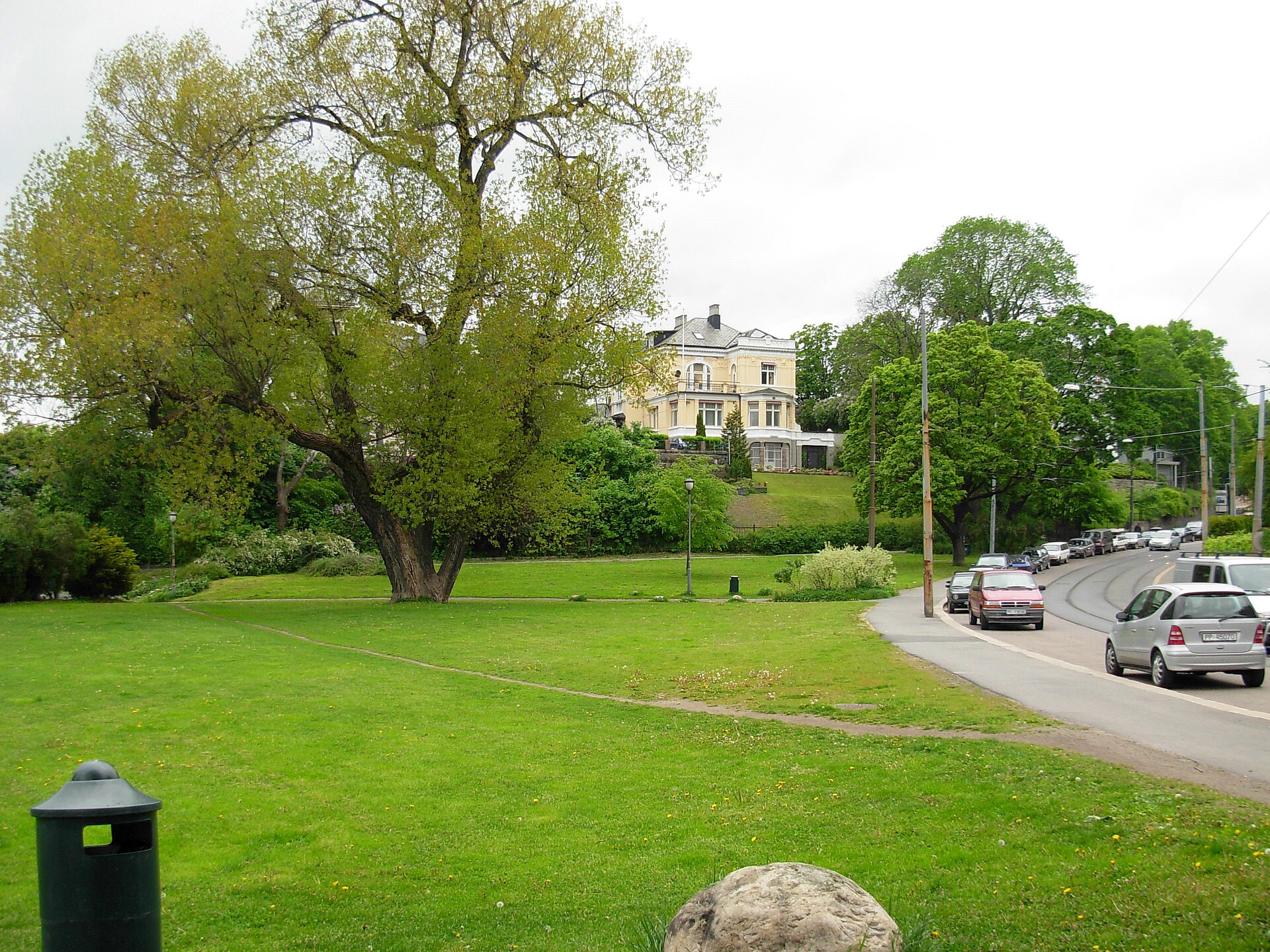
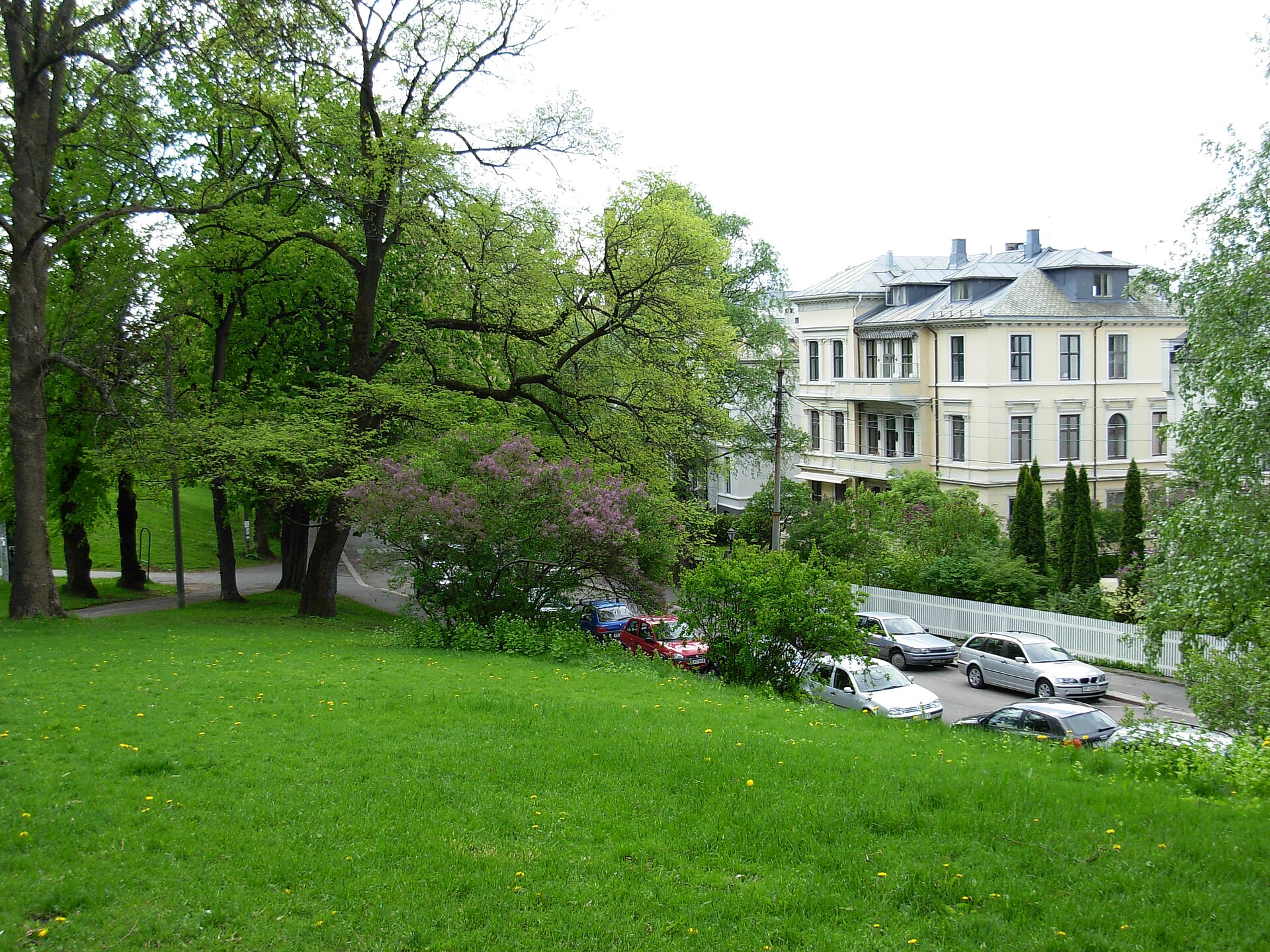
Skarpsnoparken is a small city park in Oslo's Frogner district, set just behind the boat harbour at Frognerkilen. It lies between Drammensveien and the Drammen railway line, with the rise of Gimlehøyden behind it to the northeast. It is a calm spot for a short break, a playground visit or a stroll by the fjord.
What is there to see in Skarpsnoparken?
The most striking feature is a large poplar in the western part of the park. It stands about 23 metres tall, and its crown spreads roughly 30 metres across. A bench in front of the tree makes a pleasant place to sit in the shade. The park also has a playground with room for ball games, which makes it a handy stop for families. In the southwest corner, a passage runs under the railway, connecting the park with the waterfront.
How did the park come about?
The story begins in 1889, when the municipality of Oslo bought the property at Drammensveien 88 along with the Skarpsno ferry landing. The following year the neighbouring plot at number 84 was acquired, and the city decided to lay the land out as a park. Design work started in 1910, the park was established between 1930 and 1934, and it received the name Skarpsno in 1934.
The ferry landing and the old station
The name is tied to a former crossing to the Bygdøy peninsula. For many years the ferry, at first rowed by hand, was run by Elias Skarpsno and his sons. A steam ferry arrived only in 1896, and a floating pier was built for it. Nearby, Skarpsno station on the Drammen railway was in service from 1882 to 1973. In 1914 the area also hosted the maritime section of the Jubilee Exhibition, open to visitors from 15 May to 11 October.
Frequently asked questions
Where is Skarpsnoparken? In the Frogner district of Oslo, between Drammensveien and the Drammen railway line, behind the harbour at Frognerkilen.
What is the main attraction? An impressive poplar about 23 metres tall with a crown around 30 metres wide. The park also has a playground.
When was the park created? The land was bought in 1889, design began in 1910, the park was established in 1930–1934, and it was named in 1934.
Are there other green spaces nearby? Yes, the neighbouring Frøyas have park is close, and the waterfront makes it easy to extend the visit into a longer walk.
Is there an entrance fee? No, it is a public city park.
Nearby places

Earn badges for the places you visit
Download NextOnTrip, discover new places and check off your trails.