About this place
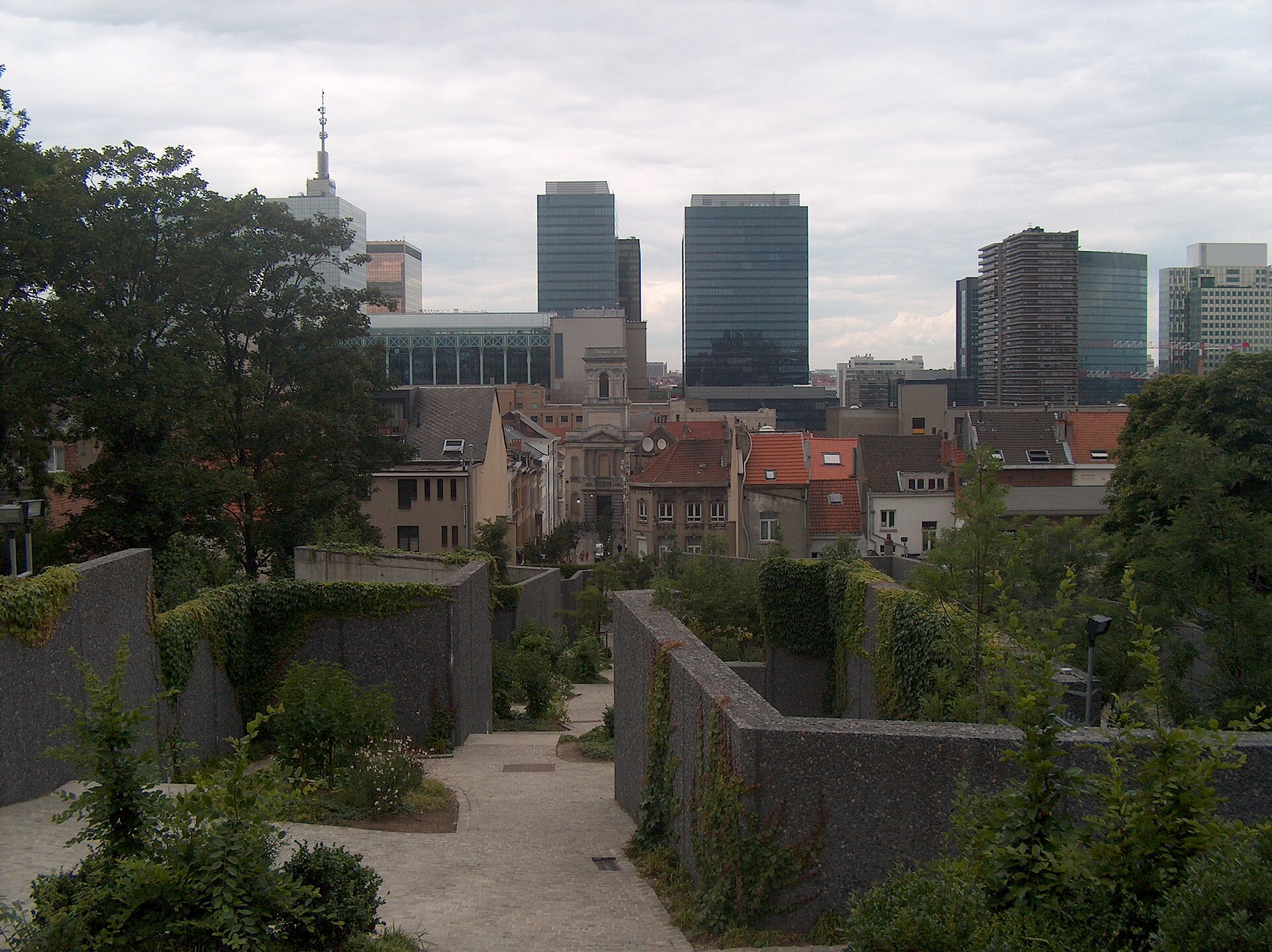
Senne Park is a linear urban park straddling the boundary between Schaerbeek and the City of Brussels, right in the heart of the Masui district in the northern part of the Belgian capital. Its path follows the former, now-covered bed of the river Senne, which for centuries formed the natural border between the municipality of Schaerbeek and the City of Brussels — and it's that historic dividing line which became the very axis along which the park was built.
Where did this place come from?
The land now occupied by the park was, for decades, a neglected post-industrial wasteland covering roughly 10,000 m². In 2014, the Brussels-Capital Region, acting through two sustainable neighbourhood contracts — "Masui" on the Schaerbeek side and "Reine-Progrès" on the City of Brussels side — decided to turn this derelict plot into a soft-mobility promenade with high ecological value. Because the soil across the entire site was heavily polluted, a 30 cm layer of clean soil had to be laid down before any planting or landscaping could begin.
What does the park look like today?
Senne Park was officially inaugurated on Saturday, 24 September 2016. Rather than following a single straight line, it is made up of four separate sections that wind their way between city blocks, forming a somewhat unexpected but coherent walking route through a densely built-up part of the city. The park is open to pedestrians and to cyclists moving at a gentle pace — it's designed as a space for slow movement, not for transit traffic.
The greenery draws on vegetation that already existed on the site, which allowed some of the location's natural character to be preserved. As a result, Senne Park strengthens both the local identity of the Masui district and the wider green network of the Brussels-Capital Region — it links the Laeken district with the Parc du 21 Juillet, forming a green corridor through the dense urban fabric of northern Brussels.
Why is it worth a visit?
Senne Park shows how a city can reclaim a degraded, post-industrial site and turn it into a functional, ecological thread within the urban fabric. It's an unassuming place, but an important one for residents of the surrounding apartment blocks — offering them a patch of greenery and quiet in a densely built district, while also standing as a living trace of Brussels' own history, recalling the river Senne that once flowed through here in an open channel.
Frequently asked questions
Where exactly is Senne Park located? The park lies on the border between the municipalities of Schaerbeek and Brussels, in the Masui district, on the site of the former covered bed of the river Senne.
When was the park opened? It was inaugurated on Saturday, 24 September 2016.
Can you cycle through it? Yes, the park is open to pedestrians and to cyclists moving at a slow pace — it's a soft-mobility space rather than a transit route.
What used to be on this site? For many years the land was a neglected, polluted post-industrial wasteland of about 10,000 m², which required soil remediation before the park could be built.
How does Senne Park connect to the wider green network? It links the Laeken district with the Parc du 21 Juillet, forming part of the broader green network of the Brussels-Capital Region.
Nearby places

Earn badges for the places you visit
Download NextOnTrip, discover new places and check off your trails.